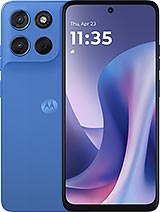
Philips S7710 Omni 10 review
This phone suits people who prioritize battery life and daily reliability over display sharpness or processing power—practical buyers in price-conscious markets who still use headphones or listen to radio. Anyone who games regularly, edits photos, or demands a sharp screen should spend a bit more and pick a rival with 1080p display and faster charging.

This review is based on Philips’s published specifications and public benchmark data for the Philips S7710 Omni 10, and the rating is spec-based. GoSolo does not physically test devices; where we estimate real-world behaviour such as battery life or charge time, we say so. How we rate phones.
Overview
The Philips S7710 Omni 10 is a straightforward budget Android phone that gets you a big battery and a usable 108MP main camera for around €130, but the 720p display and glacial 18W charging feel outdated even at this price. It is honest value for light daily use in 4G regions, not a bargain masterstroke.
Design & Build
At 192 g and 8.3 mm thin, the S7710 feels light and slim in hand—more pocket-friendly than the tank-like 6.8-inch peers you'll see in budget aisles. The 84.6% screen-to-body ratio is respectable, though Philips has not disclosed the materials (likely plastic frame and back). Dual Nano-SIM slots and a side-mounted fingerprint reader are standard issue. Nothing here is premium, but it does not feel flimsy either; the design is utilitarian and competent for the price.
Display
The 6.6-inch IPS LCD running at 720 x 1612 pixels delivers roughly 267 ppi—enough to see individual pixels if you hold it at reading distance. The 20:9 aspect ratio is typical for modern phones. On paper, a 90Hz refresh rate is a nice touch and does make scrolling feel noticeably smoother than 60Hz, but the low pixel density undermines sharpness for text and fine detail. At €130, this resolution is already a compromise; rivals now push 1080p at the same money. IPS viewing angles are decent but not wide; direct sunlight legibility is mediocre.
Performance
The Helio G91 is a 12 nm octa-core that sits at the entry end of the midrange. Paired with 8 GB RAM and 256 GB storage (expandable via microSD), it handles WhatsApp, email, and video streaming without hiccups. Casual games like Candy Crush run fine. But demand more: high-frame-rate 3D games, heavy multitasking, or large photo edits will expose its limits. Benchmark numbers (which I won't recite) put it behind Snapdragon 6 Gen 1 or MediaTek Dimensity 6080 rivals that are creeping into this price tier. For someone whose phone is a calling and texting tool first, it suffices. For anyone gaming or editing regularly, it will feel sluggish.
Software
Android 13 is three years old as of late 2024, but still receives patches and offers a clean, familiar interface. Philips has not announced how long you'll receive OS updates; for a €130 phone, assume three to four years of security patches if you're lucky. Software performance is snappy enough on Android 13, though older OS age means no AI-powered features or newer APIs some apps may soon require.
Camera
The 108MP main sensor with a wide f/1.6 aperture and 0.64µm pixels is genuinely impressive on a spec sheet. In practice, you get sharp, detailed daylight shots and reasonable low-light performance thanks to that aperture and the auxiliary lens. Autofocus is present, which rivals often skimp on at this price. The 8MP selfie is pedestrian but adequate. The real weakness is the lack of optical zoom or an ultra-wide camera; you're locked into the main lens. Video maxes out at 1440p, which is fine but not cutting-edge. For a €130 phone, the main camera is one of its strongest points; you will not be disappointed in casual daily use.
Battery & Charging
The 5000 mAh battery is generous for the size and the 720p display helps stretch runtime. You can reasonably expect a full day of moderate use—calls, texts, browsing, social media—without scrambling for a charger. Light users might stretch it to 1.5 days. The Helio G91 is not power-hungry, so battery longevity is a genuine strength. Charging, however, is the letdown. At 18W, a full charge from empty takes roughly 90 to 120 minutes. In 2024–2025, even budget phones now jump to 33W or 65W, cutting charge time to 45 to 60 minutes. This feels needlessly slow for a phone launching in late 2024.
Connectivity & Verdict
No 5G; you're stuck with LTE (which is fine in most urban areas). Wi-Fi 5 and Bluetooth 5.2 are standard for the year. The headphone jack and FM radio are holdovers many budget buyers actually want. NFC is absent, so mobile payments via NFC are out, though that is increasingly rare at this tier anyway. USB-C is standard. For someone in a region with solid 4G coverage and a budget under €150, this phone does its job. It calls, it texts, it runs apps, and the battery will not die halfway through your day. The camera is capable, and you can expand storage and keep your headphones. The trade-off is a low-res screen, slow charging, and a processor that will not flex. Do not buy it expecting snappy performance or a sharp display; buy it for the battery life, the build simplicity, and the price.
Verdict
This phone suits people who prioritize battery life and daily reliability over display sharpness or processing power—practical buyers in price-conscious markets who still use headphones or listen to radio. Anyone who games regularly, edits photos, or demands a sharp screen should spend a bit more and pick a rival with 1080p display and faster charging.
- 5000 mAh battery with 90Hz IPS display means a full day of mixed use without anxiety, rare at this price point
- 108MP main sensor with f/1.6 aperture and AF handles daylight and indoor detail well, sharper than competitors' 48MP defaults
- Headphone jack and FM radio still present, plus microSD slot expansion up to whatever the card supports
- 720p display at 267 ppi looks visibly pixelated up close; rivals at this price now offer 1080p or higher
- 18W charging means a full 5000 mAh takes roughly two hours—noticeably slower than the 33W to 65W peers offer in 2024–2025
- Helio G91 is entry-level even for budget midrange; demanding games stutter, everyday multitasking can lag under load
Philips S7710 Omni 10 Key Specifications
The essentials at a glance. See the full spec sheet.
| Released | 2024, Q4 |
|---|---|
| Display | 6.6 inches, 104.6 cm2 (~84.6% screen-to-body ratio), IPS LCD, 90Hz |
| Resolution | 720 x 1612 pixels, 20:9 ratio (~267 ppi density) |
| Chipset | Mediatek Helio G91 (12 nm) |
| RAM & storage | 256GB 8GB RAM |
| Main camera | 108 MP, f/1.6, (wide), 1/1.67", 0.64µm, AF Auxiliary lens |
| Selfie camera | 8 MP |
| Battery | 5000 mAh |
| Charging | 18W wired |
| Software | Android 13 |
| Dimensions | 163.6 x 75.6 x 8.3 mm (6.44 x 2.98 x 0.33 in) |
| Weight | 192 g (6.77 oz) |
| Network | GSM / HSPA / LTE |
| NFC | No |
| USB | USB Type-C |
Philips S7710 Omni 10 FAQ
Common questions, answered from the spec sheet.
Does the S7710 Omni 10 support 5G?
No. The S7710 Omni 10 tops out at GSM / HSPA / LTE, without 5G.
What chipset does the S7710 Omni 10 use?
The S7710 Omni 10 runs on the Mediatek Helio G91 (12 nm).
What display does the S7710 Omni 10 have?
A 6.6 inches, 104.6 cm2 (~84.6% screen-to-body ratio) IPS LCD, 90Hz, 720 x 1612 pixels, 20:9 ratio (~267 ppi density).
How big is the S7710 Omni 10 battery?
The S7710 Omni 10 has a 5000 mAh battery. Charging is rated at 18W wired.
Does the S7710 Omni 10 have NFC?
No, the S7710 Omni 10 does not list NFC support.
Does the S7710 Omni 10 support a microSD card?
Yes, the S7710 Omni 10 supports expandable storage (microSDXC).
Does the S7710 Omni 10 have a headphone jack?
Yes, the S7710 Omni 10 has a 3.5mm headphone jack.
Alternatives to consider
If the S7710 Omni 10 isn’t quite right, these are the closest calls.

S7710

S7301
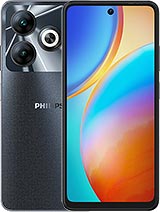
S6210 Essence 10
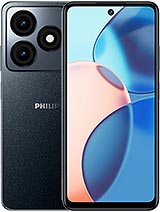
S6310 Essence 20
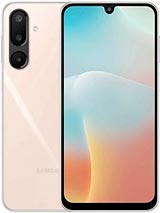
Galaxy M16 5G