Realme 13 4G review
The Realme 13 4G suits someone who values a bright, smooth display and all-day battery life over raw performance or camera prowess; spend more if you game frequently or demand a sharp, versatile camera setup.

This review is based on Realme’s published specifications and public benchmark data for the Realme 13 4G, and the rating is spec-based. GoSolo does not physically test devices; where we estimate real-world behaviour such as battery life or charge time, we say so. How we rate phones.
Overview
The Realme 13 4G trades 5G for a 120Hz AMOLED screen, fast charging, and solid battery life at a price most can afford. It handles daily tasks and light gaming without fuss, but the mid-range chipset and 1080p resolution show their limits against pricier rivals.
Design & build
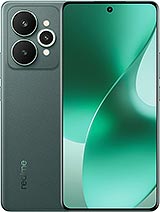
At 185 grams and 7.6 mm thick, the Realme 13 4G sits comfortably in hand—light enough to pocket all day without fatigue. The flat-edge frame is practical and modern, though the phone itself is not striking or memorable in person. IP65 rating is the real draw here: dust-sealed and rated for direct water jets, which puts it ahead of most mid-range rivals that ship with IP54 or nothing. That matters if you work outdoors or live near coast or heavy rain. The plastic back and frame cheapen the feel compared to phones with metal or glass, but for the price, build quality is adequate and durability is genuinely better than expected.
Display
The 6.67-inch AMOLED screen is the phone's strongest card. 120Hz scrolling feels noticeably smoother than 60Hz LCD or standard AMOLED, and the 600 nits typical brightness with 2000 nits peak means outdoor readability is not a struggle even in direct sun. HDR10+ support and vibrant colour reproduction make streaming and photos feel alive. That said, 1080p on this diagonal leaves text softer than 1440p or AMOLED panels at higher density; the difference is subtle but noticeable if you spend hours reading. For the price, this is a strong screen, but don't expect QHD sharpness.
Performance
The Dimensity 7300 Energy is a capable upper-midrange chip that handles email, social media, video, and casual gaming without lag or heat issues. Everyday performance feels smooth; apps open promptly and multitasking is responsive. Light 3D games (Genshin Impact at low settings, PUBG Mobile on medium) run acceptably, though demanding titles or high-refresh play will disappoint. Compared to rivals at this price in 2025, this chipset is slightly behind—Snapdragon options offer faster GPU performance and better thermal control under sustained load. For someone who avoids heavy gaming, it's fine. For a gamer, you'll want to look elsewhere.
Software
Realme UI 5.0 on Android 14 is bloat-light by modern standards. The interface is fast and responsive, with useful Realme touches (smart sidebar, quick toggles) that don't clutter the experience. Security updates are timely, though Realme's long-term support pledge is shorter than Samsung or Google. Out of the box, you'll find some pre-installed apps that you can uninstall, but nothing aggressively invasive. The OS itself won't slow you down and feels pleasant to use day-to-day.
Camera
The 50MP f/1.8 main sensor with OIS and 1/1.95" size sounds competent on paper, but real-world output is ordinary. Photos in good light are detailed and punchy, but colour accuracy can feel oversaturated, and shadow detail lags behind pricier flagships. Night mode works but delivers noisy results compared to rivals with larger sensors or computational prowess. There's no ultrawide or telephoto—just the one lens—which limits creative framing. The 16MP selfie camera is fine for video calls and social posts but lacks the detail or smoothing of more expensive phones. Video maxes out at 4K 30fps, which is standard but pedestrian for 2024.
Battery & charging
The 5000 mAh battery delivers realistic all-day endurance for moderate use—expect 6 to 7 hours of active screen time in heavy use, stretching toward a full day if you're gentle. The real strength is 67W SuperVOOC charging, which fills the tank from empty in roughly 30 to 45 minutes. That's fast enough to grab a quick top-up before leaving the house, and it's significantly quicker than the 30W or 33W charging common at this price a year or two ago. Charging speed is a genuine advantage here.
Value & verdict-context
At around €250, the Realme 13 4G is a straightforward value play. You're sacrificing 5G and the absolute sharpest display to afford a phone with a big bright screen, smooth 120Hz scrolling, reliable battery life, and fast charging. The Dimensity chipset is past its prime compared to current Snapdragon options, and the 1080p resolution is no longer a standout. The camera is honest but uninspiring. What you get is stability and everyday speed without paying flagship money—a practical phone for someone who won't game hard and values battery life and screen quality over cutting-edge performance or camera finesse. If you need more computing power or better image quality, you'll need to spend more.
Verdict
The Realme 13 4G suits someone who values a bright, smooth display and all-day battery life over raw performance or camera prowess; spend more if you game frequently or demand a sharp, versatile camera setup.
- 6.67-inch 120Hz AMOLED display with 2000 nits peak brightness—sharp, smooth, and genuinely visible in sunlight without blowing the budget
- 5000 mAh battery with 67W SuperVOOC charging: realistic day-long endurance and a 30- to 45-minute full charge that suits people who move fast
- Dimensity 7300 Energy handles everyday apps, browsing, and light gaming without stutter; fast enough that you won't feel held back for ordinary use
- IP65 rating is a real step up from the usual IP54—dust-sealed and rated for water jets, not just splash resistance
- Mediatek Dimensity 7300 Energy is capable but dated—Snapdragon rivals at this price already ship with faster, more efficient chips for 2024/2025
- 1080p resolution on a 6.67-inch screen means 395 ppi, which is standard but noticeably less sharp than 1440p or higher-res phones at similar money
- 50MP main camera is honest hardware but often underperforms rivals in detail and colour accuracy; no ultrawide or telephoto to add versatility
Realme 13 4G Key Specifications
The essentials at a glance. See the full spec sheet.
| Released | 2024, August 29 |
|---|---|
| Display | 6.67 inches, 107.4 cm2 (~88.9% screen-to-body ratio), AMOLED, 120Hz, HDR10+, 600 nits (typ), 2000 nits (peak) |
| Resolution | 1080 x 2400 pixels, 20:9 ratio (~395 ppi density) |
| Chipset | Mediatek Dimensity 7300 Energy (4 nm) |
| RAM & storage | 128GB 8GB RAM, 256GB 8GB RAM, 256GB 12GB RAM, 512GB 12GB RAM |
| Main camera | 50 MP, f/1.8, 26mm (wide), 1/1.95", PDAF, OIS Auxiliary lenses |
| Selfie camera | 16 MP, f/2.4, 24mm (wide), 1/3.0" |
| Battery | 5000 mAh |
| Charging | SuperVOOC up to 67 W |
| Software | Android 14, Realme UI 5.0 |
| Dimensions | 161.7 x 74.7 x 7.6 mm (6.37 x 2.94 x 0.30 in) |
| Weight | 185 g (6.53 oz) |
| Durability | IP65 dust tight and water resistant (low pressure water jets) |
| Network | GSM / HSPA / LTE / 5G |
| NFC | Yes, 360˚ (market/region dependent) |
| USB | USB Type-C 2.0 |
Realme 13 4G FAQ
Common questions, answered from the spec sheet.
Does the 13 4G support 5G?
Yes. The 13 4G supports 5G networks.
What chipset does the 13 4G use?
The 13 4G runs on the Mediatek Dimensity 7300 Energy (4 nm).
What display does the 13 4G have?
A 6.67 inches, 107.4 cm2 (~88.9% screen-to-body ratio) AMOLED, 120Hz, HDR10+, 600 nits (typ), 2000 nits (peak), 1080 x 2400 pixels, 20:9 ratio (~395 ppi density).
How big is the 13 4G battery?
The 13 4G has a 5000 mAh battery. Charging is rated at SuperVOOC up to 67 W.
Does the 13 4G have NFC?
Yes, the 13 4G has NFC.
Is the 13 4G water resistant?
The 13 4G carries a IP65 dust tight and water resistant (low pressure water jets) rating.
Does the 13 4G support a microSD card?
Yes, the 13 4G supports expandable storage (microSDXC (uses shared SIM slot)).
Alternatives to consider
If the 13 4G isn’t quite right, these are the closest calls.

13+ 5G

13 Pro+ 5G

14 Pro 5G
15 5G

Galaxy A35 5G