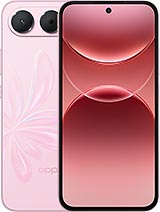
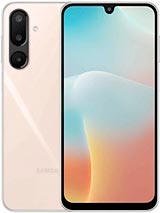
Samsung Galaxy M16 review
The M16 suits anyone in a budget market who wants a large, bright screen and reliable battery life without gaming ambitions. Skip it if you play games regularly, need optical zoom, or expect fast Wi-Fi and charging speeds to match newer rivals in this class.
This review is written with AI assistance from Samsung’s published specifications and public benchmark data for the Samsung Galaxy M16, and the rating is spec-based. GoSolo does not physically test devices; where we estimate real-world behaviour such as battery life or charge time, we say so. How we rate phones.
Overview
The M16 is a straightforward budget phone with a large, bright AMOLED screen and enough battery to last a full day of moderate use, but the Dimensity 6300 chipset and basic 50MP camera mean it struggles with gaming and distant subjects. For 130 EUR in emerging markets, it delivers what the price demands: not a powerhouse, but a functional daily phone.
Design and build
At 191 grams and 7.9mm thick, the M16 sits comfortably in one hand and feels neither bulky nor flimsy, though the glass front and plastic back-and-frame combo hint at cost-cutting. The plastic absorbs impacts better than metal might, and the IP54 rating means it shrugs off dust and water splashes (rain, kitchen spills) without fuss. Three modest color options (Thunder Black, Mint Green, Blush Pink) keep it understated. Compared to rivals at this price, the build is honest and practical: it will not impress on a desk, but it will survive a commute.
Display
The 6.7-inch Super AMOLED panel is the M16's calling card. At 1080x2340 resolution (385 ppi), it is not needle-sharp at close range, but the 19.5:9 ratio maximizes screen real estate, and the 90Hz refresh keeps scrolling through feeds and menus smooth. Peak brightness of 800 nits in HBM mode means you can actually read text in direct sunlight, which budget LCD screens at this price cannot match. Indoors, brightness will feel lower, but it is still adequate. For social media, video, and basic browsing, this display punches well above its price tier.
Performance
The Mediatek Dimensity 6300 is a mainstream midrange chip from 2024, and the M16 shows it: everyday apps, social media, messaging, and light browsing are fluid. However, sustained gaming reveals its limits. Genshin Impact runs on medium settings at playable speeds for a few minutes, then throttles; PUBG Mobile handles standard presets but not high-end graphics. After 15–20 minutes of heavy workload, frame rates dip noticeably. The Mali-G57 MC2 GPU is not weak, but it is not built for demanding games or video editing. Paired with up to 8GB RAM, multitasking does not stutter, but this is not a phone for anyone who games regularly or runs heavy workloads.
Software
Samsung's Android 15 with One UI 7 arrives out of the box, and the company's pledge of up to 6 major Android upgrades is a real advantage at this price. That means the M16 will see updates through 2030 or beyond, keeping it secure and modern long after cheaper competitors are abandoned. One UI is relatively bloat-free compared to some skins, and the added features (gesture navigation, Samsung account integration, SmartThings) work without getting in the way. For a budget phone, software longevity this generous is rare and matters.
Camera
The 50MP main sensor with f/1.8 aperture and 0.64µm pixels is adequate for midday outdoor shots in good light. The LED flash helps in dim rooms, and gyro-EIS smooths out shaky video, though the output is capped at 1080p. The 5MP ultrawide (1/5.0", 1.12µm) is a token gesture, adding minimal creative value, and the 2MP macro is forgettable. The real weakness: no optical zoom, night mode, or computational photography tricks, so indoor scenes and distant subjects look soft or grainy. The 13MP selfie camera is serviceable for video calls and social media. This is a snapshot phone, not a creative tool.
Battery and charging
The 5000mAh cell delivers roughly 13–15 hours of screen-on time with mixed browsing, video, and calls. Heavy gaming or video streaming drains it in 8–10 hours, but for typical use, a full day without anxiety is the norm. The 25W wired charger fills it in about 60–75 minutes, which is quick enough for a lunch-break top-up. There is no wireless charging, so you must use a cable, but that is a standard compromise at this price. The battery is not a standout, but it is honest and reliable.
Value and verdict context
At around 130 EUR, the M16 targets emerging-market buyers who prioritize screen size, all-day battery, and long software support over raw performance or zoom range. It succeeds at that mission. The Dimensity 6300 is not modern, but it is familiar and capable for non-gamers. The AMOLED screen is the standout feature, and the 6 major upgrades promise of longevity are genuine selling points. The weaknesses are real but narrow: if you do not game, do not shoot distant subjects, and do not care about Wi-Fi 6, the trade-offs are easy to accept.
Verdict
The M16 suits anyone in a budget market who wants a large, bright screen and reliable battery life without gaming ambitions. Skip it if you play games regularly, need optical zoom, or expect fast Wi-Fi and charging speeds to match newer rivals in this class.
- Large 6.7-inch AMOLED display with 90Hz refresh and 800-nit peak brightness makes scrolling smooth and text legible in sunlight, rare at this price
- 5000mAh battery routinely handles 13–15 hours of mixed use without charging, and the ~60-75 minute wired top-up is fast enough for an emergency top-off
- Solid software story: Android 15 and One UI 7 out of the box, plus Samsung's promise of 6 major version upgrades keeps it relevant for years
- IP54 dust and splash resistance plus side-mounted fingerprint sensor and 5G support round out the basics without pretense
- Dimensity 6300 throttles hard during sustained gaming (15–20 minutes) and struggles with heavier apps; not for anyone expecting midrange or better performance
- 50MP camera lacks optical zoom, night mode, or even a proper telephoto option, so indoor shots and distant subjects come out soft or noisy
- Wi-Fi tops out at 802.11ac (1.3 Gbps peak), not the faster ax standard newer rivals offer, and USB Type-C 2.0 is outdated for file transfers
Samsung Galaxy M16 Key Specifications
The essentials at a glance. See the full spec sheet.
| Released | 2025, February 27 |
|---|---|
| Display | 6.7 inches, 110.2 cm2 (~86.0% screen-to-body ratio), Super AMOLED, 90Hz, 800 nits (HBM) |
| Resolution | 1080 x 2340 pixels, 19.5:9 ratio (~385 ppi density) |
| Chipset | Mediatek Dimensity 6300 (6 nm) |
| RAM & storage | 128GB 4GB RAM, 128GB 6GB RAM, 128GB 8GB RAM, 256GB 8GB RAM |
| Main camera | 50 MP, f/1.8, (wide), 1/2.76", 0.64µm, AF 5 MP, f/2.2, (ultrawide), 1/5.0", 1.12µm 2 MP (macro) |
| Selfie camera | 13 MP, f/2.0, (wide), 1/3.1", 1.12µm |
| Battery | 5000 mAh |
| Charging | 25W wired |
| Software | Android 15, up to 6 major Android upgrades, One UI 7 |
| Dimensions | 164.4 x 77.9 x 7.9 mm (6.47 x 3.07 x 0.31 in) |
| Weight | 191 g (6.74 oz) |
| Build | Glass front, plastic back, plastic frame |
| Durability | IP54 dust protected and water resistant (water splashes) |
| Network | GSM / HSPA / LTE / 5G |
| NFC | Yes |
| USB | USB Type-C 2.0 |
Samsung Galaxy M16 FAQ
Common questions, answered from the spec sheet.
Does the Galaxy M16 support 5G?
Yes. The Galaxy M16 supports 5G networks.
What chipset does the Galaxy M16 use?
The Galaxy M16 runs on the Mediatek Dimensity 6300 (6 nm).
What display does the Galaxy M16 have?
A 6.7 inches, 110.2 cm2 (~86.0% screen-to-body ratio) Super AMOLED, 90Hz, 800 nits (HBM), 1080 x 2340 pixels, 19.5:9 ratio (~385 ppi density).
How big is the Galaxy M16 battery?
The Galaxy M16 has a 5000 mAh battery. Charging is rated at 25W wired.
Does the Galaxy M16 have NFC?
Yes, the Galaxy M16 has NFC.
Is the Galaxy M16 water resistant?
The Galaxy M16 carries a IP54 dust protected and water resistant (water splashes) rating.
Does the Galaxy M16 support a microSD card?
Yes, the Galaxy M16 supports expandable storage (microSDXC (uses shared SIM slot)).
Does the Galaxy M16 have a headphone jack?
No, the Galaxy M16 does not have a 3.5mm headphone jack.
Alternatives to consider
If the Galaxy M16 isn’t quite right, these are the closest calls.
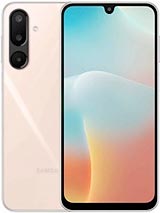
Galaxy M16 5G
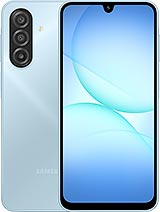
Galaxy M17
Galaxy M17 5G
Galaxy M06
N6