Samsung Galaxy Z TriFold review
The Z TriFold suits users who prioritize a genuinely large unfolded screen and are comfortable carrying a 309g device with weaker water resistance and slower charging. Anyone chasing raw value, lighter weight, or durability should look elsewhere.
This review is written with AI assistance from Samsung’s published specifications and public benchmark data for the Samsung Galaxy Z TriFold, and the rating is spec-based. GoSolo does not physically test devices; where we estimate real-world behaviour such as battery life or charge time, we say so. How we rate phones.
Overview
Samsung's three-fold screen does deliver that genuine tablet experience in a pocket, but the 309g weight, IP48 rating (dust still gets in), and reliance on a 5600mAh battery running an enormous display make this more engineering showpiece than practical daily driver for the price.
Design & build
The Z TriFold weighs 309 grams, noticeably heftier than a traditional flagship but unavoidable when you are housing three display panels and a titanium hinge. Folded, it measures 12.9mm thick—pocket-able, though bulky. The design feels deliberate: Gorilla Glass Ceramic on the folded exterior resists scratches, the back uses a ceramic-glass reinforced polymer, and the aluminum frame gets Samsung's Advanced Armor treatment. Where it stumbles is durability. IP48 is weaker than the IP67 or IP68 most flagships carry now. The spec means dust larger than 1mm can enter, and water resistance maxes out at 1.5 meters for 30 minutes. If you are paying nearly 3000 EUR, you are not thinking about shallow-water immersion—you want genuine ruggedness, and the Z TriFold asks you to be more careful than rivals.
Display
The 10-inch unfolded AMOLED is the reason to buy this phone. At 1584 by 2160 pixels across a 4:3 ratio, it delivers 269 ppi density—sharp enough at arm's length, though noticeably less dense than a modern tablet. Peak brightness hits 2600 nits unfolded and 1600 nits on the cover screen, meaning outdoor visibility is not an issue. The 120Hz LTPO refresh is smooth for scrolling and games. The 4:3 ratio does leave black bars when watching widescreen video, a trade-off Samsung made to keep the phone narrower when folded. This is compromise baked in, but for reading, productivity, and tablet-style use, the screen is genuinely large and bright enough to justify the form factor.
Performance
The Snapdragon 8 Elite with 16GB of RAM is current-generation flagship silicon. It powers through Android 16 and One UI 8.5 without stutter, handles demanding games at high settings, and enables Samsung DeX for a desktop-like experience when docked. Expect sustained performance in most apps. Heavy 3D gaming may throttle after 20–30 minutes of continuous load due to thermal constraints in such a thin unfolded chassis, a real limitation for a 2900 EUR device if you are chasing gaming durability. Day-to-day, this chipset keeps pace with any 2025 flagship, and the extra RAM allows smooth multitasking across Samsung's foldable-specific app layouts.
Software
One UI 8.5 on Android 16 is Samsung's current standard. The interface adapts well to the tri-fold form factor, offering different layouts for folded, mid-fold, and unfolded modes. Samsung DeX wireless support means you can mirror the display to a monitor or desktop experience without docking. For productivity, this is a genuine strength. Multi-window support is robust, and the software does not feel half-baked. Updates and support should be solid given Samsung's track record, though the short release window and discontinued status suggest limited real-world longevity.
Camera
The 200MP f/1.7 main sensor with 1/1.3-inch dimensions, OIS, and multi-directional PDAF captures fine detail in daylight. It is not revolutionary—200MP on a premium sensor is more about resolving power than a day-to-day quality leap over a 100MP alternative. The 10MP 3x telephoto with OIS handles mid-range zoom cleanly without software upscaling artifacts, useful for portraiture and distant subjects. The 12MP ultrawide at 120 degrees covers landscapes and group shots. Video maxes out at 8K 30fps and 4K 60fps with 10-bit HDR, which is par for flagship flagships now. The dual selfie cameras (10MP ultrawide and 10MP wide on the cover) are adequate but not standout. Overall, the camera system is competent and well-balanced, but not the defining reason to buy this phone.
Battery & charging
The 5600mAh battery powers an enormous unfolded display and a flagship chipset. Real-world screen-on time lands around 10–12 hours on moderate use; heavy gaming or maxing out the 2600-nit brightness mode shortens that noticeably. For a 3000 EUR device, this is acceptable but not exceptional given the weight and thickness constraints a foldable entails. Charging speed is the weakness: 45W wired reaches 50 percent in 30 minutes but takes another 45–55 minutes to full, and 15W wireless is too slow for practical fast charging, relegating it to overnight. Rivals at this price and tier often hit 100W or more, making the Z TriFold feel old-school in the charger department.
Value & verdict-context
At 2900 EUR, the Z TriFold asks flagship money for a device that delivers on the foldable form factor but cuts corners on water resistance, charging speed, and thermal sustained performance. If your priority is a large unfolded tablet screen and you tolerate the heft and durability trade-offs, the value case exists. For most buyers shopping this price, a traditional flagship with better IP rating, faster charging, and lighter frame is the safer bet. The tri-fold is impressive engineering, but it is also a device that feels designed to prove Samsung can build it, not necessarily that you should buy it.
Verdict
The Z TriFold suits users who prioritize a genuinely large unfolded screen and are comfortable carrying a 309g device with weaker water resistance and slower charging. Anyone chasing raw value, lighter weight, or durability should look elsewhere.
- 10-inch unfolded AMOLED screen with 2600 nits peak brightness and 120Hz makes the foldable size feel purposeful rather than gimmicky
- Snapdragon 8 Elite with 16GB RAM handles demanding multitasking and desktop apps via Samsung DeX without compromise
- 200MP main camera with 1/1.3-inch sensor, OIS, and 3x optical zoom captures sharp detail in most daylight conditions
- Reasonably thin at 3.9mm when fully unfolded, and titanium hinge shows Samsung took durability of the fold mechanism seriously
- IP48 rating allows dust larger than 1mm to enter and limits water immersion to shallow depths, well behind typical flagship water resistance
- 5600mAh battery powers a 10-inch screen for roughly 10–12 hours; heavy media use or continuous max brightness drains it noticeably faster
- 45W charging takes 45–55 minutes to full, and 15W wireless is slow enough that most users will default to overnight charging
Samsung Galaxy Z TriFold Key Specifications
The essentials at a glance. See the full spec sheet.
| Released | 2025, December 02. Released 2025, December 12 |
|---|---|
| Display | 10.0 inches, 305.4 cm2 (~89.6% screen-to-body ratio), Tri-foldable Dynamic LTPO AMOLED 2X, 120Hz, HDR, 1600 nits (peak) |
| Resolution | 1584 x 2160 pixels, 4:3 ratio (~269 ppi density) |
| Chipset | Qualcomm SM8750-AC Snapdragon 8 Elite (3 nm) |
| RAM & storage | 512GB 16GB RAM, 1TB 16GB RAM |
| Main camera | 200 MP, f/1.7, 24mm (wide), 1/1.3", 0.6µm, multi-directional PDAF, OIS 10 MP, f/2.4, 67mm (telephoto), 1/3.94", 1.0µm, PDAF, OIS, 3x optical zoom 12 MP, f/2.2, 13mm, 120˚ (ultrawide), 1/2.55", 1.4µm, dual pixel PDAF |
| Selfie camera | 10 MP, f/2.2, 18mm (ultrawide), 1/3.0", 1.12µm Cover camera: 10 MP, f/2.2, 24mm (wide), 1/3.0", 1.12µm |
| Battery | 5600 mAh |
| Charging | 45W wired, QC2.0, 50% in 30 min15W wireless4.5W reverse wireless |
| Software | Android 16, One UI 8.5 |
| Dimensions | Unfolded: 159.2 x 214.1 x 3.9-4.2 mmFolded: 159.2 x 75 x 12.9 mm |
| Weight | 309 g (10.90 oz) |
| Build | Glass front (Gorilla Glass Victus Ceramic 2) (folded), plastic front (unfolded), ceramic-glass fiber-reinforced polymer back, aluminum frame, titanium hinge housing |
| Durability | IP48 dust and water resistant (dust > 1mm; immersible up to 1.5m for 30 min) Advanced Armor aluminum frame |
| Network | GSM / CDMA / HSPA / EVDO / LTE / 5G |
| NFC | Yes |
| USB | USB Type-C 3.2 |
Samsung Galaxy Z TriFold FAQ
Common questions, answered from the spec sheet.
Does the Galaxy Z TriFold support 5G?
Yes. The Galaxy Z TriFold supports 5G networks.
What chipset does the Galaxy Z TriFold use?
The Galaxy Z TriFold runs on the Qualcomm SM8750-AC Snapdragon 8 Elite (3 nm).
What display does the Galaxy Z TriFold have?
A 10.0 inches, 305.4 cm2 (~89.6% screen-to-body ratio) Tri-foldable Dynamic LTPO AMOLED 2X, 120Hz, HDR, 1600 nits (peak), 1584 x 2160 pixels, 4:3 ratio (~269 ppi density).
How big is the Galaxy Z TriFold battery?
The Galaxy Z TriFold has a 5600 mAh battery. Charging is rated at 45W wired, QC2.0, 50% in 30 min15W wireless4.5W reverse wireless.
Does the Galaxy Z TriFold have NFC?
Yes, the Galaxy Z TriFold has NFC.
Is the Galaxy Z TriFold water resistant?
The Galaxy Z TriFold carries a IP48 dust and water resistant (dust > 1mm; immersible up to 1.5m for 30 min) Advanced Armor aluminum frame rating.
Does the Galaxy Z TriFold support a microSD card?
No, the Galaxy Z TriFold does not support expandable storage.
Does the Galaxy Z TriFold have a headphone jack?
No, the Galaxy Z TriFold does not have a 3.5mm headphone jack.
Alternatives to consider
If the Galaxy Z TriFold isn’t quite right, these are the closest calls.
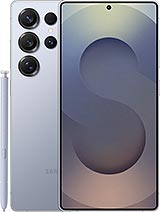
Galaxy S25 Ultra
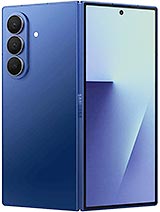
Galaxy Z Fold7
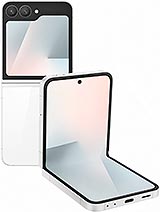
Galaxy Z Flip7 FE
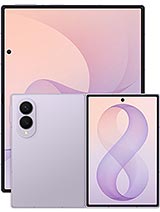
Galaxy Z Fold8
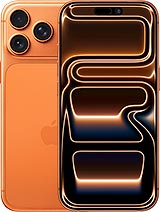
iPhone 17 Pro Max