Tecno Camon 30s Pro review
This phone works for people who care about screen and battery more than gaming or raw speed, and who value Tecno's regional support and local payment options. Buyers who plan to keep the phone for three-plus years or play demanding games should look elsewhere.
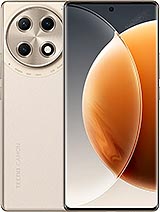
This review is based on Tecno’s published specifications and public benchmark data for the Tecno Camon 30s Pro, and the rating is spec-based. GoSolo does not physically test devices; where we estimate real-world behaviour such as battery life or charge time, we say so. How we rate phones.
Overview
The Camon 30s Pro is a mid-range phone built around a strong AMOLED display and solid battery life rather than processing power, with a 120Hz 1080p screen and 5000mAh cell that will handle a full day of mixed use. The MediaTek Helio G100 is capable enough for everyday work and casual gaming, but the real draw here is the practical screen and endurance—not chasing benchmark numbers.
Design & build
The Camon 30s Pro is thin and compact at 7.8mm and sits in the hand without complaint. The flat frame and rounded edges keep it practical rather than fussy, though the unspecified weight leaves a gap in the picture. IP53 rating means it survives splashes and light dust but won't survive immersion or heavy outdoor abuse, which is realistic for this price tier. Dual SIM slots are useful for regions where it matters. Nothing flashy, but the device feels like it was built to be used rather than admired.
Display
The 6.78-inch AMOLED is the strongest reason to pick this phone. 120Hz refresh makes scrolling smooth enough that you won't feel the need to apologize for the hardware, and 1300 nits peak brightness means you can actually see the screen in sunlight without adjusting your grip. The catch is 1080p resolution at this screen size—at 393 ppi, pixels become visible if you hold it close, and text looks softer than it should. This was acceptable in 2023, but rivals in the same price band now ship with 1440p panels. Still, for everyday messaging, video, and social media, the AMOLED quality and refresh rate do more work than raw resolution would.
Performance
The Helio G100 is a capable eight-core processor for routine tasks: messaging, browsing, email, and light photo editing all run without stutter. It will handle mobile games at medium settings and won't embarrass you in day-to-day use. Where it falters is sustained heavy work—intensive 3D games, video editing, or long gaming sessions cause thermal throttling and frame drops. For a mid-range phone in 2024, this is expected, but it is worth knowing you are not getting a future-proof processor. RAM at 8GB is adequate, and 256GB of storage is generous, though eMMC architecture means file transfers crawl compared to flagships with UFS.
Software
Android 14 with Tecno's HIOS 14 overlay ships out of the box. The promise of up to 2 major Android upgrades gives you a reasonable runway to Android 16 or so, which is respectable for a 2024 mid-ranger. HIOS itself adds some localisation features but also bloat; expect to spend time disabling apps you won't use. Security patch frequency is not guaranteed in the spec, so plan on updating when available rather than expecting monthly patches like a Samsung or Poco might offer.
Camera
Both cameras pack 50 megapixels, which sounds impressive on paper but translates to less dramatic real-world gains than the headline suggests. The main camera's f/1.9 aperture and OIS help in low light, and dual-LED flash on both the rear and front cameras is thoughtful for night shots. In bright conditions, the 50MP main sensor will produce sharp images, and the front camera's 50MP is overkill for video calls but useful if you crop selfies. The catch is that megapixel counts alone don't make for compelling photos; processing and lens quality matter more, and neither is likely to compete with Poco or Realme at this price. Video is capped at 1080p, which is passable but not ambitious.
Battery & charging
The 5000mAh battery is the backbone of this phone's appeal. In mixed use—messaging, browsing, video, social media with the screen at medium brightness—expect a full day of uptime, possibly stretching into the evening if you are moderate with the display. Heavy gaming or high brightness will cut that short; light use might push it to a day and a half. The 45W SuperCharge claims to refill the battery in roughly 30 to 40 minutes, which is competitive for 2024 mid-range. Wireless charging at 20W is a bonus that some rivals at this price skip entirely.
Value & verdict
The Camon 30s Pro makes sense as a daily driver if you prioritise screen quality and battery life over raw processing grunt. The AMOLED display with 120Hz refresh and the 5000mAh battery are both standouts for the price, and 45W charging plus wireless top-up add convenience. You sacrifice resolution density and gaming performance against faster mid-range rivals, and the Helio G100 will feel its age if you hold onto the phone for more than two years of heavy use. For a buyer in emerging markets who needs a phone that reliably lasts a full day, feels smooth to scroll through, and survives light splashes, this is a credible choice. Anyone chasing performance or longevity should look at competitors with Snapdragon 6 or 7 series processors instead.
Verdict
This phone works for people who care about screen and battery more than gaming or raw speed, and who value Tecno's regional support and local payment options. Buyers who plan to keep the phone for three-plus years or play demanding games should look elsewhere.
- 120Hz AMOLED with 1300 nits peak brightness makes scrolling smooth and outdoor use practical even in direct sun.
- 5000mAh battery with 45W charging delivers a full day of typical mixed use and tops up in roughly 30 to 40 minutes.
- Clean, flat design at 7.8mm thick and dual-LED flash on both cameras for usable low-light performance.
- IP53 durability and dual SIM support cover the basics for everyday robustness in emerging markets.
- 1080p resolution on a 6.78-inch display leaves pixels visible at arm's length; rivals at this price point now often step up to 1440p.
- Helio G100 struggles with sustained heavy gaming and demanding 3D workloads compared to processors in competing mid-range phones.
- Storage appears eMMC-based rather than faster UFS, so file transfers and app loading lag behind more ambitious mid-range rivals.
Tecno Camon 30s Pro Key Specifications
The essentials at a glance. See the full spec sheet.
| Released | 2024, July 30 |
|---|---|
| Display | 6.78 inches, 109.9 cm2 (~89.5% screen-to-body ratio), AMOLED, 1B colors, 120Hz, 1300 nits (HBM) |
| Resolution | 1080 x 2436 pixels (~393 ppi density) |
| Chipset | Mediatek Helio G100 (6 nm) |
| RAM & storage | 256GB 8GB RAM |
| Main camera | 50 MP, f/1.9, (wide), 1/1.56", 1.0µm, PDAF, OIS Auxiliary lenses |
| Selfie camera | 50 MP, AF |
| Battery | 5000 mAh |
| Charging | SuperCharge up to 45 W, Wireless: Charger power 20 W |
| Software | Android 14, up to 2 major Android upgrades, HIOS 14 |
| Dimensions | 164.6 x 74.6 x 7.8 mm (6.48 x 2.94 x 0.31 in) |
| Durability | IP53 dust protected and water resistant (vertical water sprays) |
| Network | GSM / HSPA / LTE |
| NFC | Yes |
| USB | USB Type-C 2.0, OTG |
Tecno Camon 30s Pro FAQ
Common questions, answered from the spec sheet.
Does the Camon 30s Pro support 5G?
No. The Camon 30s Pro tops out at GSM / HSPA / LTE, without 5G.
What chipset does the Camon 30s Pro use?
The Camon 30s Pro runs on the Mediatek Helio G100 (6 nm).
What display does the Camon 30s Pro have?
A 6.78 inches, 109.9 cm2 (~89.5% screen-to-body ratio) AMOLED, 1B colors, 120Hz, 1300 nits (HBM), 1080 x 2436 pixels (~393 ppi density).
How big is the Camon 30s Pro battery?
The Camon 30s Pro has a 5000 mAh battery. Charging is rated at SuperCharge up to 45 W, Wireless: Charger power 20 W.
Does the Camon 30s Pro have NFC?
Yes, the Camon 30s Pro has NFC.
Is the Camon 30s Pro water resistant?
The Camon 30s Pro carries a IP53 dust protected and water resistant (vertical water sprays) rating.
Does the Camon 30s Pro support a microSD card?
Yes, the Camon 30s Pro supports expandable storage (Unspecified).
Alternatives to consider
If the Camon 30s Pro isn’t quite right, these are the closest calls.
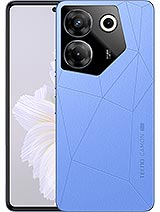
Camon 20s Pro 5G

Camon 30 Pro 5G

Camon 30S

Camon 40 Pro 5G
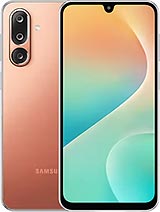
Galaxy M36 5G