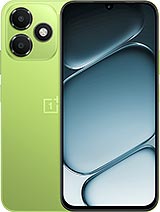
Tecno Spark Go 3 Pro review
This phone suits someone in a demanding job or climate who needs a large screen, all-day battery, and genuine protection without bleeding money—think outdoor work, transportation, or use in dusty or humid environments. Skip it if you expect smooth gaming, sharp text, or snappy multitasking; the chipset and RAM will disappoint, and the 720p display becomes a daily frustration on a screen this size.

This review is written with AI assistance from Tecno’s published specifications and public benchmark data for the Tecno Spark Go 3 Pro, and the rating is spec-based. GoSolo does not physically test devices; where we estimate real-world behaviour such as battery life or charge time, we say so. How we rate phones.
Overview
The Spark Go 3 Pro is a no-frills budget phone that pairs a massive 6.78-inch display with decent durability (IP68, drop resistance) and a 120Hz refresh rate, but the entry-level Unisoc chipset and 720p resolution mean don't expect smooth gaming or sharp text. For €140, it's a functional device for basic tasks and media consumption if you can live with occasional lag and fuzzy text.
Design & build
Tecno has given the Go 3 Pro a thick 8.1mm frame that carries real durability: glass front, plastic back and frame, IP68/IP69 water and dust sealing, and a 1.5m drop rating. This level of protection at €140 is genuinely useful, especially in regions where phones are worked hard. The trade-off is weight and perceived heft, but the spec sheet doesn't list dimensions or weight, making that judgment incomplete. Side-mounted fingerprint sensor is the norm now; no surprises there. Nano-SIM + Nano-SIM with dedicated microSDXC slot is a smart inclusion that avoids the common trap of forcing you to choose between dual SIM and storage expansion.
Display
The 6.78-inch screen is vast for this price, and Tecno's 120Hz IPS LCD makes scrolling smooth and responsive during everyday use. That's the good news. The bad news is pixel density at 259 ppi on a 720 x 1600 display—text is noticeably soft, web pages look slightly fuzzy, and photos lack crispness. It's tolerable for casual video and browsing, but anyone accustomed to sharper displays will feel the trade-off immediately. For comparison, rivals at similar prices have begun hitting 1080p, which would make a tangible difference on a screen this size. Brightness and color gamut figures are absent, so outdoor visibility and vibrancy remain unknown.
Performance
The Unisoc T7250 is entry-level silicon; it handles basic tasks like messaging, calls, and light browsing without drama, but it is not built for multitasking or modern gaming. The octa-core design (2x A75 cores at 1.8 GHz, 6x A55 at 1.6 GHz) sounds balanced on paper, but the Mali-G57 MP1 GPU and modest CPU clock speeds mean 3D games will stutter and demanding apps may pause or crash. Pair this with only 4GB RAM, and you will feel the ceiling quickly when switching between apps or running background tasks. This is a phone for calls, social media, email, and light work—not a device for mobile gaming enthusiasts or power users. By 2026 standards, even budget phones often ship with 8GB RAM or more capable chips; the Go 3 Pro's pairing feels cost-cut in a way that will age poorly.
Software
Android 16 with HIOS 16 (Tecno's skin) should ensure recent features and security patches, though Tecno's update track record is mixed. A clean, lightweight OS is usually Tecno's style, which suits the modest hardware. HIOS customization is often minimal, so bloat should not be severe, but without hands-on time, real-world slowdowns from overlays remain a question. On paper, the combination is sensible for low-power hardware.
Camera
A 13MP main sensor with dual-LED flash and an 8MP selfie camera. These are bare-bones specs; the absence of ultra-wide, macro, or depth lenses means you get only what the main sensor delivers. Low-light photography with just dual-LED will be grainy and flat. The 8MP front camera is adequate for video calls and selfies, but again, no frills. Video recording tops out at 1440p, which is acceptable but not exceptional. This is a camera system that works for social media and quick snapshots, not for anyone who cares about photo quality or creative flexibility.
Battery & charging
The 5200 mAh battery is substantial and, paired with the efficient display and modest chipset, should deliver solid all-day battery life for moderate use (messaging, browsing, some video). The spec sheet lists 15W charging, which is slow by modern standards; even midrange rivals now offer 30W or more. No charging time estimate is provided, so expect somewhere in the region of two hours for a full charge, but that is an educated guess from the wattage alone. Overnight charging will be normal for most users, but those accustomed to 30-minute top-ups will feel the penalty.
Value & verdict
At €140, the Spark Go 3 Pro occupies a crowded niche where durability and a large screen matter more than raw speed or display sharpness. The IP68 rating, drop resistance, and 120Hz refresh are legitimate draws for someone who prioritizes a phone that can survive rough handling and everyday scrolling without headaches. The 720p display and entry-level chipset are real compromises, but they are the trade-offs Tecno has made to hit this price point. If you use your phone for calls, social media, messaging, and casual media consumption—and you value toughness—it earns its place. If you need to multitask, game, or want a crisp display, the savings evaporate when you find yourself frustrated. The lack of weight and dimension specs also prevents a full durability judgment, which is a missed opportunity for a phone pitching durability as a strength.
Verdict
This phone suits someone in a demanding job or climate who needs a large screen, all-day battery, and genuine protection without bleeding money—think outdoor work, transportation, or use in dusty or humid environments. Skip it if you expect smooth gaming, sharp text, or snappy multitasking; the chipset and RAM will disappoint, and the 720p display becomes a daily frustration on a screen this size.
- IP68 water resistance and 1.5m drop tolerance offer real durability for the price, backed by Gorilla Glass front
- 120Hz IPS LCD display at this cost is unusual; smooth scrolling during everyday use outweighs the low 259 ppi pixel density
- 5200 mAh battery with large screen means realistic all-day endurance for light to moderate use
- Dedicated microSDXC slot lets you expand storage without sacrificing the second SIM, rare in modern phones at this tier
- Unisoc T7250 is entry-level even for 2026; gaming, multitasking, and demanding apps will stutter noticeably
- 720p resolution on 6.78 inches produces soft text and images (259 ppi is bottom-tier); reading and media consumption suffer compared to rivals that offer 1080p at similar prices
- Only 4GB RAM paired with budget chipset limits app juggling and background performance; expect force-closes and slow app switching
Tecno Spark Go 3 Pro Key Specifications
The essentials at a glance. See the full spec sheet.
| Released | 2026, August 28 |
|---|---|
| Display | 6.78 inches, 111.0 cm2 (~85.1% screen-to-body ratio), IPS LCD, 120Hz |
| Resolution | 720 x 1600 pixels, 20:9 ratio (~259 ppi density) |
| Chipset | Unisoc T7250 (12 nm) |
| RAM & storage | 64GB 4GB RAM, 128GB 4GB RAM |
| Main camera | 13 MP |
| Selfie camera | 8 MP |
| Battery | 5200 mAh |
| Software | Android 16, HIOS 16 |
| Build | Glass front, plastic back, plastic frame |
| Durability | IP68/IP69 dust tight and water resistant (high pressure water jets; immersible up to 1.5m for 30 min) Drop resistant up to 1.5m |
| Network | GSM / HSPA / LTE |
| NFC | No |
| USB | USB Type-C, OTG |
Tecno Spark Go 3 Pro FAQ
Common questions, answered from the spec sheet.
Does the Spark Go 3 Pro support 5G?
No. The Spark Go 3 Pro tops out at GSM / HSPA / LTE, without 5G.
What chipset does the Spark Go 3 Pro use?
The Spark Go 3 Pro runs on the Unisoc T7250 (12 nm).
What display does the Spark Go 3 Pro have?
A 6.78 inches, 111.0 cm2 (~85.1% screen-to-body ratio) IPS LCD, 120Hz, 720 x 1600 pixels, 20:9 ratio (~259 ppi density).
How big is the Spark Go 3 Pro battery?
The Spark Go 3 Pro has a 5200 mAh battery.
Does the Spark Go 3 Pro have NFC?
No, the Spark Go 3 Pro does not list NFC support.
Is the Spark Go 3 Pro water resistant?
The Spark Go 3 Pro carries a IP68/IP69 dust tight and water resistant (high pressure water jets; immersible up to 1.5m for 30 min) Drop resistant up to 1.5m rating.
Does the Spark Go 3 Pro support a microSD card?
Yes, the Spark Go 3 Pro supports expandable storage (microSDXC (dedicated slot)).
Alternatives to consider
If the Spark Go 3 Pro isn’t quite right, these are the closest calls.

Spark Go 3
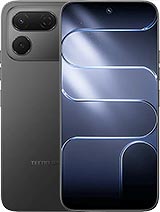
Spark 50 Pro
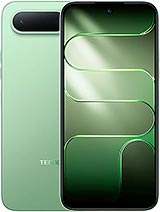
Spark 50
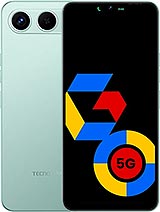
Spark Go 2
Galaxy M17e