Ulefone Armor Mini 20 Pro review
Buy this if you work in wet, dusty, or high-impact environments and need a phone that survives submersion and abuse without babying it. Skip it if you are a casual user looking for a compact all-rounder with a sharp screen and quick charging—a mainstream midrange phone at the same price will give you better everyday experience.
This review is based on Ulefone’s published specifications and public benchmark data for the Ulefone Armor Mini 20 Pro, and the rating is spec-based. GoSolo does not physically test devices; where we estimate real-world behaviour such as battery life or charge time, we say so. How we rate phones.
Overview
The Armor Mini 20 Pro is built for harsh environments first, with IP68/IP69K rating, MIL-STD-810H compliance, and a 2-meter drop rating that genuinely matter for field workers and outdoor types. The 720p display and wireless-only charging are trade-offs that feel deliberate—this phone prioritizes survival and battery life over the sharpness and charging speed expected in flagships.
Design & build
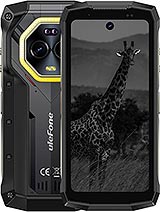
At 301g and 24.9mm thick, the Armor Mini 20 Pro is boxy and heavy—clearly engineered for impact and water resistance, not pocket friendliness. The IP68/IP69K rating is the real headline: it survives full submersion in 2 meters of water for 30 minutes and withstands high-pressure water jets, which puts it in utility-vehicle territory rather than everyday-phone territory. MIL-STD-810H compliance and a 2-meter drop rating add credibility to those claims. The 500-lumen dedicated flashlight is practical for construction sites, caves, or emergency response. The trade-off is obvious: there is no thinness, and it will not slip into a slim pocket. For someone who works outdoors, on a boat, or in wet environments, this ruggedness is not fluff—it is the entire point. For an urban commuter, it feels like overkill.
Display
The 4.7-inch IPS LCD runs at 720 x 1600 pixels (373 ppi), which is low by 2024 standards. Text, icons, and photos lack the clarity of a 1080p panel at the same size, and side-by-side with any modern flagship or even a midrange phone at EUR 300, the softness is immediately obvious. The 90Hz refresh rate keeps scrolling smooth, and Gorilla Glass Victus handles scratches and minor impacts. At 700 nits peak brightness, it is readable in bright sunlight. The trade-off is deliberate: lower resolution means lower power draw, which contributes to the extended battery life. For outdoor work where the phone spends time in direct sun and durability matters more than photograph-like sharpness, it is acceptable. For media consumption, it is a step backward.
Performance
The Mediatek Dimensity 6300 is a mainstream midrange chip: it handles messaging, social media, navigation, and light everyday tasks without stutter. Multitasking is smooth, and apps launch without delay. Light games run fine; demanding titles like PUBG or Genshin Impact will either throttle or require lower graphics settings. Video editing or photo processing apps will be slow. For the intended user—someone who needs a phone for calls, messages, GPS, and light apps in a tough package—it is sufficient. But at EUR 340, it is not a performance bargain compared to phones with faster chips in the same price band. The 8GB RAM and 256GB UFS 2.2 storage are solid, and the microSD slot (up to 2TB) means you are not locked into the base capacity if you need more space.
Software
Android 14 out of the box is current and expected. Ulefone typically ships minimal bloat, and the OS should work cleanly on a Dimensity 6300 without lag. Updates from Ulefone are inconsistent across its range, so do not expect years of major version jumps or swift security patches—this is a trade-off of the brand. For a rugged phone targeted at fieldwork, software longevity is less critical than hardware durability, but it is worth knowing upfront that you are not buying into Samsung or Apple's update cadence.
Camera
The 50MP main camera (f/2.0, 1/1.31") with night-vision mode is a genuine practical choice for a rugged phone. The large sensor and wide aperture gather light well in low-light conditions, which is useful on job sites or in natural settings where you need to capture detail without a flash. The 32MP selfie camera is ordinary. Video maxes out at 1440p@30fps, which is fine for clips and documentation but not cinema-grade. The dual-LED flash supports HDR and panorama. In daylight, the camera handles standard shots adequately; in shadow or indoors, the night-vision mode is a solid differentiator. It is not a flagship camera rig, but it is competent for the class and purpose.
Battery & charging
The 6200mAh battery paired with the efficient Dimensity 6300 delivers roughly 1.5 to 2 days on a charge with moderate mixed use (messaging, calls, light browsing). Heavy video or gaming will drain it to one day. For a rugged phone, this is competitive—the waterproof design and durability take priority over thinness, which would shrink the battery. The catch is charging: 15W wireless charging only, with no wired USB-C charging port. A full charge takes 2+ hours, and there is no way to grab a quick 15-minute boost before leaving for a site. If you rely on charging speed or top-ups during the day, this is a real friction point. Overnight charging at your desk or in your vehicle is the expected workflow.
Value & verdict-context
At EUR 340, the Armor Mini 20 Pro occupies a niche: it is expensive for a midrange phone with a 720p screen and Dimensity 6300, but cheap for an IP69K-rated rugged phone. If durability and submersion resistance are the primary need—construction, maritime, emergency response, outdoor expeditions—it delivers real value. If you want a well-rounded compact phone with a sharp screen and fast performance, this is not it. The 720p display and wireless-only charging are not oversights; they are intentional compromises made to prioritize toughness and battery longevity. The question is whether you need what it offers.
Verdict
Buy this if you work in wet, dusty, or high-impact environments and need a phone that survives submersion and abuse without babying it. Skip it if you are a casual user looking for a compact all-rounder with a sharp screen and quick charging—a mainstream midrange phone at the same price will give you better everyday experience.
- IP68/IP69K immersion and high-pressure jet rating, plus MIL-STD-810H durability means it handles submersion, mud, and drops without excuses
- 6200mAh battery with modest Dimensity 6300 draw stretches to roughly 1.5–2 days of mixed use, competitive for a compact rugged phone
- 50MP main camera with f/2.0 aperture and night-vision mode, useful in low light on a phone built for fieldwork
- 256GB storage plus microSD expansion (shared SIM slot) covers most users without lockup to a single capacity
- 720p resolution on a 4.7-inch screen leaves text and icons visibly softer than modern phones in this price range
- 15W wireless charging only—no wired port means 2+ hours to a full charge and no quick top-up before heading out
- Dimensity 6300 handles everyday tasks but struggles with demanding games and video editing, and it's a modest chip for EUR 340
Ulefone Armor Mini 20 Pro Key Specifications
The essentials at a glance. See the full spec sheet.
| Released | 2024, September |
|---|---|
| Display | 4.7 inches, 53.3 cm2 (~63.1% screen-to-body ratio), IPS LCD, 90Hz |
| Resolution | 720 x 1600 pixels, 20:9 ratio (~373 ppi density) |
| Chipset | Mediatek Dimensity 6300 (6 nm) |
| RAM & storage | 256GB 8GB RAM |
| Main camera | 50 MP, f/2.0, (wide), 1/1.31", 1.2µm Night vision camera |
| Selfie camera | 32 MP, f/2.5, (wide), 1/2.8", 0.8µm |
| Battery | 6200 mAh |
| Charging | Wireless: Charger power 15 W |
| Software | Android 14 |
| Dimensions | 133.5 x 63.3 x 24.9 mm (5.26 x 2.49 x 0.98 in) |
| Weight | 301 g (10.62 oz) |
| Durability | IP68/IP69K dust tight and water resistant (high pressure water jets; immersible up to 2m for 30 min) Drop resistant up to 2m MIL-STD-810H compliant 500 lumens dedicated flood flashlight |
| Network | GSM / CDMA / HSPA / CDMA2000 / LTE / 5G |
| NFC | Yes |
| USB | USB Type-C 2.0, OTG |
Ulefone Armor Mini 20 Pro FAQ
Common questions, answered from the spec sheet.
Does the Armor Mini 20 Pro support 5G?
Yes. The Armor Mini 20 Pro supports 5G networks.
What chipset does the Armor Mini 20 Pro use?
The Armor Mini 20 Pro runs on the Mediatek Dimensity 6300 (6 nm).
What display does the Armor Mini 20 Pro have?
A 4.7 inches, 53.3 cm2 (~63.1% screen-to-body ratio) IPS LCD, 90Hz, 720 x 1600 pixels, 20:9 ratio (~373 ppi density).
How big is the Armor Mini 20 Pro battery?
The Armor Mini 20 Pro has a 6200 mAh battery. Charging is rated at Wireless: Charger power 15 W.
Does the Armor Mini 20 Pro have NFC?
Yes, the Armor Mini 20 Pro has NFC.
Is the Armor Mini 20 Pro water resistant?
The Armor Mini 20 Pro carries a IP68/IP69K dust tight and water resistant (high pressure water jets; immersible up to 2m for 30 min) Drop resistant up to 2m MIL-STD-810H compliant 500 lumens dedicated flood flashlight rating.
Does the Armor Mini 20 Pro support a microSD card?
Yes, the Armor Mini 20 Pro supports expandable storage (microSDXC (uses shared SIM slot)).
Alternatives to consider
If the Armor Mini 20 Pro isn’t quite right, these are the closest calls.
Armor Mini 20T Pro
Armor 27 Pro

Armor 25T Pro
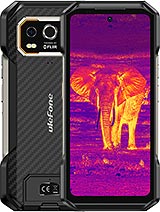
Armor 27T Pro
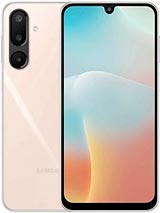
Galaxy M16 5G