Ulefone Armor Mini 20T Pro review
This phone is for outdoor workers and trade professionals who rely on durability (IP68/IP69K), a thermal camera (FLIR), and long battery life. If you want a sturdy everyday phone with a sharp screen and fast charging, look elsewhere.
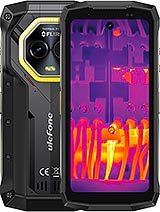
This review is based on Ulefone’s published specifications and public benchmark data for the Ulefone Armor Mini 20T Pro, and the rating is spec-based. GoSolo does not physically test devices; where we estimate real-world behaviour such as battery life or charge time, we say so. How we rate phones.
Overview
The Armor Mini 20T Pro is a compact rugged phone built for outdoor work and travel, not everyday users: it survives dunks and drops, includes a thermal camera, and runs Android 14, but the 720p screen and wireless-only 15W charging feel dated at this price. If durability and a thermal imager matter to you and screen resolution doesn't, it's a solid choice; otherwise, mainstream rivals offer sharper displays and faster charging for the same money.
Design & durability
At 301g and 24.9mm thick, this is a chunky phone—roughly the heft of a rugged tool, which is the point. The IP68/IP69K rating and MIL-STD-810H compliance aren't decoration: the Armor Mini 20T Pro genuinely survives 2-meter dunks in freshwater for 30 minutes, resists high-pressure water jets, and drops from 2 meters onto concrete without flinching. For electrical contractors, plumbers, and site managers, that durability is the entire value proposition. The 500-lumen dedicated flood flashlight is practical in dark crawl spaces or job sites, not marketing theater. The Mohs level 4 screen protection is modest—scratches happen—but the upside is repairability and replacement cost, which matter if you actually work rough.
Display
The 4.7-inch IPS LCD runs at 720×1600 pixels and 90Hz. The 90Hz refresh makes scrolling and app-switching visibly smoother, and 700 nits peak brightness ensures readability in direct sun on the job. But 373ppi on this screen size means fine text is grainy; it is the kind of resolution you stop noticing once you adjust, but compared to rivals at 360 EUR offering 1080p or better, it is a gap. For spreadsheets, CAD drawings, or detailed text work, you will squint. The trade-off is intentional—shrinking the resolution lowers power draw and cost, both sensible choices for a phone that prioritizes toughness and runtime over visual polish.
Performance
The Dimensity 6300 paired with 8GB RAM and Mali-G57 GPU is mainstream midrange chipset work. Maps, web browsing, email, and messaging run smoothly without lag. Demanding 3D games will stutter on medium settings and drop frames on high, so this is not a gaming phone. The 432K AnTuTu score is in line with what midrange 2024 phones deliver—fast enough to do the job, not impressive on paper. For the use cases this phone targets (navigation, calls, messaging, job-site documentation), the performance is adequate. Heavy multitasking or app-hopping does not cause frustration, just patience if you try to push it.
Thermal camera
The FLIR thermal module (160×120 pixels, 8.7Hz) is the technical standout. Electricians use it to spot overheating wiring before fire risk; plumbers hunt leaks in walls; building inspectors find insulation gaps and moisture. This is a professional tool, not a parlor trick. At this price, and in this form factor, you will not find better thermal imaging. The trade-off is that the image is chunky (160×120 is low res) and the 8.7Hz refresh is glacial for real-time scanning, but for still-frame diagnostics, it works. If you don't do electrical, plumbing, or HVAC work, this feature is wasted money.
Software & connectivity
Android 14 is current and should bring several years of security updates. 5G connectivity spans the major bands and regions, and dual nano-SIM lets you carry two numbers (e.g., work and personal, or two regional carriers). WiFi 6 is absent—you get dual-band 802.11ac, which is fine for ordinary browsing but slower than newer rivals. NFC is here for mobile payments. FM radio is a nice-to-have for offline music or site alerts. GPS plus GALILEO, GLONASS, BDS, and QZSS gives you strong lock-on in GPS-challenged urban canyons and construction sites.
Camera
The 50MP main camera (f/2.0, 1/1.31") captures 1440p video at 30fps. Daylight photos are decent—f/2.0 aperture and large sensor handle outdoor light well. Low-light performance is average; you get blur and noise once the sun drops. The 32MP selfie camera (f/2.5, 1/2.8") handles video calls adequately. Video at 1440p is clear but not cinematic; 30fps is the norm at this spec tier. For job-site documentation and video calls, this is workable. There is no ultrawide, telephoto, or macro mode listed, so you get a single focal length. If your workflow is photos and not a creative pursuit, it is enough.
Battery & charging
The 6200mAh battery under moderate screen time (texts, calls, social media) lasts about 36 to 48 hours—solid longevity. Heavy use (video, gaming, tethering) will drain it faster. The catch is charging: wireless only at 15W, with no wired charger in the box. A 15W wireless pad takes 2 to 3 hours to refill from empty, which is slow by 2024 standards. Most rivals at this price point offer wired charging at 30W or higher, and even lower-cost phones often include both wired and wireless options. For a rugged phone sold to professionals who need reliability, the absence of wired charging feels like a convenience cut you would not expect.
Value & verdict
At about 360 EUR, the Armor Mini 20T Pro is not cheap, and the spec sheet admits trade-offs: 720p screen, midrange chip, wireless charging only. The justification is durability and the thermal camera. If you are an electrician, plumber, inspector, or outdoor worker for whom a rugged phone with thermal imaging is a tool—not a luxury—the price and compromises make sense. For a casual user or someone who wants both durability and flagship-grade performance, rivals at this cost point offer sharper screens, faster chips, and wired charging. The Armor Mini 20T Pro is purpose-built and honest about what it is; it simply is not for everyone.
Verdict
This phone is for outdoor workers and trade professionals who rely on durability (IP68/IP69K), a thermal camera (FLIR), and long battery life. If you want a sturdy everyday phone with a sharp screen and fast charging, look elsewhere.
- IP68/IP69K rating and MIL-STD-810H compliance make it genuinely rugged—survives 2-meter freshwater submersion and high-pressure jets, plus 2-meter drops without coddling
- Thermal camera (FLIR, 160×120, 8.7Hz) is genuinely useful for electrical troubleshooting, water damage assessment, and building inspection; this is not a gimmick for the trade users this phone targets
- 5G bands and dual nano-SIM setup cover most regions and let you run two numbers simultaneously
- 6200mAh battery lasts roughly 36 to 48 hours on moderate use (texts, calls, social media), which is respectable longevity
- 15W wireless charging only, with no wired charger included—taking 2 to 3 hours to fully charge from empty is slow by 2024 standards, and wireless-only limits convenience in the field
- 720p display on a 4.7-inch screen yields sharp text that isn't a strength and feels like a cost-cut for the price tier; 90Hz smooths scrolling but doesn't fix the resolution shortfall
- Dimensity 6300 and Mali-G57 handle everyday tasks smoothly but stutter under demanding 3D games on medium settings, and the 432K AnTuTu score is solidly midrange, not aspirational
Ulefone Armor Mini 20T Pro Key Specifications
The essentials at a glance. See the full spec sheet.
| Released | 2024, September 03 |
|---|---|
| Display | 4.7 inches, 53.3 cm2 (~63.1% screen-to-body ratio), IPS LCD, 90Hz |
| Resolution | 720 x 1600 pixels, 20:9 ratio (~373 ppi density) |
| Chipset | Mediatek Dimensity 6300 (6 nm) |
| RAM & storage | 256GB 8GB RAM |
| Main camera | 50 MP, f/2.0, (wide), 1/1.31", 1.2µm Thermal camera by Flir, 160x120 px, 8.7Hz, 12μm |
| Selfie camera | 32 MP, f/2.5, (wide), 1/2.8", 0.8µm |
| Battery | 6200 mAh |
| Charging | Wireless: Charger power 15 W |
| Software | Android 14 |
| Dimensions | 133.5 x 63.3 x 24.9 mm (5.26 x 2.49 x 0.98 in) |
| Weight | 301 g (10.62 oz) |
| Durability | IP68/IP69K dust tight and water resistant (high pressure water jets; immersible up to 2m for 30 min) Drop resistant up to 2m MIL-STD-810H compliant 500 lumens dedicated flood flashlight |
| Network | GSM / CDMA / HSPA / CDMA2000 / LTE / 5G |
| NFC | Yes |
| USB | USB Type-C 2.0, OTG |
Ulefone Armor Mini 20T Pro FAQ
Common questions, answered from the spec sheet.
Does the Armor Mini 20T Pro support 5G?
Yes. The Armor Mini 20T Pro supports 5G networks.
What chipset does the Armor Mini 20T Pro use?
The Armor Mini 20T Pro runs on the Mediatek Dimensity 6300 (6 nm).
What display does the Armor Mini 20T Pro have?
A 4.7 inches, 53.3 cm2 (~63.1% screen-to-body ratio) IPS LCD, 90Hz, 720 x 1600 pixels, 20:9 ratio (~373 ppi density).
How big is the Armor Mini 20T Pro battery?
The Armor Mini 20T Pro has a 6200 mAh battery. Charging is rated at Wireless: Charger power 15 W.
Does the Armor Mini 20T Pro have NFC?
Yes, the Armor Mini 20T Pro has NFC.
Is the Armor Mini 20T Pro water resistant?
The Armor Mini 20T Pro carries a IP68/IP69K dust tight and water resistant (high pressure water jets; immersible up to 2m for 30 min) Drop resistant up to 2m MIL-STD-810H compliant 500 lumens dedicated flood flashlight rating.
Does the Armor Mini 20T Pro support a microSD card?
Yes, the Armor Mini 20T Pro supports expandable storage (microSDXC (uses shared SIM slot)).
Alternatives to consider
If the Armor Mini 20T Pro isn’t quite right, these are the closest calls.
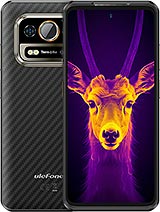
Armor 25T Pro
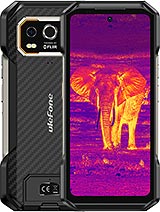
Armor 27T Pro
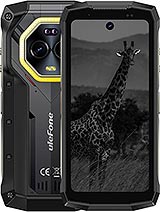
Armor Mini 20 Pro
Armor X16 Pro
Galaxy M16 5G