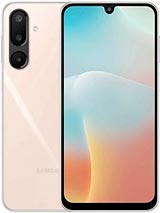
Vivo iQOO Z9x 5G review
The Z9x suits anyone whose day centers on apps, feeds, and video who values a phone that stays charged longer than the competition. Skip it if you need water resistance that survives accidents, fast charging for daily quick-tops, or camera range beyond one focal length.

This review is based on Vivo’s published specifications and public benchmark data for the Vivo iQOO Z9x 5G, and the rating is spec-based. GoSolo does not physically test devices; where we estimate real-world behaviour such as battery life or charge time, we say so. How we rate phones.
Overview
The iQOO Z9x trades outright speed for stamina: a tall 6.72-inch screen with 120Hz smoothness, a 6000mAh battery that genuinely stretches past a day, and 44W charging come together in a 199g frame at about €160. It is built for scrolling and content consumption, not gaming, and skips water resistance that matters when you drop it near water.
Design & build
At 199g with 8mm thickness, the Z9x feels light in hand and slips easily into a pocket. The build is straightforward: glass front, plastic back and frame—no surprises for the price. The narrow 76mm width is a real win for one-handed reach on a 6.72-inch phone, though it makes landscape video playback and gaming feel a little cramped. IP64 is honest water resistance: it handles splashes and dust during daily carry, but do not mistake it for submersion protection. Drop this phone near a sink and you are taking a real risk. For this price, it is functional enough, though the plastic back shows fingerprints and will pick up scuffs faster than a glass back would.
Display
The 6.72-inch IPS LCD runs at 1080p and 393ppi, which is sharp enough for a midrange phone but not dense enough to hide individual pixels if you squint. The 120Hz refresh rate is where it stands out—scrolling through apps, feeds, and web pages feels noticeably smoother than a 60Hz panel, and for media consumption, that matters more than raw pixel count. Peak brightness hits 1000 nits, which means outdoor sunlight readability is decent without being exceptional; you will not struggle to see the screen in bright sun, but reflections can still get in the way. The 20:9 ratio leans tall rather than wide, so video and games stretch vertically, which suits social media but feels less cinematic for YouTube or Netflix. IPS colours are flat compared to AMOLED but consistent and reliable across angles.
Performance
The Snapdragon 6 Gen 1 with up to 12GB RAM handles daily work without strain: email, messaging, browsing, and even Netflix streaming run smoothly. Medium-load games like Genshin Impact are playable on lower settings or with frame drops you will feel. Demanding titles like Call of Duty Mobile or BGMI ask for reduced graphics to stay fluid. App startup is quick, multitasking does not stutter, and the phone does not noticeably slow down over time. This is not a machine for 3D gaming ambition or heavy video editing on the phone itself, but it does what most users ask of a device at this price. The gap between the 4GB base RAM and the 8–12GB options is real if you keep many apps open; 6GB or 8GB is the practical sweet spot.
Software
Funtouch OS 14 (in international markets) layers Vivo's customizations on top of Android 14. The interface is clean and intuitive with a side-mounted fingerprint sensor that is quick to unlock. Bloatware is moderate compared to some rivals—you get a handful of preinstalled apps that you cannot uninstall, but nothing excessive. Updates have been timely in the past. One trade-off: you are not running vanilla Android, so there is a small performance overhead and occasional quirks in how features behave compared to stock, but nothing that disrupts daily use. If you strongly prefer pure Android, this is a reason to look elsewhere, but most users will find Funtouch transparent enough to ignore.
Camera
The 50MP main sensor with f/1.8 aperture and PDAF captures sharp, well-lit photos in daylight and handles low light better than you might expect for this price. Colours are neutral, detail is crisp, and the wide-angle framing suits landscapes and groups. In shadow, noise creeps in faster than a flagship, and the phone does not have an ultrawide or telephoto lens to cover other framing needs, so every shot relies on the one wide sensor. Video at 4K with gyro-EIS is stabilized well enough for handheld recording, though bitrate is compressed enough to show in fine detail. The 8MP selfie is adequate for video calls and casual selfies but lacks the sharpness for enlargement or printing. Overall, this is a single-lens setup that covers the core use case well but does not inspire creative ambition beyond that.
Battery & charging
The 6000mAh battery is the Z9x's strongest asset. Light to moderate use—social media, messages, browsing, music—stretches comfortably past 24 hours, and many users will see a second day. Heavy video streaming or gaming drains it in under a day, so endurance is not infinite, but it sits well above the one-day average for midrange phones. The 44W charger (not included in the box, but available separately) tops it in about 50–60 minutes from empty, which is reasonable but slower than rivals pushing 80W or 100W at this price. Fast wireless charging is absent. If you charge overnight, the battery drain during sleep is minimal, so the Z9x is a phone that rewards low-intensity usage with real multi-day stretches.
Value & verdict
At about €160, the Z9x occupies an interesting middle ground: it is not the cheapest midrange phone, but it is not trying to be a budget flagship either. You are paying mainly for the battery, the 120Hz screen, and the overall refinement of the form factor. Rivals in this range often prioritize raw performance or go for extreme screen size; the Z9x instead picks battery endurance and scrolling smoothness, which is a valid choice if that is what your day demands. The trade-offs are clear: no ultrawide, only IP64 splash resistance, last-gen charging speeds, and a plastic back. If you need durability against water, fast charging, or camera versatility, the money might be better spent elsewhere. If you value a phone that lasts through an active day and screens that feel fluid, the Z9x delivers on that promise without hype.
Verdict
The Z9x suits anyone whose day centers on apps, feeds, and video who values a phone that stays charged longer than the competition. Skip it if you need water resistance that survives accidents, fast charging for daily quick-tops, or camera range beyond one focal length.
- 6000mAh battery genuinely stretches beyond one full day on moderate use, a practical advantage over single-day rivals at this price
- 120Hz IPS LCD keeps scrolling and everyday interaction smooth without the AMOLED cost or battery drain overkill
- Compact 76mm width makes the large 6.72-inch screen usable one-handed, a real convenience most large-screen phones abandon
- IP64 splash resistance only—drop it near water and you are taking a real risk; no submersion protection like rivals at €200+
- 44W charging is slow for 2024: rivals push 80W or 100W at this price, so a full battery takes an hour when others charge in 20–30 minutes
- Single 50MP camera with no ultrawide or zoom; versatile enough for basics but limiting compared to competitors offering 2–3 lenses
Vivo iQOO Z9x 5G Key Specifications
The essentials at a glance. See the full spec sheet.
| Released | 2024, April 24 |
|---|---|
| Display | 6.72 inches, 108.8 cm2 (~86.4% screen-to-body ratio), IPS LCD, 120Hz, 1000 nits (peak) |
| Resolution | 1080 x 2408 pixels, 20:9 ratio (~393 ppi density) |
| Chipset | Qualcomm SM6450 Snapdragon 6 Gen 1 (4 nm) |
| RAM & storage | 128GB 4GB RAM, 128GB 6GB RAM, 128GB 8GB RAM, 256GB 8GB RAM, 256GB 12GB RAM |
| Main camera | 50 MP, f/1.8, (wide), 1/1.95", 0.8µm, PDAF Auxiliary lens |
| Selfie camera | 8 MP, f/2.1, (wide) |
| Battery | 6000 mAh |
| Software | Android 14, Funtouch OS 14 (International), OriginOS (China) |
| Dimensions | 165.7 x 76 x 8 mm (6.52 x 2.99 x 0.31 in) |
| Weight | 199 g (7.05 oz) |
| Build | Glass front, plastic back, plastic frame |
| Durability | IP64 dust tight and water resistant (water splashes) |
| Network | GSM / CDMA / HSPA / LTE / 5G |
| NFC | Yes (market/region dependent) |
| USB | USB Type-C 2.0, OTG |
Vivo iQOO Z9x 5G FAQ
Common questions, answered from the spec sheet.
Does the iQOO Z9x 5G support 5G?
Yes. The iQOO Z9x 5G supports 5G networks.
What chipset does the iQOO Z9x 5G use?
The iQOO Z9x 5G runs on the Qualcomm SM6450 Snapdragon 6 Gen 1 (4 nm).
What display does the iQOO Z9x 5G have?
A 6.72 inches, 108.8 cm2 (~86.4% screen-to-body ratio) IPS LCD, 120Hz, 1000 nits (peak), 1080 x 2408 pixels, 20:9 ratio (~393 ppi density).
How big is the iQOO Z9x 5G battery?
The iQOO Z9x 5G has a 6000 mAh battery.
Does the iQOO Z9x 5G have NFC?
Yes, the iQOO Z9x 5G has NFC.
Is the iQOO Z9x 5G water resistant?
The iQOO Z9x 5G carries a IP64 dust tight and water resistant (water splashes) rating.
Does the iQOO Z9x 5G support a microSD card?
Yes, the iQOO Z9x 5G supports expandable storage (microSDXC (uses shared SIM slot)).
Alternatives to consider
If the iQOO Z9x 5G isn’t quite right, these are the closest calls.
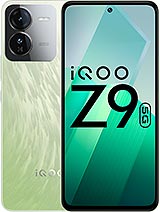
iQOO Z9 5G

V40 Lite 4G

T3x 5G

Y100 4G
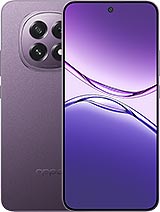
F29 5G