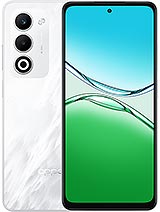
Vivo Y200i review
The Y200i suits everyday users who prioritize screen brightness and battery endurance over gaming or premium materials. Skip it if you demand a powerful processor for gaming or expect flagship-grade durability from the chassis.
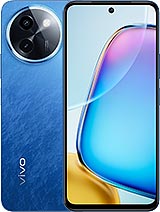
This review is based on Vivo’s published specifications and public benchmark data for the Vivo Y200i, and the rating is spec-based. GoSolo does not physically test devices; where we estimate real-world behaviour such as battery life or charge time, we say so. How we rate phones.
Overview
The Y200i is a budget phone that succeeds where it counts: a large, bright display, a 6000 mAh battery that sips power, and a snappy main camera for the price. It's held back by its entry-level processor and plastic build, but delivers genuine value for everyday users who won't demand heavy gaming.
Design & build
At 199 g and 8 mm thick, the Y200i feels neat in hand and doesn't pretend to be metal or glass—the plastic frame and back are honest choices at this price. The weight sits comfortably for a 6.72-inch phone; it doesn't fatigue your wrist over a day of use. IP64 protection means dust and water splashes won't kill it, though a dunking will. The side-mounted fingerprint sensor works reliably, and the overall fit and finish feel coherent rather than cheap, though the plastic does pick up scratches more readily than a metal frame would. This is a phone built for durability over style, and that's the right call for the market.
Display
The 6.72-inch, 1080p IPS LCD is the Y200i's biggest win. The 120Hz refresh keeps scrolling fluid in everyday apps and web browsing, and the 1000-nit peak brightness punches through outdoor sunlight without making you squint. At 393 ppi, text stays crisp. The 20:9 aspect ratio eats into video letterboxing, so streaming feels less cramped than on squatter phones. The downside is inherent to IPS: blacks look greyish, colours shift noticeably when you tilt the screen, and there's no local dimming or the rich contrast an OLED would bring. For a 180 EUR phone, though, this screen outpunches rivals; you're getting brightness and refresh that used to live only in flagships, even if the panel tech is dated.
Performance
The Snapdragon 4 Gen 2 is entry-level—it's designed for calls, messages, social apps, light web, and YouTube, and it does all that without stutter. Everyday multitasking feels brisk thanks to decent RAM configurations (8 GB base, 12 GB on higher tiers) and fast UFS 2.2 storage. Gaming is where you hit the ceiling. Demanding titles like Call of Duty or PUBG on high settings will drop frames or force you to compromise on visuals. Lighter, older games run fine. If your use is messaging, email, news, and casual apps, the Snapdragon 4 Gen 2 is enough; if you plan to game seriously, you're swimming upstream.
Camera
The 50MP main sensor with f/1.8 aperture and PDAF is the standout. In daylight it captures sharp, detailed photos without the oversharpening that plagues some budget phones, and the wide aperture gathers light well in dim rooms or during the golden hour. Night mode holds up, though it leans on computational assistance rather than raw sensor strength. The auxiliary depth sensor is a placeholder—don't expect convincing bokeh; the phone uses software trickery instead. The 8MP selfie is functional for video calls and casual snaps but won't win you any portrait contests. Video maxes at 1080p at 30 fps, which is behind what some rivals now offer at this price point, but the stabilization works and colour grading stays steady. For a budget phone, this camera punches harder than the price suggests.
Battery & charging
The 6000 mAh battery is a genuine advantage. With moderate use—email, messaging, some video, social browsing—expect about 1.5 to 2 days without charging. Heavy video streaming or gaming brings you down to a single day, but that's honest for the workload. The 44W wired charging reaches 50 percent in 36 minutes, so you can top up before leaving the house; a full charge takes roughly 70–80 minutes from empty. No wireless charging, but at this price that's standard omission. The large capacity means you're rarely hunting for an outlet, which counts for a lot in markets with inconsistent power infrastructure.
Software
OriginOS 4 on top of Android 14 is Vivo's custom layer, and it lands somewhere between helpful and intrusive. The interface is responsive and doesn't come bloated with garbage third-party apps. Update support and how long security patches land are unknowns at launch, so that's a gamble you're taking—budget phones often disappoint here. If you prefer stock Android, this won't feel native, but it's not so heavy-handed that it renders the phone frustrating.
Value & verdict
At around 180 EUR, the Y200i slots into the budget-practical tier alongside phones from Xiaomi, Realme, and Samsung's own J-series. What sets it apart is the combination of a bright, large screen and a genuinely large battery; you're not trading one for the other. The main camera is solid for the price, and the phone doesn't feel flimsy or outmatched by its rivals. The trade-offs are real: the Snapdragon 4 Gen 2 won't impress gamers, the plastic body isn't premium, and there's no expandable storage. But for someone who values screen time between charges and a phone that won't feel outdated in six months, the Y200i delivers.
Verdict
The Y200i suits everyday users who prioritize screen brightness and battery endurance over gaming or premium materials. Skip it if you demand a powerful processor for gaming or expect flagship-grade durability from the chassis.
- 6000 mAh battery delivers genuine 1.5–2 day endurance on moderate use, unusual for this price
- 120Hz IPS LCD with 1000 nits peak brightness makes the large 6.72-inch screen actually usable in sunlight and scrolling fluid
- 50MP main camera with f/1.8 and PDAF captures sharp daylight shots and handles low light better than typical budget sensors
- Snapdragon 4 Gen 2 entry-level chip struggles with demanding games and multitasking under real load
- Plastic build scratches and scuffs more readily than metal or glass, and IP64 won't survive submersion
- 1080p video recording at 30 fps lags rivals now pushing 1080p 60 fps or higher resolution at similar prices
Vivo Y200i Key Specifications
The essentials at a glance. See the full spec sheet.
| Released | 2024, April 21 |
|---|---|
| Display | 6.72 inches, 108.8 cm2 (~86.4% screen-to-body ratio), IPS LCD, 120Hz, 1000 nits (peak) |
| Resolution | 1080 x 2408 pixels, 20:9 ratio (~393 ppi density) |
| Chipset | Qualcomm SM4450 Snapdragon 4 Gen 2 (4 nm) |
| RAM & storage | 256GB 8GB RAM, 256GB 12GB RAM, 512GB 12GB RAM |
| Main camera | 50 MP, f/1.8, (wide), PDAF Auxiliary lens |
| Selfie camera | 8 MP, f/2.1, (wide) |
| Battery | 6000 mAh |
| Charging | 44W wired, 50% in 36 minReverse wired |
| Software | Android 14, OriginOS 4 |
| Dimensions | 165.7 x 76 x 8 mm (6.52 x 2.99 x 0.31 in) |
| Weight | 199 g (7.02 oz) |
| Build | Glass front, plastic frame, plastic back |
| Durability | IP64 dust tight and water resistant (water splashes) |
| Network | GSM / CDMA / HSPA / LTE / 5G |
| NFC | No |
| USB | USB Type-C 2.0, OTG |
Vivo Y200i FAQ
Common questions, answered from the spec sheet.
Does the Y200i support 5G?
Yes. The Y200i supports 5G networks.
What chipset does the Y200i use?
The Y200i runs on the Qualcomm SM4450 Snapdragon 4 Gen 2 (4 nm).
What display does the Y200i have?
A 6.72 inches, 108.8 cm2 (~86.4% screen-to-body ratio) IPS LCD, 120Hz, 1000 nits (peak), 1080 x 2408 pixels, 20:9 ratio (~393 ppi density).
How big is the Y200i battery?
The Y200i has a 6000 mAh battery. Charging is rated at 44W wired, 50% in 36 minReverse wired.
Does the Y200i have NFC?
No, the Y200i does not list NFC support.
Is the Y200i water resistant?
The Y200i carries a IP64 dust tight and water resistant (water splashes) rating.
Does the Y200i support a microSD card?
No, the Y200i does not support expandable storage.
Does the Y200i have a headphone jack?
Yes, the Y200i has a 3.5mm headphone jack.
Alternatives to consider
If the Y200i isn’t quite right, these are the closest calls.
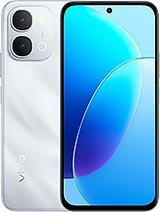
Y500i
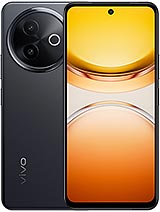
Y300i
V40 SE
Y300
Galaxy M16 5G