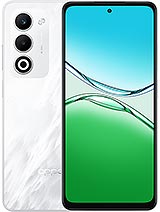
Vivo Y300 review
The Y300 suits someone who wants a large, bright screen and all-day battery for everyday messaging, social media, and light content consumption on a tight budget. Skip it if you game seriously, create video content, or need sustained performance for demanding apps—a mid-range Snapdragon 6-series phone will feel significantly faster and more capable for only a modest price premium."
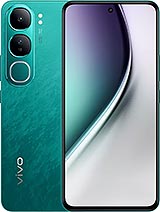
This review is based on Vivo’s published specifications and public benchmark data for the Vivo Y300, and the rating is spec-based. GoSolo does not physically test devices; where we estimate real-world behaviour such as battery life or charge time, we say so. How we rate phones.
Overview
The Vivo Y300 is a large-screened budget phone with a genuinely bright AMOLED display and responsive 120Hz refresh, 5G connectivity, and fast 80W charging—all unusually generous for its price tier. The trade-off is a dated Snapdragon 4 Gen 2 that struggles with demanding apps and games, video maxes out at 1080p30, and you forfeit dual SIM if you want expandable storage.
Design & build
The Y300 is slim and light at 7.8mm thick and 188g, with a glass front, plastic back, and plastic frame—a straightforward budget sandwich. The weight distribution feels balanced in hand, and the 6.67-inch body doesn't feel oversized despite the large screen. IP64 rating handles dust and water splashes from sink spray or light rain, but it is not submersion-proof and won't survive heavy downpour or pool time. Three color options (Titanium Silver, Carbon Black, Emerald Green) are available, though the plastic rear will show fingerprints and won't feel as solid as an aluminum frame.
Display
This is the Y300's calling card. A 6.67-inch AMOLED at 1080 x 2400 pixels (395 ppi) doesn't break records for sharpness, but at arm's length text and icons stay crisp enough. What stands out is the 120Hz refresh, which makes scrolling and app switching noticeably smoother than standard 60Hz displays at this price. The real strength is brightness: 1800 nits peak means you can read it comfortably in direct sunlight, and the 1200 nit high brightness mode maintains readability during outdoor use. For a budget phone, this display punches well above its weight in everyday usability. The 86.7% screen-to-body ratio also leaves minimal bezel, giving you more screen real estate than older rivals.
Performance
The Snapdragon 4 Gen 2 is entry-level silicon, and it shows. It handles everyday tasks—messaging, social media, light browsing—without stutter, and casual games like Candy Crush run smoothly. Demanding 3D games and streaming apps that require heavy decoding will either choke or force graphical compromises; expect 30 fps in heavy games rather than 60+. The Adreno 613 GPU is not designed for gaming performance, so anyone seeking a gaming phone should look elsewhere. With 8GB of RAM, multitasking is acceptable for typical use, but do not expect this to rival mid-range phones from last year. For someone using the phone primarily for calls, messages, and social browsing, the chipset is adequate; for anything more demanding, the limitations become real.
Software
The Y300 ships with Android 14 and Vivo's Funtouch 14 overlay. Funtouch is known for aggressive customization, which translates to a fuller feature set but also more bloat and system apps than stock Android. Performance is generally smooth on everyday tasks, though the aging Snapdragon 4 Gen 2 will struggle if you run demanding apps in the background. Updates may arrive slower than flagship models, and software support duration is not yet clearly stated. The upside is that Vivo's customizations include gesture controls, app vault organization, and other quality-of-life refinements that some users appreciate.
Camera
The 50MP main sensor with an f/1.8 aperture and large 1/1.95-inch size captures decent daylight shots with good detail and handles low light better than smaller sensors. PDAF ensures fast autofocus. The ring-LED flash helps in very dark scenes. However, there is no ultrawide lens, no zoom, and no night mode—features now standard in the mid-range. Video is capped at 1080p30, which means pans look choppy and slow-motion recording is not possible. The 32MP selfie camera is adequate for video calls and social media posts. For casual photography and social sharing, the main camera delivers satisfactory results; professional or video-heavy users will be disappointed by the lack of flexibility and video frame rates.
Battery & charging
The 5000 mAh battery comfortably lasts a full day of moderate use—about 18 to 22 hours of mixed browsing, messaging, and media playback. Heavy video streaming will drain it faster, but for typical tasks the battery is a genuine strength at this price. The 80W wired charging is genuinely quick: reaching 80 percent in about 30 minutes and full charge in roughly 35 to 40 minutes with the supplied charger. There is no wireless charging, which is standard to omit at this price. The combination of large capacity and fast charging makes this phone practical if you forget to charge overnight occasionally.
Connectivity & storage
5G connectivity is present where available, along with LTE and Wi-Fi 5 (802.11ac), which is adequate but not cutting-edge—Wi-Fi 6 is now standard in mid-range phones. Dual nano-SIM lets you carry two carriers. Storage comes as 128GB or 256GB with 8GB RAM; microSDXC expansion is supported but uses the shared nano-SIM slot, forcing a choice between dual SIM and expandable storage. GPS and GALILEO support is solid for navigation. Bluetooth 5.0 handles wireless audio and accessories. USB Type-C 2.0 is standard, though Type 3.0 or faster would have been welcome. No NFC or FM radio, which are not critical at this tier but limit versatility.
Verdict
The Y300 suits someone who wants a large, bright screen and all-day battery for everyday messaging, social media, and light content consumption on a tight budget. Skip it if you game seriously, create video content, or need sustained performance for demanding apps—a mid-range Snapdragon 6-series phone will feel significantly faster and more capable for only a modest price premium."
- 120Hz AMOLED display with 1800 nits peak brightness—makes outdoor readability and scrolling smooth in a sub-300 EUR phone
- 80W fast charging reaches 80% in 30 minutes, plus 5000mAh battery delivers a full day of moderate use
- 5G connectivity and dual nano-SIM support at this price, plus large bright screen makes it practical for media and navigation
- Thin and light at 7.8mm and 188g, with decent build quality for plastic construction
- Snapdragon 4 Gen 2 is entry-level; struggles with demanding games and heavy apps, limiting future-proofing
- Video maxes out at 1080p30, no ultrawide camera, no zoom—very limited for content creators or anyone wanting recording flexibility
- microSD slot shares the nano-SIM slot, forcing you to choose between expandable storage and dual SIM
Vivo Y300 Key Specifications
The essentials at a glance. See the full spec sheet.
| Released | 2024, November 21 |
|---|---|
| Display | 6.67 inches, 107.4 cm2 (~86.7% screen-to-body ratio), AMOLED, 1B colors, 120Hz, 1200 nits (HBM), 1800 nits (peak) |
| Resolution | 1080 x 2400 pixels, 20:9 ratio (~395 ppi density) |
| Chipset | Qualcomm SM4450 Snapdragon 4 Gen 2 (4 nm) |
| RAM & storage | 128GB 8GB RAM, 256GB 8GB RAM |
| Main camera | 50 MP, f/1.8, (wide), 1/1.95", 0.8µm, PDAF Auxiliary lens |
| Selfie camera | 32 MP, f/2.5, (wide) |
| Battery | 5000 mAh |
| Charging | 80W wired, 80% in 30 minReverse wired |
| Software | Android 14, Funtouch 14 |
| Dimensions | 163.2 x 75.9 x 7.8 mm or 8.0 mm |
| Weight | 188 g or 190 g (6.63 oz) |
| Build | Glass front, plastic back, plastic frame |
| Durability | IP64 dust tight and water resistant (water splashes) |
| Network | GSM / HSPA / LTE / 5G |
| NFC | No |
| USB | USB Type-C 2.0, OTG |
Vivo Y300 FAQ
Common questions, answered from the spec sheet.
Does the Y300 support 5G?
Yes. The Y300 supports 5G networks.
What chipset does the Y300 use?
The Y300 runs on the Qualcomm SM4450 Snapdragon 4 Gen 2 (4 nm).
What display does the Y300 have?
A 6.67 inches, 107.4 cm2 (~86.7% screen-to-body ratio) AMOLED, 1B colors, 120Hz, 1200 nits (HBM), 1800 nits (peak), 1080 x 2400 pixels, 20:9 ratio (~395 ppi density).
How big is the Y300 battery?
The Y300 has a 5000 mAh battery. Charging is rated at 80W wired, 80% in 30 minReverse wired.
Does the Y300 have NFC?
No, the Y300 does not list NFC support.
Is the Y300 water resistant?
The Y300 carries a IP64 dust tight and water resistant (water splashes) rating.
Does the Y300 support a microSD card?
Yes, the Y300 supports expandable storage (microSDXC (uses shared SIM slot)).
Does the Y300 have a headphone jack?
No, the Y300 does not have a 3.5mm headphone jack.
Alternatives to consider
If the Y300 isn’t quite right, these are the closest calls.
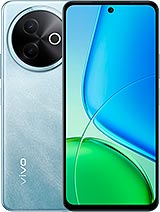
Y39
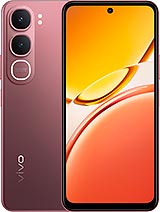
Y31
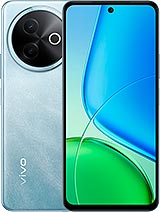
Y39 5G
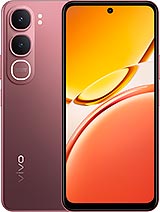
Y31 5G
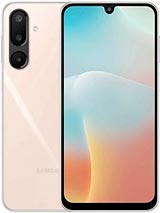
Galaxy M16 5G