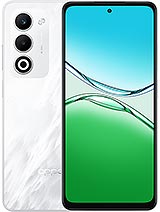
Vivo Y300 5G review
The Y300 suits people in 5G markets who prioritize a bright, smooth screen and all-day battery over gaming and camera richness. Skip it if you demand a sharp display at this size, hope to play demanding games, or need fast charging.
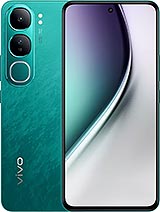
This review is based on Vivo’s published specifications and public benchmark data for the Vivo Y300 5G, and the rating is spec-based. GoSolo does not physically test devices; where we estimate real-world behaviour such as battery life or charge time, we say so. How we rate phones.
Overview
The Y300 is a sensible mid-range 5G phone that shines on screen brightness and battery life but stumbles where it counts: a 1080p display at 6.67 inches feels soft, the Snapdragon 4 Gen 2 can't handle demanding games, and there's no word on charging speed despite the 5000mAh battery. For light users who need a big, bright screen and all-day stamina, it delivers; for anyone wanting real gaming or photo punch, look elsewhere.
Design & Build
The Y300 is slim at 7.8mm and light at 188g, favouring sleekness over ruggedness. Glass front, plastic back and frame keep costs down, and the IP64 rating means it shrugs off dust and splash but won't survive submersion. Dual nano-SIM and a shared microSD slot give flexibility without a physical tray trade-off. The design feels unremarkable but functional for its price; it won't turn heads and isn't meant to.
Display
The 1800-nit AMOLED screen is this phone's strongest asset. Peak brightness keeps content readable in direct sunlight where cheaper LCDs fade, and the 120Hz refresh makes scrolling and transitions smooth instead of janky. Colours are punchy on AMOLED, and the 6.67-inch footprint gives scrolling room. The weakness is resolution: 1080p at this screen size yields roughly 395ppi, which is noticeably soft compared to the 2K or higher you get on competitors. Text at close range and fine details in photos lack crispness. For video streaming and social media it is fine; for photo editing or reading small type it falls short.
Performance
The Snapdragon 4 Gen 2 is entry-level silicon with twin 2.2GHz Cortex-A78 cores and six efficiency cores, paired with the Adreno 613 GPU. Messaging, social apps, and light browsing run without lag, and casual games like puzzles or turn-based strategy hit 60fps easily. Demanding titles like PUBG or Genshin Impact will force you to lower graphics or accept 30fps and frame drops. For streaming video, email, and everyday tasks it is adequate; for gaming ambitions it is a non-starter. The 8GB RAM helps multitasking but cannot overcome a fundamentally modest chipset.
Software
Android 14 with Vivo's Funtouch 14 overlay runs the show. Funtouch adds customization and a few Vivo services but strips less bloatware than some rivals. Updates are typical for Vivo: a year or two of major upgrades and several years of patches, not flagship-tier longevity. Nothing here stands out as broken or frustratingly slow, but also nothing impresses. It is plain, standard mid-range fare.
Camera
The 50MP main camera uses a 1/1.95-inch sensor with f/1.8 aperture and PDAF, which on paper sounds decent. In daylight it captures sharp, well-balanced shots, and the f/1.8 lens collects good light for indoors or low-light scenes. Video maxes out at 1080p@30fps, which is ordinary for this tier. The 32MP selfie camera is fine for portraits and video calls but nothing exceptional. Night mode and zoom are competent but not stunning; the single main camera means no ultrawide or telephoto, so framing is limited. It is a capable point-and-shoot, not a photography tool.
Battery & Charging
The 5000mAh cell is substantial and easily delivers a full day on moderate to heavy use, with lighter days pushing past 36 hours. Standby longevity is strong. The missing detail is charging speed: the spec sheet does not list wattage, which is a red flag. At this price, rivals often charge at 65W or faster, cutting charge time to under 30 minutes. Vivo's silence suggests the Y300 uses much slower charging, likely 18W to 30W. If you charge nightly it is tolerable; if you need quick topups during the day, you will be frustrated. The lack of transparency here is itself a con.
Value & Verdict
At around 250 EUR, the Y300 slots into the affordable 5G segment. The AMOLED screen and 5000mAh battery are genuine strengths that justify the price for light to moderate users. The 1080p display softness, entry-level chipset, and murky charging story are the trade-offs. You are paying for screen quality and stamina, not raw power or flagship flourishes. If your use is messaging, video, social media, and light photography, the Y300 is sensible. If you game, edit photos seriously, or want a sharp 6.67-inch display, save for something stronger.
Verdict
The Y300 suits people in 5G markets who prioritize a bright, smooth screen and all-day battery over gaming and camera richness. Skip it if you demand a sharp display at this size, hope to play demanding games, or need fast charging.
- 1800-nit AMOLED panel with 120Hz refresh keeps the screen readable in sunlight and scrolling feels smooth, rare at this price
- 5000mAh battery easily lasts a full day on moderate to heavy use; microSD slot lets you expand storage up to 2TB without fuss
- 5G connectivity and dual nano-SIM on a device under 250 EUR makes carrier flexibility accessible without a flagship bill
- 1080p resolution on a 6.67-inch screen leaves sharpness and text clarity behind rivals; noticeable at arm's length reading or photo viewing
- Snapdragon 4 Gen 2 is entry-level and chokes on demanding games; casual apps and social media run fine but expect stutters in anything graphics-heavy
- No charging wattage listed despite 5000mAh battery suggests slow charging; rivals at this price often hit 65W or more
Vivo Y300 5G Key Specifications
The essentials at a glance. See the full spec sheet.
| Released | 2024, November 21 |
|---|---|
| Display | 6.67 inches, 107.4 cm2 (~86.7% screen-to-body ratio), AMOLED, 1B colors, 120Hz, 1200 nits (HBM), 1800 nits (peak) |
| Resolution | 1080 x 2400 pixels, 20:9 ratio (~395 ppi density) |
| Chipset | Qualcomm SM4450 Snapdragon 4 Gen 2 (4 nm) |
| RAM & storage | 128GB 8GB RAM, 256GB 8GB RAM |
| Main camera | 50 MP, f/1.8, (wide), 1/1.95", 0.8µm, PDAF Auxiliary lens |
| Selfie camera | 32 MP, f/2.5, (wide) |
| Battery | 5000 mAh |
| Software | Android 14, Funtouch 14 |
| Dimensions | 163.2 x 75.9 x 7.8 mm or 8.0 mm |
| Weight | 188 g or 190 g (6.63 oz) |
| Build | Glass front, plastic back, plastic frame |
| Durability | IP64 dust tight and water resistant (water splashes) |
| Network | GSM / HSPA / LTE / 5G |
| NFC | No |
| USB | USB Type-C 2.0, OTG |
Vivo Y300 5G FAQ
Common questions, answered from the spec sheet.
Does the Y300 5G support 5G?
Yes. The Y300 5G supports 5G networks.
What chipset does the Y300 5G use?
The Y300 5G runs on the Qualcomm SM4450 Snapdragon 4 Gen 2 (4 nm).
What display does the Y300 5G have?
A 6.67 inches, 107.4 cm2 (~86.7% screen-to-body ratio) AMOLED, 1B colors, 120Hz, 1200 nits (HBM), 1800 nits (peak), 1080 x 2400 pixels, 20:9 ratio (~395 ppi density).
How big is the Y300 5G battery?
The Y300 5G has a 5000 mAh battery.
Does the Y300 5G have NFC?
No, the Y300 5G does not list NFC support.
Is the Y300 5G water resistant?
The Y300 5G carries a IP64 dust tight and water resistant (water splashes) rating.
Does the Y300 5G support a microSD card?
Yes, the Y300 5G supports expandable storage (microSDXC (uses shared SIM slot)).
Alternatives to consider
If the Y300 5G isn’t quite right, these are the closest calls.
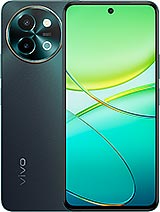
Y38 5G

Y100 5G
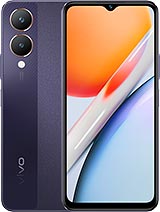
Y28 5G
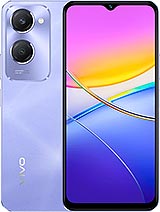
Y37 5G
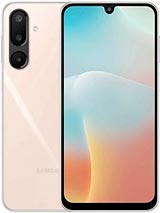
Galaxy M16 5G