Vivo Y300 (China) review
The Y300 suits people who spend their phone time scrolling, messaging, and video calls on a big screen and need the battery to last. Skip it if you game, use the camera seriously, or want the fastest chip for your money—those needs are better served elsewhere at this price.

This review is based on Vivo’s published specifications and public benchmark data for the Vivo Y300 (China), and the rating is spec-based. GoSolo does not physically test devices; where we estimate real-world behaviour such as battery life or charge time, we say so. How we rate phones.
Overview
The Y300 is a straightforward mid-range phone that prioritizes screen real estate and battery endurance over performance or camera reach. At €260, it delivers the promised essentials—a large 120Hz AMOLED display and a 6500mAh battery that outlasts most rivals in its price band—but asks you to accept a modest Dimensity 6300 chip and a basic 50MP camera with no optical zoom.
Design & Build
At 7.8mm thick and 200g, the Y300 feels slender for its 6.77-inch footprint, which is the point. Vivo has done the math: maximize screen without forcing an unwieldy slab into your pocket. The phone is narrow enough (76.2mm) to handle one-handed, though tall screens often aren't. IP64 rating means dust and splashes are fine; a pool is not. The metal and glass construction feels standard for the price—no premium materials, but no obvious flex or creak either.
Display
The 6.77-inch 1080p AMOLED panel is the clearest win here. At 388 ppi, sharpness is fine for everyday use, and the 120Hz refresh rate keeps scrolling silky. Brightness reaches 1300 nits (HBM) and peaks at 1800 nits—that is genuinely bright enough to read in direct sun, rare at this price. Rivals at €250–300 often ship 60Hz panels or cheaper IPS screens, so the combination of size, smoothness, and brightness is a real advantage. The 89% screen-to-body ratio is reasonable without being exceptional.
Performance
The Dimensity 6300 is a mid-range chip for 2024: it handles everyday apps, messaging, browsing, and video calls without stutter. Photography, social apps, and light media consumption work fine. But gaming is where the limits show; new titles at high settings drop frames, and anything demanding will thermal-throttle after 20–30 minutes. Multitasking with many background apps causes occasional lag. For a phone at this price, that is normal, but if you spend hours gaming or work with large files, this chip will disappoint you. The 8GB or 12GB RAM variants (depending on storage tier) help, but do not overcome the core GPU limitation.
Software
Android 15 with OriginOS 5 keeps things clean. Vivo's overlay is lightweight compared to others in the budget space, avoiding the usual bloatware pile. Updates are a question mark—Vivo is inconsistent with long-term support for Y-series phones—but out of the box, the software feels fast and usable. The fingerprint sensor (under-display, optical) is reasonably quick, though not as snappy as ultrasonic implementations.
Camera
The main 50MP sensor with f/1.8 aperture and PDAF shoots usable daytime photos at typical distances, but do not expect detail or dynamic range that rivals €400+ phones. The lack of zoom (no telephoto) means anything beyond arm's length requires you to step closer or accept a wide crop. Low-light performance is noisy and flat—night shots look muddy next to phones with larger sensors or multi-camera systems. Video is capped at 1080p at 30fps, which feels dated; most competitors now hit 4K. The 8MP selfie and auxiliary depth sensor are functional but unremarkable.
Battery & Charging
The 6500mAh battery is the phone's second major strength. In moderate daily use (email, messaging, social media, light video), expect 1.5–2 days before needing a charge. Heavier use (constant gaming or video) drains it in a full day, but most people will appreciate the breathing room. The 44W wired charger (sold separately) gets you from empty to full in roughly 45–60 minutes depending on cable quality and temperature. There is no wireless charging or reverse wired charging, which is a trade-off at this price where some rivals offer it, but the battery longevity mostly compensates.
Value & Verdict Context
At €260, the Y300 is aimed at people who prioritize screen size, battery life, and a smooth general-use experience over gaming power or advanced camera features. It competes with phones from Xiaomi, Motorola, and Realme in the same price window, most of which offer faster chips or better cameras in exchange for smaller screens or weaker batteries. The Y300 makes a calculated trade: bigger and longer-lasting for less raw performance. That is a defensible choice, but only if your daily life matches those priorities. If you game, zoom photos, or edit video, the Dimensity 6300 and basic camera will frustrate you. If you just want a large screen that does not die mid-day, the Y300 delivers.
Verdict
The Y300 suits people who spend their phone time scrolling, messaging, and video calls on a big screen and need the battery to last. Skip it if you game, use the camera seriously, or want the fastest chip for your money—those needs are better served elsewhere at this price.
- 6.77-inch 120Hz AMOLED display is large and bright (1300 nits HBM), making it genuinely useful for video and reading in daylight without the usual budget-phone dimness
- 6500mAh battery routinely delivers 1.5+ days of moderate use; fast enough to recharge fully in under an hour with the 44W charger
- Slim 7.8mm frame and 200g weight keep the phone manageable despite the large screen, and IP64 rating handles dust and splashes
- Clean Android 15 with OriginOS 5 overlay avoids the bloatware noise common at this price
- Dimensity 6300 struggles with demanding games and heavy multitasking; not a phone for anyone who games or runs memory-intensive apps regularly
- 50MP camera has no zoom and weak low-light performance; 1080p video at 30fps is dated for 2024 at any price
- No reverse charging, no NFC, no expandable storage—minor omissions individually but they add friction at a price point where those features are becoming standard
Vivo Y300 (China) Key Specifications
The essentials at a glance. See the full spec sheet.
| Released | 2024, December 16 |
|---|---|
| Display | 6.77 inches, 110.9 cm2 (~89.0% screen-to-body ratio), AMOLED, 120Hz, 1300 nits (HBM), 1800 nits (peak) |
| Resolution | 1080 x 2392 pixels (~388 ppi density) |
| Chipset | Mediatek Dimensity 6300 (6 nm) |
| RAM & storage | 128GB 8GB RAM, 256GB 8GB RAM, 256GB 12GB RAM, 512GB 12GB RAM |
| Main camera | 50 MP, f/1.8, (wide), PDAF Auxiliary lens |
| Selfie camera | 8 MP, f/2.1, (wide) |
| Battery | 6500 mAh |
| Charging | 44W wiredReverse wired |
| Software | Android 15, OriginOS 5 |
| Dimensions | 163.6 x 76.2 x 7.8 mm (6.44 x 3.00 x 0.31 in) |
| Weight | 200 g (7.05 oz) |
| Durability | IP64 dust tight and water resistant (water splashes) |
| Network | GSM / CDMA / HSPA / LTE / 5G |
| NFC | No |
| USB | USB Type-C 2.0, OTG |
Vivo Y300 (China) FAQ
Common questions, answered from the spec sheet.
Does the Y300 (China) support 5G?
Yes. The Y300 (China) supports 5G networks.
What chipset does the Y300 (China) use?
The Y300 (China) runs on the Mediatek Dimensity 6300 (6 nm).
What display does the Y300 (China) have?
A 6.77 inches, 110.9 cm2 (~89.0% screen-to-body ratio) AMOLED, 120Hz, 1300 nits (HBM), 1800 nits (peak), 1080 x 2392 pixels (~388 ppi density).
How big is the Y300 (China) battery?
The Y300 (China) has a 6500 mAh battery. Charging is rated at 44W wiredReverse wired.
Does the Y300 (China) have NFC?
No, the Y300 (China) does not list NFC support.
Is the Y300 (China) water resistant?
The Y300 (China) carries a IP64 dust tight and water resistant (water splashes) rating.
Does the Y300 (China) support a microSD card?
No, the Y300 (China) does not support expandable storage.
Does the Y300 (China) have a headphone jack?
No, the Y300 (China) does not have a 3.5mm headphone jack.
Alternatives to consider
If the Y300 (China) isn’t quite right, these are the closest calls.
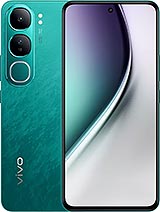
Y300
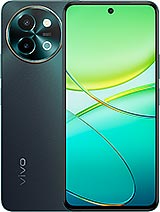
Y38 5G
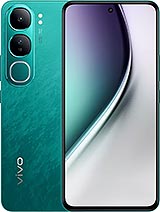
Y300 5G
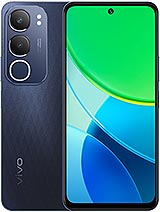
Y29 5G

Galaxy M16 5G