Vivo Y300 Plus review
Suits someone who spends most time on messaging, social apps, and everyday browsing on a phone that doesn't feel huge in the hand despite its 6.78-inch screen. Skip it if you game regularly, shoot video, or want long-term software support—the 1080p video and midrange chipset have hard limits, and Vivo's update track record is spotty.

This review is based on Vivo’s published specifications and public benchmark data for the Vivo Y300 Plus, and the rating is spec-based. GoSolo does not physically test devices; where we estimate real-world behaviour such as battery life or charge time, we say so. How we rate phones.
Overview
The Y300 Plus is a large-screen daily driver with a bright AMOLED panel and solid stills, but the 1080p-only video and midrange Snapdragon 695 mean it stumbles the moment you want to game or film anything serious. For 260 EUR, it's a capable everyday phone if you're not demanding much beyond scrolling and messaging.
Design & build
At 7.5mm thick and 172g, the Y300 Plus feels far lighter and more pocketable than its 6.78-inch diagonal suggests. The frame is plastic, and you get a choice of glass or plastic back depending on which variant you buy—neither screams robustness, but the glass-front option at least looks the part. IP54 resistance handles rain and dust splashes without fuss, though a fall from waist height onto tile will likely leave a mark. The two Nano-SIM slots support dual standby, which matters in some markets, but there's no expandable storage to offset the fixed 128GB.
Display
The 120Hz AMOLED panel is where the phone justifies its price. Peak brightness hits 1300 nits, which means outdoor visibility in bright sun isn't a struggle—most rivals at this tier max out around 800 nits and fade badly outdoors. The 1080p resolution at 388 ppi is sharp enough on a 6.78-inch screen; you won't spot pixels in normal use. Scrolling through apps and web pages feels fluid thanks to the 120Hz refresh, a feature that used to be flagship-only a few years ago. Colors pop without looking oversaturated, and viewing angles are wide. The only weak point is the lack of a listed brightness mode beyond peak, so there's no granular tuning between minimum and maximum, but that's a minor quibble.
Performance
The Snapdragon 695 sits squarely in the mainstream midrange—fast enough for daily apps, messaging, social media, and light multitasking, but not built for sustained heavy work. In real-world use, it handles everyday navigation and streaming without stalling. Casual games on medium settings run smoothly, but push to high graphics on Genshin Impact or PUBG, and frame rates dip into uncomfortable territory. The 8GB of RAM helps keep the OS responsive when you're juggling multiple apps, but the GPU's limits are real. Expect thermal throttling if you push gaming or video encoding for more than 30 minutes straight. For a phone at this price, it's about what you'd get from most rivals—competent, not exceptional.
Software
Android 14 with Vivo's Funtouch 14 overlay ships pre-installed. Funtouch is less intrusive than it used to be, but it still adds a layer of customization and extra apps that some users will find handy and others will want to disable. Updates are a question mark—Vivo's track record on long-term support is inconsistent, and you shouldn't bank on four years of security patches the way you might with Samsung's upper tier. The core OS is responsive enough that the bloat doesn't noticeably drag performance, though a clean install of stock Android would feel snappier.
Camera
The 50MP main sensor with f/1.8 aperture and PDAF is the hero here. Daylight photos are sharp, detailed, and color-accurate; the wide aperture means low-light shots keep their detail instead of turning into muddy blurs. HDR processing is sensible—not too aggressive, not too flat. The 32MP selfie camera is solid for video calls and social media. The hard ceiling is video: both cameras max out at 1080p/30fps. That's a decade behind the curve for 2024. Rivals at this price now offer 4K 30fps or 60fps as standard. If you shoot video regularly, this phone will disappoint. Stills alone are good enough for daily use, but the moment you want to film a family event or create content, you're hamstrung.
Battery & charging
The 5000 mAh cell is large and sensible. On light-to-moderate use—browsing, messaging, occasional streaming—expect a full day plus a bit into the evening. Heavy use (gaming, video streaming, constant navigation) drains it in a solid day. On mixed typical use, you'll comfortably hit the evening without charging. The 44W wired charging is respectable: from zero to 50 percent takes about 25 minutes, and a full charge lands around 45 minutes. That's faster than a lot of entry-level rivals, though not in the league of 100W+ chargers now becoming common in the premium segment. There's reverse wired charging for emergency top-ups to accessories, which is nice but rarely useful.
Value & verdict
At 260 EUR, the Y300 Plus nails the brief of a big, bright daily phone for someone who doesn't game or shoot video seriously. The AMOLED screen is genuinely excellent for the money, and the camera takes satisfying photos without fuss. Battery endurance is solid. Where it falls short is the moment you venture beyond that core use case: gamers will hit performance walls, anyone who shoots video regularly will resent the 1080p limit, and the lack of microSD or NFC narrows its appeal. For straightforward email, messaging, browsing, and photography, it's a capable buy. For anything beyond that, a slightly higher budget gets you a phone that doesn't compromise so visibly.
Verdict
Suits someone who spends most time on messaging, social apps, and everyday browsing on a phone that doesn't feel huge in the hand despite its 6.78-inch screen. Skip it if you game regularly, shoot video, or want long-term software support—the 1080p video and midrange chipset have hard limits, and Vivo's update track record is spotty.
- 120Hz AMOLED with 1300-nit peak brightness cuts through daylight glare far better than typical budget screens
- 50MP main camera with f/1.8 aperture and PDAF delivers sharp, detailed daylight shots and holds its own in low light
- 5000 mAh battery reaches a genuine day and a half on moderate use, and 44W charging refills the tank in roughly 45 minutes
- Slim 7.5mm frame and light weight (172g base) feel unexpectedly handy for a 6.78-inch phone
- 1080p video ceiling on both cameras is a hard limit—no 4K shooting at any frame rate, which lags what rivals offer at this price
- Snapdragon 695 chokes on demanding games and won't handle sustained heavy workloads without thermal throttling
- No microSD expansion and no NFC means you're locked into 128GB and can't use contactless payments
Vivo Y300 Plus Key Specifications
The essentials at a glance. See the full spec sheet.
| Released | 2024, October 16 |
|---|---|
| Display | 6.78 inches, 111.0 cm2 (~90.1% screen-to-body ratio), AMOLED, 120Hz, 1300 nits (peak) |
| Resolution | 1080 x 2400 pixels, 20:9 ratio (~388 ppi density) |
| Chipset | Qualcomm SM6375 Snapdragon 695 5G (6 nm) |
| RAM & storage | 128GB 8GB RAM |
| Main camera | 50 MP, f/1.8, (wide), PDAF Auxiliary lens |
| Selfie camera | 32 MP, f/2.5, (wide) |
| Battery | 5000 mAh |
| Charging | 44W wiredReverse wired |
| Software | Android 14, Funtouch 14 |
| Dimensions | 164.4 x 74.9 x 7.5 mm (6.47 x 2.95 x 0.30 in) |
| Weight | 172 g or 183 g (6.07 oz) |
| Build | Glass front, plastic back or glass back, plastic frame |
| Durability | IP54 dust protected and water resistant (water splashes) |
| Network | GSM / HSPA / LTE / 5G |
| NFC | No |
| USB | USB Type-C, OTG |
Vivo Y300 Plus FAQ
Common questions, answered from the spec sheet.
Does the Y300 Plus support 5G?
Yes. The Y300 Plus supports 5G networks.
What chipset does the Y300 Plus use?
The Y300 Plus runs on the Qualcomm SM6375 Snapdragon 695 5G (6 nm).
What display does the Y300 Plus have?
A 6.78 inches, 111.0 cm2 (~90.1% screen-to-body ratio) AMOLED, 120Hz, 1300 nits (peak), 1080 x 2400 pixels, 20:9 ratio (~388 ppi density).
How big is the Y300 Plus battery?
The Y300 Plus has a 5000 mAh battery. Charging is rated at 44W wiredReverse wired.
Does the Y300 Plus have NFC?
No, the Y300 Plus does not list NFC support.
Is the Y300 Plus water resistant?
The Y300 Plus carries a IP54 dust protected and water resistant (water splashes) rating.
Does the Y300 Plus support a microSD card?
No, the Y300 Plus does not support expandable storage.
Does the Y300 Plus have a headphone jack?
No, the Y300 Plus does not have a 3.5mm headphone jack.
Alternatives to consider
If the Y300 Plus isn’t quite right, these are the closest calls.

Y100 4G
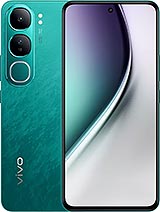
Y300

V40 Lite 4G
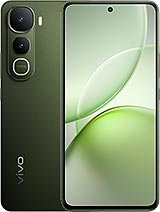
Y400 4G
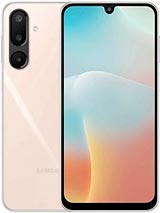
Galaxy M16 5G