Vivo Y37 5G review
This phone suits buyers in 5G markets who prioritize a full day of battery life and connectivity over screen sharpness or camera quality, or anyone who simply needs a durable, no-frills daily driver at a low price. Anyone expecting smooth gaming, crisp visuals, or serious photo capability should look at a model further up the price ladder.

This review is based on Vivo’s published specifications and public benchmark data for the Vivo Y37 5G, and the rating is spec-based. GoSolo does not physically test devices; where we estimate real-world behaviour such as battery life or charge time, we say so. How we rate phones.
Overview
The Vivo Y37 5G is a budget 5G phone that prioritizes connectivity and battery life over display crispness or raw processing power. At around 150 EUR, it delivers practical everyday performance and a full day of moderate use, but the 720p screen looks grainy up close and gaming will disappoint.
Design & build
The Y37 is slim and light at 8.4 mm and 185 grams, with a glass front and plastic rear that feels ordinary at this price. The IP54 rating resists dust and water splashes, which is a genuine bonus for a sub-150 EUR device—most rivals at this cost skip water resistance entirely. The frame is plastic, so it won't feel premium, but it is practical. Dual nano-SIM slots let you run two carriers or personal and work lines simultaneously, and the side-mounted fingerprint sensor is responsive enough for daily unlock speed.
Display
At 6.56 inches and 720p (269 ppi), this screen will appear grainy when you hold it at arm's length and look closely at text or small icons. That is the honest trade-off for a 150 EUR phone; rivals in this tier often match the resolution, so you are not being short-changed, but it is a real cost of the price. The 90Hz refresh rate is a genuine strength, though. Scrolling through apps and social feeds feels noticeably smoother than 60Hz, and that matters more for daily feel than raw sharpness. The IPS panel maxes out at 840 nits (peak brightness), which is enough for outdoors in overcast conditions but requires cranking brightness in direct sun. Colour accuracy and contrast are adequate for a budget LCD, nothing more.
Performance
The Dimensity 6300 is a mainstream midrange chipset designed for efficiency, not speed. Everyday tasks—messaging, social media, light web browsing, video calls—run without stutter. Multitasking with more than three or four apps open will cause noticeable lag as the 4 GB or 6 GB of RAM fills up, and switching between demanding apps feels sluggish. Gaming is a weakness. Anything beyond casual puzzle games or older titles will stutter; modern games will either force you to lower settings drastically or refuse to run smoothly. The Mali-G57 GPU is entry-level for a reason. If you plan to game or edit video, this is not your phone. For basic smartphone use in 2024, it is enough, but just enough.
Software
Vivo ships this with Android 14 and its Funtouch OS overlay (or OriginOS 4 in China). The interface is functional, and Android 14 itself is current. Expect Vivo's customizations and a few pre-installed apps you may not use, which is standard practice in this price range. Software updates are not guaranteed to last as long as on premium models, so factor that in if longevity matters to you.
Camera
The 13 MP main shooter with f/2.2 aperture is basic for 2024. In good light, photos are acceptable but lack fine detail and dynamic range; you will notice the difference if you zoom in or print. Low-light performance is poor—noise kicks in quickly, and autofocus hesitates. The 5 MP selfie camera is enough for video calls but not for anything you plan to keep. Video is limited to 1080p@30fps, which is standard for this price but feels dated against rivals pushing 1080p@60fps or higher. There is no ultrawide, macro, or telephoto—just the single main camera and a selfie sensor. For snapshots and social media, it works; for anything more serious, it will disappoint.
Battery & charging
The 5000 mAh cell delivers roughly 6 to 8 hours of screen time with average brightness and mixed use (messaging, browsing, light video). Heavy video streaming cuts that to 5 to 6 hours, but for everyday use, you will get through a full day of moderate activity without needing to charge. That is a genuine win at this price. Charging power is listed as 15W, which is slow by modern standards (rivals often hit 30W or higher in this segment now), so expect around two hours or more to fully charge from zero. There is no wireless charging, which is expected at 150 EUR.
Value & verdict
At around 150 EUR in mid-2024, the Y37 5G occupies a specific niche: buyers who want 5G connectivity and good battery life without spending more on a phone they might drop or damage, or those in regions where 5G is rolling out and data plans are still cheap enough to justify an upgrade. It is not a flagship killer or an outlier; it is a straightforward, competent budget phone. The 720p display is the main daily compromise, and the camera and gaming performance are genuinely weak. But the battery lasts, 5G works where available, and it does not cost much. For value in its class and generation, it sits squarely in the middle—nothing is badly wrong, nothing remarkable, and no meaningful upgrade over last year's equivalent 4G budget phones unless 5G matters to you.
Verdict
This phone suits buyers in 5G markets who prioritize a full day of battery life and connectivity over screen sharpness or camera quality, or anyone who simply needs a durable, no-frills daily driver at a low price. Anyone expecting smooth gaming, crisp visuals, or serious photo capability should look at a model further up the price ladder.
- 5G connectivity and dual SIM in a sub-150 EUR phone
- 5000 mAh battery easily lasts a full day at moderate use
- 90Hz display noticeably smoother than the 60Hz standard at this price
- IP54 dust and splash resistance adds practical durability
- 720p resolution at 6.56 inches means text and icons look pixelated at normal viewing distance
- 13 MP camera is basic; low light and detail struggle, video capped at 1080p@30fps
- Dimensity 6300 handles messaging and social media fine, but gaming and heavy multitasking show visible lag
Vivo Y37 5G Key Specifications
The essentials at a glance. See the full spec sheet.
| Released | 2024, July 15 |
|---|---|
| Display | 6.56 inches, 103.4 cm2 (~83.6% screen-to-body ratio), IPS LCD, 90Hz, 840 nits (HBM) |
| Resolution | 720 x 1612 pixels, 20:9 ratio (~269 ppi density) |
| Chipset | Mediatek Dimensity 6300 (6 nm) |
| RAM & storage | 64GB 4GB RAM, 128GB 4GB RAM, 128GB 6GB RAM, 128GB 8GB RAM, 256GB 8GB RAM, 256GB 12GB RAM |
| Main camera | 13 MP, f/2.2, 25mm (wide), 1.12µm, AF Auxiliary lens (flicker sensor) |
| Selfie camera | 5 MP, f/2.2, (wide), 1/5.0", 1.12µm |
| Battery | 5000 mAh |
| Software | Android 14, Funtouch OS 14 (International), OriginOS 4 (China) |
| Dimensions | 163.6 x 75.6 x 8.4 mm (6.44 x 2.98 x 0.33 in) |
| Weight | 185 g (6.53 oz) |
| Build | Glass front, plastic frame, plastic back |
| Durability | IP54 dust protected and water resistant (water splashes) |
| Network | GSM / CDMA / HSPA / CDMA2000 / LTE / 5G |
| NFC | No |
| USB | USB Type-C 2.0, OTG |
Vivo Y37 5G FAQ
Common questions, answered from the spec sheet.
Does the Y37 5G support 5G?
Yes. The Y37 5G supports 5G networks.
What chipset does the Y37 5G use?
The Y37 5G runs on the Mediatek Dimensity 6300 (6 nm).
What display does the Y37 5G have?
A 6.56 inches, 103.4 cm2 (~83.6% screen-to-body ratio) IPS LCD, 90Hz, 840 nits (HBM), 720 x 1612 pixels, 20:9 ratio (~269 ppi density).
How big is the Y37 5G battery?
The Y37 5G has a 5000 mAh battery.
Does the Y37 5G have NFC?
No, the Y37 5G does not list NFC support.
Is the Y37 5G water resistant?
The Y37 5G carries a IP54 dust protected and water resistant (water splashes) rating.
Does the Y37 5G support a microSD card?
No, the Y37 5G does not support expandable storage.
Alternatives to consider
If the Y37 5G isn’t quite right, these are the closest calls.
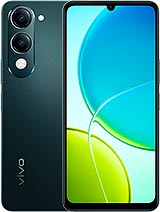
Y19 5G
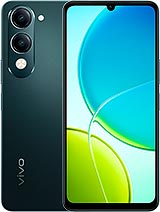
Y04 4G
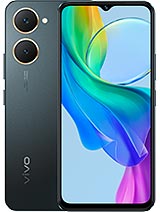
Y03

Y50 5G
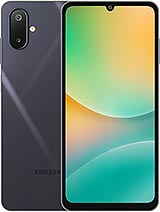
Galaxy M06 5G