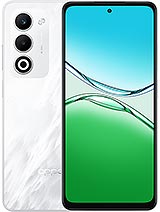
Vivo Y38 review
The Y38 suits daily drivers in 5G-ready markets who need battery longevity and sunlight readability over screen sharpness or gaming muscle. Anyone who spends time reading text, editing files, or playing demanding games should prioritize a sharper display and stronger chip over the Y38's battery advantage.
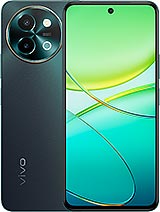
This review is based on Vivo’s published specifications and public benchmark data for the Vivo Y38, and the rating is spec-based. GoSolo does not physically test devices; where we estimate real-world behaviour such as battery life or charge time, we say so. How we rate phones.
Overview
The Vivo Y38 pairs a 6000mAh battery and bright 120Hz display with an entry-level Snapdragon 4 Gen 2 and a heavy reliance on software tricks to feel responsive. It's a reliable all-day phone for casual use and markets with good 5G coverage, but the low-resolution screen and modest processing power limit its appeal beyond basic apps and content consumption.
Design & Build
The Y38 feels unremarkable but compact at 199g and 8mm thick, with a glass front and plastic frame and back that cut costs without obvious downsides at first touch. The side-mounted fingerprint sensor is well-placed and responsive. IP64 means it can survive a spill or light rain, but the plastic back and sides will not forgive a fall to concrete, and the notification LED on the rear is a nostalgic touch few users will miss. Vivo has kept the 3.5mm jack and stereo speakers, which still matter for budget buyers who do not want to spend on wireless earbuds or rely on tinny mono audio.
Display
The 6.68-inch 120Hz IPS LCD is one of the Y38's genuine strengths, delivering 1000 nits of peak brightness that makes direct sunlight reading a non-issue in most conditions. Scrolling and animations feel fluid at 120Hz, a rarity at this price. The glaring problem is resolution: 720 x 1612 pixels on a screen this large yields just 264 ppi, visible pixelation of text and icons at normal viewing distance, and a soft, smudged appearance compared to the 300+ ppi baseline that budget phones have settled on. For a phone announced in 2024, this is a real step backward; even entry-level rivals in developing markets often hit 1080p. The 20:9 ratio and 85% screen-to-body ratio are decent, but the low pixel count undermines the entire experience.
Performance
The Snapdragon 4 Gen 2 with 8GB of RAM handles messaging, social media, light browsing, and YouTube without strain, and Funtouch 14 adds motion effects that mask modest hardware. Anything more demanding stutters: games like PUBG Mobile or Genshin Impact require lowered graphics or suffer frame drops, and juggling multiple heavy apps causes noticeable lag. The Adreno 613 GPU is entry-level, and there is no way around it. For the price and target market, this is acceptable for casual users, but it means the phone will feel slow in two years when apps grow heavier. Video editing, photo processing, and sustained multitasking are not realistic expectations.
Software
Android 14 with Funtouch 14 ships clean enough, but Vivo's skin is lighter on bloat than some rivals and actually leans on software polish to compensate for modest hardware. The UI snappiness is partly illusion driven by animations, but for everyday use it works. Updates are a question; Vivo's track record on long-term OS support in Southeast Asia is inconsistent, and the Y series typically gets two major updates if you are lucky.
Camera
The 50MP main sensor with f/1.8 aperture and PDAF captures detail-rich shots in good light, and the large aperture helps in dim conditions more than the megapixels would suggest. There is no optical zoom, so distant subjects require digital crops that lose detail fast. Video is capped at 1080p30fps, unambitious but fine for casual clips. The 8MP front camera is predictably basic, adequate for video calls but grainy in poor light. For a device at this price, the camera is honest but unremarkable: no ultra-wide, no macro surprises, just a solid main lens and nothing else.
Battery & Charging
The 6000mAh battery is genuinely spacious and easily delivers a full day on mixed use, stretching to a day and a half if you keep to light apps. With the modest Snapdragon 4 Gen 2, battery drain is leisurely compared to flagship chips. The 44W wired charging hits full capacity in roughly 50 to 70 minutes, competitive for this tier. There is no wireless charging, but at this price that is expected. Battery degradation over two years is inevitable, but the large starting capacity provides a buffer.
Value & Verdict
The Y38 lands in the budget 5G segment where it competes on battery life and brightness rather than raw power. For markets with rolled-out 5G infrastructure and buyers who prioritize all-day endurance and daylight visibility, it makes sense. The 720p display is the sticking point: it feels like a choice made to keep costs down rather than a necessary compromise, and it will frustrate anyone who reads text or browses regularly. The Snapdragon 4 Gen 2 is honest about what the phone is, but the low resolution sits awkwardly between true budget and mid-range expectations. If you live in an area with strong 5G coverage and your main use is messaging, social media, and video streaming, the battery and brightness earn consideration. Anyone who reads a lot, plays games, or wants the screen to feel modern should look at alternatives with better pixel density, even if they cost a little more.
Verdict
The Y38 suits daily drivers in 5G-ready markets who need battery longevity and sunlight readability over screen sharpness or gaming muscle. Anyone who spends time reading text, editing files, or playing demanding games should prioritize a sharper display and stronger chip over the Y38's battery advantage.
- 6000mAh battery with 44W charging covers a full day easily and refills in under an hour
- 120Hz IPS LCD with 1000 nits peak brightness stays legible in bright sun and feels smooth for everyday scrolling
- Compact and light at 199g despite the large display, with stereo speakers and a 3.5mm jack still present
- 5G connectivity where available, dual-band Wi-Fi, and NFC for payments
- 720p resolution on a 6.68-inch screen means visible pixelation and soft text; a budget phone from 2024 should not cut corners here
- Snapdragon 4 Gen 2 is an entry chip that struggles with any game beyond light titles and drags in multitasking
- IP64 splash resistance only; plastic build and lack of gorilla glass offer minimal real-world durability against drops
Vivo Y38 Key Specifications
The essentials at a glance. See the full spec sheet.
| Released | 2024, May 02 |
|---|---|
| Display | 6.68 inches, 107.2 cm2 (~85.1% screen-to-body ratio), IPS LCD, 120Hz, 1000 nits (peak) |
| Resolution | 720 x 1612 pixels, 20:9 ratio (~264 ppi density) |
| Chipset | Qualcomm SM4450 Snapdragon 4 Gen 2 (4 nm) |
| RAM & storage | 256GB 8GB RAM |
| Main camera | 50 MP, f/1.8, (wide), PDAF Auxiliary lens |
| Selfie camera | 8 MP, f/2.1, (wide) |
| Battery | 6000 mAh |
| Charging | 44W wired |
| Software | Android 14, Funtouch 14 |
| Dimensions | 165.7 x 76 x 8 mm (6.52 x 2.99 x 0.31 in) |
| Weight | 199 g (7.02 oz) |
| Build | Glass front, plastic frame, plastic back |
| Durability | IP64 dust tight and water resistant (water splashes) Notification LED round light on the back |
| Network | GSM / HSPA / LTE / 5G |
| NFC | Yes |
| USB | USB Type-C 2.0, OTG |
Vivo Y38 FAQ
Common questions, answered from the spec sheet.
Does the Y38 support 5G?
Yes. The Y38 supports 5G networks.
What chipset does the Y38 use?
The Y38 runs on the Qualcomm SM4450 Snapdragon 4 Gen 2 (4 nm).
What display does the Y38 have?
A 6.68 inches, 107.2 cm2 (~85.1% screen-to-body ratio) IPS LCD, 120Hz, 1000 nits (peak), 720 x 1612 pixels, 20:9 ratio (~264 ppi density).
How big is the Y38 battery?
The Y38 has a 6000 mAh battery. Charging is rated at 44W wired.
Does the Y38 have NFC?
Yes, the Y38 has NFC.
Is the Y38 water resistant?
The Y38 carries a IP64 dust tight and water resistant (water splashes) Notification LED round light on the back rating.
Does the Y38 support a microSD card?
Yes, the Y38 supports expandable storage (microSDXC (uses shared SIM slot)).
Does the Y38 have a headphone jack?
Yes, the Y38 has a 3.5mm headphone jack.
Alternatives to consider
If the Y38 isn’t quite right, these are the closest calls.
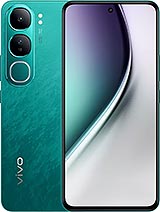
Y300
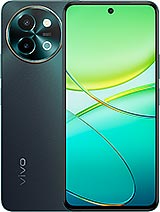
Y38 5G
Y300 5G
Y29 5G
Galaxy M16 5G