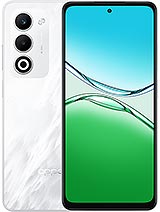
Vivo Y38 5G review
This is for people who want 5G, all-day battery, and basic reliability without spending heavily, and are comfortable with soft text and no gaming ambition. Anyone who plans to keep the phone for more than 18 months or uses it for content consumption beyond casual browsing should look at a model with higher pixel density.
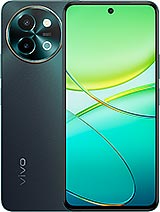
This review is based on Vivo’s published specifications and public benchmark data for the Vivo Y38 5G, and the rating is spec-based. GoSolo does not physically test devices; where we estimate real-world behaviour such as battery life or charge time, we say so. How we rate phones.
Overview
The Y38 5G is a light, long-lasting phone that does everyday tasks without struggle but stumbles on anything demanding. Its 720p screen at 6.68 inches looks soft, though brightness tops out strong enough for sunlight.
Design & build
The Y38 is slim and light at 8mm thick and 199g, with a glass front face and plastic frame and back. It feels compact enough to slip into a pocket or bag without complaint. The IP64 rating guards against dust and splashing, so accidental spills or a light rain shower won't ruin it, though full submersion will. There is a side-mounted fingerprint sensor, a notification LED on the back, and dual nano-SIM support. It is the kind of phone that prioritises portability and ruggedness over aesthetics, which suits the price and market it is aimed at.
Display
The 6.68-inch IPS LCD runs at 120Hz with a 1000 nit peak brightness, both solid specs for outdoor readability and scrolling smoothness. The problem is resolution: 720 by 1612 pixels works out to only 264 ppi at this diagonal, so text and app icons look visibly blocky and soft on close inspection. This would have been forgivable on a 5.5-inch screen; at 6.68 inches, it is the display's defining weakness. The screen-to-body ratio of 85.1 per cent is respectable. If you spend most time texting, watching video, or reading web articles from arm's length, the softness fades into the background. If you read e-books or work with spreadsheets up close, you will notice it.
Performance
The Snapdragon 4 Gen 2 is an entry-level chip that handles calls, messaging, social media, and light web browsing without hiccup. Streaming video is smooth, and everyday apps open quickly. Where it hits a wall is gaming and heavy multitasking. Modern games like PUBG or Genshin Impact will run, but only on low to medium settings if you want a steady frame rate, and even then stuttering can creep in during intense scenes. The 8GB of RAM and UFS 2.2 storage do their part, but the CPU and GPU are the bottleneck. For a phone at this price, that is the expected ceiling; do not assume otherwise.
Software
Android 14 with Vivo's Funtouch 14 overlay ships out of the box. Funtouch adds a layer of customisation and extra features on top of stock Android, which some users appreciate and others find cluttered. The OS itself is stable and responsive for everyday work. Long-term software support is typically where budget Vivos lag behind their Chinese rivals, so expect a year or two of updates and perhaps three to four years of security patches, not the five-plus year commitment of a flagship.
Camera
The 50MP main sensor with f/1.8 aperture and PDAF can capture sharp daytime shots with decent colour, and the f/1.8 lens helps in low light. Video maxes out at 1080p 30fps, which is standard for this class. The 8MP selfie camera is workable for video calls and casual shots. Do not expect flagship-level detail or dynamic range. The real limitation is the modest compute power on the phone; software processing for HDR, night mode, and other post-capture tricks is basic. Photos are clean and punchy in bright sunlight but fall back in shadow or dimly lit venues.
Battery & charging
At 6000 mAh with typical mixed use, the phone should squeeze out 6 to 8 hours of screen-on time, meaning a full day is achievable if you avoid constant gaming or video streaming. The 44W charging speed is unremarkable for 2024; rivals in this space now push 65W to 100W, so a full recharge takes longer than it should. Without the exact charge curve on record, expect the battery to go from flat to full in roughly 50 to 60 minutes, which is not a dealbreaker but slower than what you will see elsewhere at the price.
Value & verdict
The Y38 5G is an honest entry-level 5G phone. It does what most people ask of a phone on a daily basis: calls, messages, browsing, social media, and video playback. The 720p display is its main visual drawback, the Snapdragon 4 Gen 2 its performance ceiling. Neither flaw is fatal for someone who does not game or demand pixel-perfect text. At its release price in mid-2024, it sits in a segment where buyers are choosing between battery life, 5G support, and decent outdoor brightness on one hand and sharper displays or faster chips on the other. This phone bets on endurance and connectivity. If you swap phones rarely and value a full day without charging, the Y38 makes sense. If screen sharpness or gaming is a priority, you will want to look at phones with 1080p or higher and a Snapdragon 6 Gen 1 or better.
Verdict
This is for people who want 5G, all-day battery, and basic reliability without spending heavily, and are comfortable with soft text and no gaming ambition. Anyone who plans to keep the phone for more than 18 months or uses it for content consumption beyond casual browsing should look at a model with higher pixel density.
- 5G connectivity with broad band support and dual SIM flexibility
- 6000 mAh battery easily covers a full day of moderate use
- Lightweight at 199g with IP64 splash resistance, built for casual carry
- 120Hz display with 1000 nits peak brightness makes outdoor viewing legible
- 720p resolution on a 6.68-inch screen leaves text and UI noticeably pixelated
- Snapdragon 4 Gen 2 handles everyday apps but struggles with modern games at playable settings
- 44W charging speed is unremarkable for a 6000 mAh battery in 2024
Vivo Y38 5G Key Specifications
The essentials at a glance. See the full spec sheet.
| Released | 2024, May 02 |
|---|---|
| Display | 6.68 inches, 107.2 cm2 (~85.1% screen-to-body ratio), IPS LCD, 120Hz, 1000 nits (peak) |
| Resolution | 720 x 1612 pixels, 20:9 ratio (~264 ppi density) |
| Chipset | Qualcomm SM4450 Snapdragon 4 Gen 2 (4 nm) |
| RAM & storage | 256GB 8GB RAM |
| Main camera | 50 MP, f/1.8, (wide), PDAF Auxiliary lens |
| Selfie camera | 8 MP, f/2.1, (wide) |
| Battery | 6000 mAh |
| Software | Android 14, Funtouch 14 |
| Dimensions | 165.7 x 76 x 8 mm (6.52 x 2.99 x 0.31 in) |
| Weight | 199 g (7.02 oz) |
| Build | Glass front, plastic frame, plastic back |
| Durability | IP64 dust tight and water resistant (water splashes) Notification LED round light on the back |
| Network | GSM / HSPA / LTE / 5G |
| NFC | Yes |
| USB | USB Type-C 2.0, OTG |
Vivo Y38 5G FAQ
Common questions, answered from the spec sheet.
Does the Y38 5G support 5G?
Yes. The Y38 5G supports 5G networks.
What chipset does the Y38 5G use?
The Y38 5G runs on the Qualcomm SM4450 Snapdragon 4 Gen 2 (4 nm).
What display does the Y38 5G have?
A 6.68 inches, 107.2 cm2 (~85.1% screen-to-body ratio) IPS LCD, 120Hz, 1000 nits (peak), 720 x 1612 pixels, 20:9 ratio (~264 ppi density).
How big is the Y38 5G battery?
The Y38 5G has a 6000 mAh battery.
Does the Y38 5G have NFC?
Yes, the Y38 5G has NFC.
Is the Y38 5G water resistant?
The Y38 5G carries a IP64 dust tight and water resistant (water splashes) Notification LED round light on the back rating.
Does the Y38 5G support a microSD card?
Yes, the Y38 5G supports expandable storage (microSDXC (uses shared SIM slot)).
Alternatives to consider
If the Y38 5G isn’t quite right, these are the closest calls.
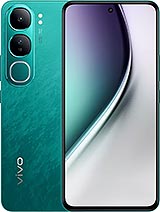
Y300 5G
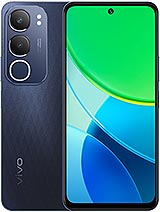
Y29 5G
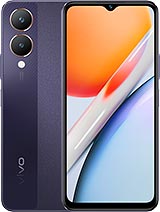
Y28 5G
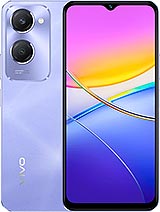
Y37 5G
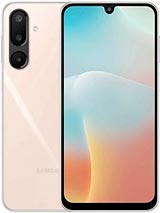
Galaxy M16 5G