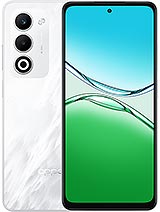
Vivo Y58 review
The Y58 suits someone prioritizing battery endurance and screen readability over raw power—students, older users, and people in cost-conscious markets will find it practical. Skip it if gaming or video work matter to you, or if you're willing to spend more for better sustained performance.
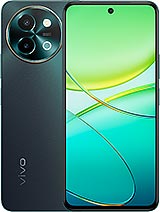
This review is based on Vivo’s published specifications and public benchmark data for the Vivo Y58, and the rating is spec-based. GoSolo does not physically test devices; where we estimate real-world behaviour such as battery life or charge time, we say so. How we rate phones.
Overview
The Vivo Y58 is a straightforward budget phone built around battery life and a bright screen rather than raw power. It suits someone who needs their phone to last a full day-plus and doesn't ask much beyond messaging and light browsing, but the Snapdragon 4 Gen 2 is a real limiting factor if you care about gaming or heavy apps.
Design & build
At 199g and 8mm thin, the Y58 feels light and pocketable—better proportioned than many budget phones that bloat to 220g or more. The glass front and plastic back is predictable for the price; the frame is plastic too, so don't expect the heft of something with all-metal bones. IP64 splash resistance covers rain and accidental spills but not submersion, which is fine for a phone in this tier. One practical touch: stereo speakers and a 3.5mm headphone jack are both here, a rarity nowadays that will matter to users who still rely on wired audio or want audible media without Bluetooth.
Display
The 6.72-inch LCD is where Vivo committed real money. At 1024 nits peak brightness (HBM mode), it's visibly brighter than most budget rivals and handles direct sunlight without becoming unreadable—a genuine quality-of-life win in outdoor use. The 120Hz refresh is smooth for scrolling and keeps gesture responses snappy, even on a mid-budget chipset. The 1080p resolution at this screen size yields 393 ppi, which is adequate but not sharp; you'll notice pixels if you look closely, but at normal viewing distance it's fine. This is a case where Vivo's spending on brightness and smoothness over sheer pixel density reflects practical priorities for a budget user.
Performance
The Snapdragon 4 Gen 2 is entry-level silicon; it's not slow for everyday tasks like messaging, social media, and streaming, but it's clearly the phone's ceiling. Casual games run fine, but anything demanding—Genshin Impact, Call of Duty Mobile, sustained 3D rendering—will force you to accept lower frame rates or graphical settings. The 8GB RAM helps keep multitasking from stuttering, and UFS 2.2 storage is fast enough for quick app launches. This is realistic for the price and year, but worth knowing upfront if gaming is part of your regular phone diet.
Software
Android 14 with Vivo's Funtouch 14 overlay is present, which adds a layer of customization and some pre-installed apps. Funtouch is lighter than it was years ago, so it doesn't bog things down significantly, but the Y58 won't feel as clean or minimal as a stock Android device. Updates over time are a bigger question—Vivo's track record on long-term support in budget segments is inconsistent, so don't assume years of meaningful patches. For the price, this is typical and acceptable.
Camera
The 50MP main sensor with f/1.8 aperture and PDAF is a sensible package for daylight and portrait shots. The wide aperture gathers decent light, and HDR processing is competent for balancing exposure. The real limitation is video: 1080p@30fps only, with no 4K, slow-motion, or cinematic tricks. For stills alone, it'll satisfy most budget users taking everyday photos and selfies, but anyone hoping for versatile video will feel constrained. The 8MP selfie camera is fine for video calls and casual self-portraits but nothing more.
Battery & charging
The 6000mAh battery is the Y58's strongest point. With moderate use—messaging, browsing, social media, some calls—expect 1.5 to 2 days between charges, and even heavier users will likely land on a full day plus an evening. The 44W charging tops it in about 50-60 minutes from empty, which is quick enough for a practical top-up before leaving the house. This combination of capacity and speed addresses real frustration points for budget users who can't afford to be tethered to an outlet or hunt for chargers throughout the day.
Value & verdict
At around 220 EUR, the Y58 is priced squarely in the budget segment, and it delivers on its practical priorities: the display is bright and smooth, the battery runs long, and the build is solid without frills. The Snapdragon 4 Gen 2 is the tradeoff; you're buying longevity and screen quality instead of gaming headroom or processing speed. For a first smartphone, a phone for a teenager, or a no-fuss backup device, this makes sense. The headphone jack and stereo speakers also nudge it ahead of rivals that dropped those features, which matters in emerging markets. Spending another 50-100 EUR would get you a mid-range chipset with noticeably better gaming and app performance, but not necessarily longer battery life or a brighter screen.
Verdict
The Y58 suits someone prioritizing battery endurance and screen readability over raw power—students, older users, and people in cost-conscious markets will find it practical. Skip it if gaming or video work matter to you, or if you're willing to spend more for better sustained performance.
- 6000mAh battery lasts 1.5 to 2 days with moderate use, the best argument for picking this phone over rivals at the price
- 1024-nit LCD is genuinely bright for outdoor use and keeps the screen readable without squinting, rare and useful in this tier
- 120Hz refresh and smooth scrolling despite modest chipset, thanks to efficient software pairing
- 3.5mm headphone jack and stereo speakers both present, a differentiator in budget phones
- Snapdragon 4 Gen 2 struggles with demanding games and heavy apps; frame rate drops and stuttering are real if you ask much of the phone
- 1080p-only video recording limits creative recording options; no 4K, slow-motion, or advanced video features
- Plastic back is prone to scratches and wear; at 199g the phone feels light but not premium
Vivo Y58 Key Specifications
The essentials at a glance. See the full spec sheet.
| Released | 2024, June 20 |
|---|---|
| Display | 6.72 inches, 108.8 cm2 (~86.4% screen-to-body ratio), IPS LCD, 120Hz, 1024 nits (HBM) |
| Resolution | 1080 x 2408 pixels, 20:9 ratio (~393 ppi density) |
| Chipset | Qualcomm SM4450 Snapdragon 4 Gen 2 (4 nm) |
| RAM & storage | 128GB 8GB RAM |
| Main camera | 50 MP, f/1.8, (wide), PDAF Auxiliary lens |
| Selfie camera | 8 MP, f/2.1, (wide) |
| Battery | 6000 mAh |
| Charging | 44W wired |
| Software | Android 14, Funtouch 14 |
| Dimensions | 165.7 x 76 x 8 mm (6.52 x 2.99 x 0.31 in) |
| Weight | 199 g (7.02 oz) |
| Build | Glass front, plastic frame, plastic back |
| Durability | IP64 dust tight and water resistant (water splashes) Notification LED round light on the back |
| Network | GSM / HSPA / LTE / 5G |
| NFC | No |
| USB | USB Type-C 2.0, OTG |
Vivo Y58 FAQ
Common questions, answered from the spec sheet.
Does the Y58 support 5G?
Yes. The Y58 supports 5G networks.
What chipset does the Y58 use?
The Y58 runs on the Qualcomm SM4450 Snapdragon 4 Gen 2 (4 nm).
What display does the Y58 have?
A 6.72 inches, 108.8 cm2 (~86.4% screen-to-body ratio) IPS LCD, 120Hz, 1024 nits (HBM), 1080 x 2408 pixels, 20:9 ratio (~393 ppi density).
How big is the Y58 battery?
The Y58 has a 6000 mAh battery. Charging is rated at 44W wired.
Does the Y58 have NFC?
No, the Y58 does not list NFC support.
Is the Y58 water resistant?
The Y58 carries a IP64 dust tight and water resistant (water splashes) Notification LED round light on the back rating.
Does the Y58 support a microSD card?
Yes, the Y58 supports expandable storage (microSDXC (uses shared SIM slot)).
Does the Y58 have a headphone jack?
Yes, the Y58 has a 3.5mm headphone jack.
Alternatives to consider
If the Y58 isn’t quite right, these are the closest calls.
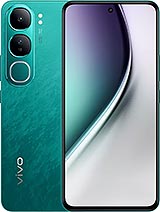
Y300
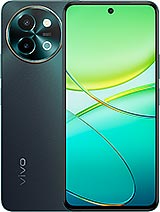
Y38 5G
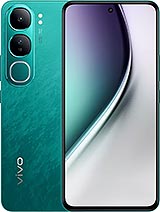
Y300 5G
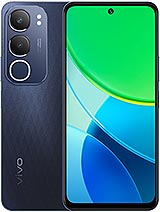
Y29 5G
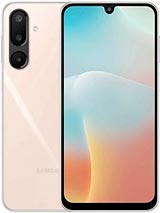
Galaxy M16 5G