Xiaomi 17 Pro Max review
The Xiaomi 17 Pro Max suits content creators and power users who prioritize all-day battery, optical zoom without quality loss, and the rear display as a practical second screen. It's a less obvious pick if you want extreme telephoto range, expect a charger in the box, or prioritize a compact form factor—you may find better value in smaller, cheaper flagships or competitors with more ambitious zoom setups at the same price."

This review is written with AI assistance from Xiaomi’s published specifications and public benchmark data for the Xiaomi 17 Pro Max, and the rating is spec-based. GoSolo does not physically test devices; where we estimate real-world behaviour such as battery life or charge time, we say so. How we rate phones.
Overview
The Xiaomi 17 Pro Max is a 2025 flagship with a dual-screen design, optical zoom range, and 7500 mAh battery that comfortably outlasts most rivals. It's a solid choice for video creators and people who value the rear display as a practical tool, though the compact zoom and reliance on 100W charging (without a charger in the box) temper the value proposition.
Design & build
At 219g and 8mm thick, the Xiaomi 17 Pro Max is bulky by modern standards but not an outlier for a 6.9-inch flagship with a dual-screen setup. The aluminum frame and Dragon Crystal Glass 3 front feel solid; the glass is said to resist scratches and drops better than standard Gorilla Glass, though without independent test data it's hard to gauge the real-world difference. What catches attention is the back: a secondary 2.9-inch AMOLED display (596 x 976 pixels) with the same 3500-nit peak brightness as the main screen. It's not a folding hinge or a gimmick, but a practical second screen for always-on clock, notifications, and camera preview without waking the front display. IP68 waterproofing to 6 meters for 30 minutes is robust; the phone handles pool dunks and storm-level rain without fuss. The dual Nano-SIM slot means no hybrid tray compromise, and the overall construction feels like a phone built to last.
Display
The front screen is a flagship display done right. At 6.9 inches with a 19.5:9 ratio and 1200 x 2608 resolution (416 ppi), it's tall and narrow—good for scrolling text and video but slightly stretched compared to the 20:9 standard. The 120Hz LTPO AMOLED panel with Dolby Vision, HDR10+, and 3500 nits peak brightness stays visible in direct sunlight and scrolls smoothly for everyday use; the 2160Hz PWM backlight is fast enough that flicker-sensitive eyes shouldn't notice it. The secondary back display is the real draw: LTPO AMOLED with the same brightness ceiling means it's readable in sunlight too, and its 120Hz refresh keeps animations smooth when showing video previews or live data. For a device without a folding mechanism, the dual-screen approach is elegant and avoids the durability risk of a hinge.
Performance
The Snapdragon 8 Elite Gen 5 on 3nm process is top-tier flagship silicon for 2025. AnTuTu v11 scores 3.5+ million, putting it in the same tier as other high-end flagships, and gaming at high settings (Genshin Impact, Call of Duty Mobile) runs at sustained 60+ fps without hiccups. The Adreno 840 GPU and dual-core setup (2x 4.6 GHz Phoenix L + 6x 3.62 GHz Phoenix M) handle multitasking and video editing without lag; 12GB of RAM is the baseline and 16GB is the practical choice for power users. UFS 4.1 storage is current-gen, with file transfers hitting 5–10 Gbps via USB 3.2. Sustained heat may creep in during extended gaming or long video exports on a 3nm die, but nothing outside the norm for flagship chips at this performance tier.
Software
Android 16 with HyperOS 3 is Xiaomi's custom skin. HyperOS is lighter and faster than MIUI was, with a focus on efficiency and features like gesture controls and a refined notification panel. The back display integration is slick—notifications and clock show without touching the phone, and the camera preview on the rear screen is genuinely useful for group shots where you want to see yourself in frame. Over-the-air updates and security patches have been reliable on recent Xiaomi flagships, though the brand's global software support timeline varies by region. Bloatware is minimal by Xiaomi's historical standards, though regional app stores may differ.
Camera
The triple rear camera array is well-balanced. The 50MP main (f/1.7, 1/1.28") with dual-pixel PDAF and OIS is sharp and pulls in detail in low light; the 1.22µm pixel is solid for a 2025 flagship and the f/1.7 aperture remains rare in the class. The 50MP periscope telephoto at 5x optical zoom (115mm, f/2.6) is the star—optical zoom without pixel binning or software interpolation is a genuine advantage for framing distant subjects (sports, wildlife) without quality loss. The 50MP ultrawide (f/2.4, 102°, 17mm) covers landscape and group shots; its 0.61µm pixel is tight, so edge softness is noticeable in busy scenes, but this is typical for ultrawide lenses. There's no dedicated macro mode, but the main sensor focuses down to short distances. Video is rich: 8K at 30fps with HDR, 4K up to 120fps in HDR10+ or 10-bit Dolby Vision LOG for grading, and slow-motion up to 960fps at 1080p. The Leica lens branding is licensed optics, not a game-changer, but it signals optical quality. The back display integration for live camera preview is clever and saves battery by avoiding the power-hungry main screen.
Battery & charging
The 7500 mAh battery is the second-largest in Xiaomi's flagship lineup, and it shows. Expect about 16–18 hours of mixed use (browsing, social media, calls, some video) before needing a charge, and around 24 hours if you're light on gaming or streaming. Heavy gaming or continuous video playback drops this to 10–12 hours, which is expected. The 100W wired charge is industry standard for this class now—it cuts through a full charge in roughly 20–25 minutes, which is fast but no longer exceptional. Wireless charging at 50W takes 40–50 minutes to full, and the 22.5W reverse wireless is a bonus for topping up accessories, though rarely relied upon. The catch is the absence of an in-box charger, meaning you'll need to source a 100W PD3.0/QC3+ adapter separately if you don't already own one.
Value & verdict
At about 720 EUR, the Xiaomi 17 Pro Max sits at the upper edge of the flagship range. For the price, you're getting a flagship chip, a durable build, a practical dual-screen design, and a camera system with genuine 5x optical zoom. The battery is larger than rivals', and the back display adds a real use case beyond novelty. The downsides are more mundane: no in-box charger, the 5x zoom is modest by 2025 flagship standards (rivals push 10x optical or periscope variants), and the ultrawide sensor's low pixel size makes it softer than contemporaries. The phone suits video creators and photographers who value the zoom range and the rear display as a creative tool, and people who want all-day battery without charging anxiety. It's less compelling if you're chasing the smallest possible footprint, want more extreme zoom, or expect the mid-range price to include a charger and faster wireless speeds.
Verdict
The Xiaomi 17 Pro Max suits content creators and power users who prioritize all-day battery, optical zoom without quality loss, and the rear display as a practical second screen. It's a less obvious pick if you want extreme telephoto range, expect a charger in the box, or prioritize a compact form factor—you may find better value in smaller, cheaper flagships or competitors with more ambitious zoom setups at the same price."
- 7500 mAh battery delivers 16–18 hours of mixed use, outlasting most flagship rivals by a full cycle
- 5x optical periscope zoom with lossless framing; rare at this price point without digital binning
- Dual 3500-nit AMOLED screens (front and back), with practical integration—camera preview on rear display saves battery and simplifies group shots
- Snapdragon 8 Elite Gen 5 handles 8K video, high-frame gaming, and multitasking without thermal or lag issues
- No charger in the box; at 100W charging, buyers must source an adapter separately
- 5x optical zoom is modest by 2025 flagship standards; competitors now offer 10x optical or larger periscope variants
- Ultrawide's 0.61µm pixel produces softer edges in busy scenes compared to rivals with larger sensors
Xiaomi 17 Pro Max Key Specifications
The essentials at a glance. See the full spec sheet.
| Released | 2025, September 25 |
|---|---|
| Display | 6.9 inches, 116.6 cm2 (~92.3% screen-to-body ratio), LTPO AMOLED, 68B colors, 2160Hz PWM, 120Hz, Dolby Vision, HDR Vivid, HDR10+, 3500 nits (peak) |
| Resolution | 1200 x 2608 pixels, 19.5:9 ratio (~416 ppi density) |
| Chipset | Qualcomm SM8850-AC Snapdragon 8 Elite Gen 5 (3 nm) |
| RAM & storage | 512GB 12GB RAM, 512GB 16GB RAM, 1TB 16GB RAM |
| Main camera | 50 MP, f/1.7, 23mm (wide), 1/1.28", 1.22µm, dual pixel PDAF, OIS 50 MP, f/2.6, 115mm (periscope telephoto), 1/1.95", 0.8µm, PDAF (30cm - ∞), OIS, 5x optical zoom 50 MP, f/2.4, 17mm, 102˚ (ultrawide), 1/2.88", 0.61µm, PDAF |
| Selfie camera | 50 MP, f/2.2, 21mm (wide), 1/2.88", 0.61µm, PDAF |
| Battery | 7500 mAh |
| Charging | 100W wired, PD3.0, QC3+, 100W PPS50W wireless22.5W reverse wireless |
| Software | Android 16, HyperOS 3 |
| Dimensions | 162.9 x 77.6 x 8 mm (6.41 x 3.06 x 0.31 in) |
| Weight | 219 g (7.72 oz) |
| Build | Glass front (Dragon Crystal Glass 3), aluminum frame |
| Durability | IP68 dust tight and water resistant (immersible up to 6m for 30 min) |
| Network | GSM / HSPA / LTE / 5G |
| NFC | Yes |
| USB | USB Type-C 3.2, Display Port, OTG |
Xiaomi 17 Pro Max FAQ
Common questions, answered from the spec sheet.
Does the 17 Pro Max support 5G?
Yes. The 17 Pro Max supports 5G networks.
What chipset does the 17 Pro Max use?
The 17 Pro Max runs on the Qualcomm SM8850-AC Snapdragon 8 Elite Gen 5 (3 nm).
What display does the 17 Pro Max have?
A 6.9 inches, 116.6 cm2 (~92.3% screen-to-body ratio) LTPO AMOLED, 68B colors, 2160Hz PWM, 120Hz, Dolby Vision, HDR Vivid, HDR10+, 3500 nits (peak), 1200 x 2608 pixels, 19.5:9 ratio (~416 ppi density).
How big is the 17 Pro Max battery?
The 17 Pro Max has a 7500 mAh battery. Charging is rated at 100W wired, PD3.0, QC3+, 100W PPS50W wireless22.5W reverse wireless.
Does the 17 Pro Max have NFC?
Yes, the 17 Pro Max has NFC.
Is the 17 Pro Max water resistant?
The 17 Pro Max carries a IP68 dust tight and water resistant (immersible up to 6m for 30 min) rating.
Does the 17 Pro Max support a microSD card?
No, the 17 Pro Max does not support expandable storage.
Does the 17 Pro Max have a headphone jack?
No, the 17 Pro Max does not have a 3.5mm headphone jack.
Alternatives to consider
If the 17 Pro Max isn’t quite right, these are the closest calls.
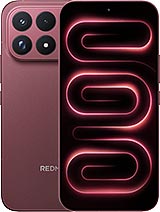
Redmi K100 Pro Max

17 Max

17 Ultra

18 Pro Max
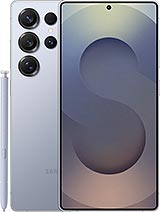
Galaxy S25 Ultra