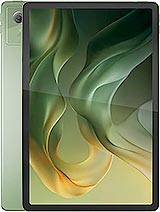
Xiaomi Pad SE review
This tablet suits anyone who reads, watches video, or needs a second screen for work without breaking the budget. If you game seriously, edit photos, or expect snappy performance from demanding apps, the Snapdragon 680 will disappoint you.
This review is based on Xiaomi’s published specifications and public benchmark data for the Xiaomi Pad SE, and the rating is spec-based. GoSolo does not physically test devices; where we estimate real-world behaviour such as battery life or charge time, we say so. How we rate phones.
Overview
The Pad SE is a straightforward budget 11-inch tablet for reading, video, and light work—the display is competent and the battery lasts, but the camera and aging processor are too weak for creative work or heavy gaming.
Design & Build
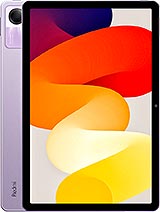
At 478 grams and 7.4 mm thick, the Pad SE is genuinely slim and portable for an 11-inch slate. The glass front and aluminum frame–and-back assembly feel solid in hand and resist daily scratches, though it will need a case for drops. The bezel-to-screen ratio is reasonable at 81% coverage, and the overall footprint is comfortable for lap use or propping on a desk. Color options (Lavender Purple, Graphite Gray, Mint Green) add personality without changing substance. This is a tablet built to be carried and used, not to flex.
Display
The 11-inch IPS LCD runs at 90Hz with a 1200 x 1920 resolution (16:10 aspect ratio), yielding 207 pixels per inch. At that size, text is legible but not sharp; photographs show solid color separation on IPS but lack the saturation and contrast of an OLED. The 400-nit peak brightness is adequate indoors and reasonably readable in partial sunlight, but direct outdoor use requires some squinting. Scrolling feels smooth thanks to the 90Hz panel, a welcome step above older 60Hz tablets at this price. It is a display that does its job without impressing, and for most readers and video watchers, that suffices.
Performance
The Snapdragon 680 is a mainstream midrange chip from 2021, paired with up to 8GB RAM and eMMC storage. Office work, web browsing, video streaming, and light multitasking run without friction. However, demanding games and heavier creative apps stutter or require settings cuts; anything that taxes the GPU (3D, real-time photo editing) will feel sluggish. The AnTuTu score of around 243–262k reflects this middle ground. By 2023–2025 standards for a budget tablet, it is dated but not dead; buyers who treat it as a reader and media consumption device will not notice weakness, but anyone expecting gaming or video work will hit the ceiling fast.
Software
Android 13 at launch, upgradable to Android 15 with HyperOS 2, gives the Pad SE a modern software stack and a clear upgrade path. Xiaomi's UI adds customization but is lighter than some OEM skins. Updates are not guaranteed forever on a budget tablet, but the Android 13-to-15 upgrade suggests reasonable long-term support. The experience is vanilla enough for productivity but flavored enough that you know Xiaomi owns it.
Camera
The rear 8MP and front 5MP cameras are afterthoughts. Both shoot only 1080p video, which is stunningly low for 2023 onward, and the sensors and apertures (f/2.0 rear, f/2.2 front) produce soft, dimly-lit footage even in good light. These are not cameras you use to create; they exist only for Zoom calls and rare document scans. If you ever need to photograph anything seriously, a smartphone will outperform this tablet by orders of magnitude. The inclusion of panorama mode does not change the verdict.
Battery & Charging
The 8000 mAh battery, combined with the efficient midrange chip and IPS screen, yields about 1 to 1.5 days of mixed use (video, reading, messaging, light work) per charge. That is solid for an 11-inch slate and means a tablet user can skip daily plugging. The 33W wired charger (USB-C with UFCS and Power Delivery) refills the battery in roughly 90 to 120 minutes—fast by tablet standards and practical for travel. There is no wireless charging, which is fine; most tablets at this price omit it.
Value & Verdict
At around 200 EUR, the Pad SE competes directly with other budget 11-inch slates and entry-level iPad Air knockoffs. It offers good battery life, a responsive display, and a light, durable chassis. However, the aging chip, weak cameras, and modest screen sharpness mean you are buying into a tablet that excels at media consumption and office tasks but falters at anything creative or gaming-forward. For students, casual readers, and office workers who want a large screen without spending much, it delivers. For anyone who needs it to edit video, play demanding games, or create content, look elsewhere.
Verdict
This tablet suits anyone who reads, watches video, or needs a second screen for work without breaking the budget. If you game seriously, edit photos, or expect snappy performance from demanding apps, the Snapdragon 680 will disappoint you.
- 11-inch display with 90Hz refresh and decent brightness (400 nits) makes scrolling smooth and readability solid in typical indoor light
- 8000 mAh battery and 33W charging deliver about a day of mixed use and quick top-ups, practical for travel and daily office work
- Slim, light aluminum-and-glass build at 478g feels sturdy and travels easily in a bag
- Stylus support and microSD expansion add utility without inflating the price
- Snapdragon 680 is mid-2021 vintage; demanding apps and any serious mobile gaming demand reduced settings or stutter
- 8MP and 5MP cameras shoot only 1080p and produce soft, dimly-lit footage; useless for content creation or scanning documents
- IPS LCD and 207 ppi density lag behind the screen quality of rivals in this price band, especially in color depth
Xiaomi Pad SE Key Specifications
The essentials at a glance. See the full spec sheet.
| Released | 2023, August 15 |
|---|---|
| Display | 11.0 inches, 347.5 cm2 (~81.4% screen-to-body ratio), IPS LCD, 90Hz, 400 nits (typ) |
| Resolution | 1200 x 1920 pixels, 16:10 ratio (~207 ppi density) |
| Chipset | Qualcomm SM6225 Snapdragon 680 4G (6 nm) |
| RAM & storage | 128GB 4GB RAM, 128GB 6GB RAM, 128GB 8GB RAM, 256GB 8GB RAM |
| Main camera | 8 MP, f/2.0, (wide), 1/4.0", 1.12µm, AF |
| Selfie camera | 5 MP, f/2.2, (ultrawide), 1/5.0", 1.12µm |
| Battery | 8000 mAh |
| Charging | 33W wired, 33W UFCS, PD |
| Software | Android 13, upgradable to Android 15, HyperOS 2 |
| Dimensions | 255.5 x 167.1 x 7.4 mm (10.06 x 6.58 x 0.29 in) |
| Weight | 478 g (1.05 lb) |
| Build | Glass front, aluminum back, aluminum frame |
| Durability | Stylus support |
| Network | No cellular connectivity |
| NFC | No |
| USB | USB Type-C, OTG |
Xiaomi Pad SE FAQ
Common questions, answered from the spec sheet.
Does the Pad SE support 5G?
No. The Pad SE tops out at No cellular connectivity, without 5G.
What chipset does the Pad SE use?
The Pad SE runs on the Qualcomm SM6225 Snapdragon 680 4G (6 nm).
What display does the Pad SE have?
A 11.0 inches, 347.5 cm2 (~81.4% screen-to-body ratio) IPS LCD, 90Hz, 400 nits (typ), 1200 x 1920 pixels, 16:10 ratio (~207 ppi density).
How big is the Pad SE battery?
The Pad SE has a 8000 mAh battery. Charging is rated at 33W wired, 33W UFCS, PD.
Does the Pad SE have NFC?
No, the Pad SE does not list NFC support.
Is the Pad SE water resistant?
The Pad SE carries a Stylus support rating.
Does the Pad SE support a microSD card?
Yes, the Pad SE supports expandable storage (microSDXC).
Does the Pad SE have a headphone jack?
No, the Pad SE does not have a 3.5mm headphone jack.
Alternatives to consider
If the Pad SE isn’t quite right, these are the closest calls.
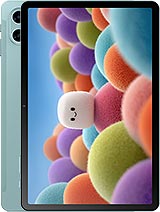
Black Shark Pad SE
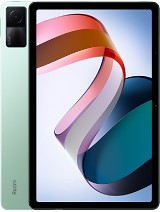
Redmi K Pad
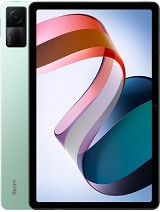
Redmi Pad 2
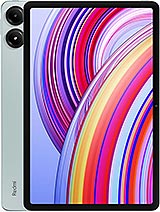
Redmi Pad 2 Pro
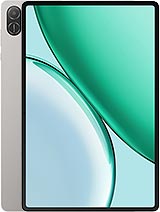
Pad X8b