Xiaomi Redmi 13 review
This phone suits first-time users, heavy texters, and anyone in regions where all-day battery life and IP53 durability matter more than raw speed. Anyone who games regularly, takes photos often, or wants to future-proof their purchase should look at faster competitors now available at the same price.

This review is based on Xiaomi’s published specifications and public benchmark data for the Xiaomi Redmi 13, and the rating is spec-based. GoSolo does not physically test devices; where we estimate real-world behaviour such as battery life or charge time, we say so. How we rate phones.
Overview
The Redmi 13 is a straightforward budget phone that delivers all-day battery life and a large, smooth 90Hz screen without pretense or premium pricing. It handles everyday use and casual gaming well enough, but the aging Helio G91 Ultra chipset, basic cameras, and slow charging remind you exactly what corners Xiaomi cut to keep the price down.
Design and build
The Redmi 13 is a competent, unremarkable slab. At 205g and 8.3mm thick, it sits at the heavier end of budget phones, with glass front and back sandwiching a plastic frame. The IP53 rating survives vertical rain and light splashes, but won't save it from a sideways spray or a dunk; it's honest durability for light users, not adventurers. The palm feel is solid if uninspired, and the large 6.79-inch footprint means one-handed use is a stretch for most people. Dual SIM support (with microSDXC via shared slot) handles multiple networks or regional travel without compromise.
Display
The 6.79-inch IPS LCD runs at 90Hz with a 1080 x 2460 resolution, yielding 396 ppi—pixel density is fine, not exceptional, and text remains sharp enough for messaging and browsing. Peak brightness of 550 nits (in HBM mode) fends off outdoor glare, a genuine asset in direct sun where many budget phones wash out. The 90Hz refresh feels noticeably smoother than 60Hz competitors when scrolling through feeds or apps, though it doesn't match the silky motion of 120Hz flagships. Gorilla Glass protection is standard. Color accuracy is acceptable but not calibrated; the panel isn't a showcase, but it gets the job done for its class.
Performance
The Helio G91 Ultra is a mainstream midrange chip from MediaTek's 2023 lineup, and by 2024 standards it's workable but visibly dated. Everyday tasks—messaging, calls, social media, web browsing—run without stutters, and the Cortex-A75 cores handle multitasking smoothly. Gaming is where age shows: casual titles like Candy Crush or Clash Royale play fine, and PUBG Mobile or COD Mobile run at medium settings and 30-60fps, but toggle to high graphics and frame pacing suffers. The 258k AnTuTu v9 score confirms it as a solid entry-midrange part, but phones at the same price in late 2024 and early 2025 pair faster chipsets (Helio G99, Snapdragon 685 variants) that handle recent apps and games more confidently. RAM choices of 6GB or 8GB are adequate; storage expansion via microSDXC is a practical safety net.
Software
HyperOS on Android 14 brings Xiaomi's customization layer to the table with minimal bloat compared to MIUI of years past. Out of the box it includes FM radio, file manager, and a sidecar app drawer, plus reasonable notification handling. Updates tend to land in dribs and drabs for budget Xiaomi devices, so don't expect years of timely security patches. The software doesn't drag performance but also doesn't hide the underlying chipset's limits; it's a neutral, competent skin that stays out of the way.
Camera
The 108MP main sensor with f/1.8 aperture and PDAF captures daytime detail capably, and the wide aperture helps in dim rooms or evening light without relying entirely on digital noise reduction. The macro lens is present but forgettable, and there's no telephoto, which means distant subjects stay small and require cropping—a genuine gap now that rivals at this price add 2x or even 3x zoom options. The 13MP selfie camera is adequate for video calls and casual shots. Both shoot 1080p30, not 4K, and video stabilization is absent; handheld clips look shaky. HDR processing is basic, and low-light shots exhibit the speckled noise of a modest sensor. For casual snapshots and social media, the camera earns a pass; for anything beyond that, it feels behind the curve.
Battery and charging
The 5030mAh battery is the phone's strongest card. With typical mixed use—browsing, messaging, an hour or two of video, casual gaming—expect 13 to 16 hours of runtime, which qualifies as genuine all-day endurance. Heavy gaming or constant video streaming will eat deeper into the reserve, but even then you won't desperately hunt for a charger mid-afternoon. The 33W wired charging fills the tank in about 50-70 minutes, a respectable pace but no longer cutting-edge; rivals now routinely hit 60W, 100W, or more, making the Redmi's pace feel incremental by comparison. There's no wireless charging, so you're tethered to a cable for quick top-ups away from outlets. Over a year of ownership, the slower charge rate will accumulate hours of waiting.
Value and verdict context
Priced at roughly $154 USD (or €105), the Redmi 13 occupies the space where Xiaomi has long thrived: a basic phone that does the essentials without frills. In mid-2024, this was a sensible buy for first-time smartphone users or those who text, call, and watch video but rarely game seriously. By late 2024 and into 2025, however, the competition has tightened. At the same price, rival makers now offer faster processors (Helio G99, Snapdragon 685 variants), higher charging wattages (60W), and better zoom capabilities. The Redmi 13 hasn't aged poorly—it still delivers on battery life and screen size—but it no longer feels like the obvious choice in its segment.
Verdict
This phone suits first-time users, heavy texters, and anyone in regions where all-day battery life and IP53 durability matter more than raw speed. Anyone who games regularly, takes photos often, or wants to future-proof their purchase should look at faster competitors now available at the same price.
- 5030mAh battery achieves genuine full-day use with mixed apps, outpacing many rivals at this price point
- 90Hz IPS display at 6.79 inches with 550-nit peak brightness is large and readable in daylight without the flicker of 60Hz
- 33W charging reaches a full battery in under an hour, faster than budget phones from two years ago
- Side-mounted fingerprint sensor and stereo sound add practical convenience for the money
- Helio G91 Ultra is showing its age; midrange gaming at high settings isn't reliable, and app load times lag behind even slightly pricier rivals from 2024-2025
- No telephoto zoom means all photography relies on cropping, a real gap when rivals at this price now include 2x or 3x zooms
- 33W charging, while acceptable, trails the 60-100W now standard in this segment, adding cumulative wait time over months of ownership
Xiaomi Redmi 13 Key Specifications
The essentials at a glance. See the full spec sheet.
| Released | 2024, June 03 |
|---|---|
| Display | 6.79 inches, 109.5 cm2 (~85.1% screen-to-body ratio), IPS LCD, 90Hz, 550 nits (HBM) |
| Resolution | 1080 x 2460 pixels (~396 ppi density) |
| Chipset | Mediatek Helio G91 Ultra (12 nm) |
| RAM & storage | 128GB 6GB RAM, 128GB 8GB RAM, 256GB 6GB RAM, 256GB 8GB RAM |
| Main camera | 108 MP, f/1.8, (wide), 1/1.67", 0.64µm, PDAF 2 MP (macro) |
| Selfie camera | 13 MP, f/2.5, (wide) |
| Battery | 5030 mAh |
| Charging | 33W wired |
| Software | Android 14, HyperOS |
| Dimensions | 168.6 x 76.3 x 8.3 mm (6.64 x 3.00 x 0.33 in) |
| Weight | 205 g (7.23 oz) |
| Build | Glass front, plastic frame, glass back |
| Durability | IP53 dust protected and water resistant (vertical water sprays) |
| Network | GSM / HSPA / LTE |
| NFC | Yes (market/region dependent) |
| USB | USB Type-C |
Xiaomi Redmi 13 FAQ
Common questions, answered from the spec sheet.
Does the Redmi 13 support 5G?
No. The Redmi 13 tops out at GSM / HSPA / LTE, without 5G.
What chipset does the Redmi 13 use?
The Redmi 13 runs on the Mediatek Helio G91 Ultra (12 nm).
What display does the Redmi 13 have?
A 6.79 inches, 109.5 cm2 (~85.1% screen-to-body ratio) IPS LCD, 90Hz, 550 nits (HBM), 1080 x 2460 pixels (~396 ppi density).
How big is the Redmi 13 battery?
The Redmi 13 has a 5030 mAh battery. Charging is rated at 33W wired.
Does the Redmi 13 have NFC?
Yes, the Redmi 13 has NFC.
Is the Redmi 13 water resistant?
The Redmi 13 carries a IP53 dust protected and water resistant (vertical water sprays) rating.
Does the Redmi 13 support a microSD card?
Yes, the Redmi 13 supports expandable storage (microSDXC (uses shared SIM slot)).
Does the Redmi 13 have a headphone jack?
Yes, the Redmi 13 has a 3.5mm headphone jack.
Alternatives to consider
If the Redmi 13 isn’t quite right, these are the closest calls.

Redmi 13 5G

Redmi A4

Redmi 13x
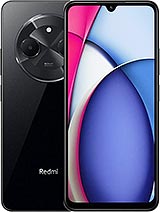
Redmi A3 Pro
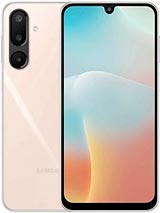
Galaxy M16 5G