Xiaomi Redmi A4 review
The Redmi A4 suits someone in an emerging market who values a large, smooth screen and honest battery life over specs or gaming, and can live with 720p resolution and slow charging. Anyone prioritizing video capture, display sharpness, or fast charging should cross-shop rivals with higher refresh-rate pricing or look for a phone that actually supports 4K video at this tier.

This review is based on Xiaomi’s published specifications and public benchmark data for the Xiaomi Redmi A4, and the rating is spec-based. GoSolo does not physically test devices; where we estimate real-world behaviour such as battery life or charge time, we say so. How we rate phones.
Overview
The Redmi A4 is a straightforward 100-EUR entry-level phone built around a 6.88-inch 120Hz display and all-day battery for messaging and social media. It delivers practical smoothness for casual use, but the 720p screen resolution and 1080p-only video are noticeably dated even for its price tier.
Design & build
At 212.4 grams and 8.2mm thick, the A4 feels substantial without being unwieldy, and the glass front and back give it a more finished look than the plastic shells many rivals at this price are wrapped in. That said, the plastic frame and lack of any mention of Gorilla Glass or equivalent protection mean drops will cost you. Dust and splash resistance is present, which covers splashes and pocket dust but not submersion. For a phone at this price aimed at emerging markets, the build is serviceable; just treat it like what it is, not an indestructible workhorse.
Display
The 6.88-inch 120Hz LCD is the A4's strongest selling point for day-to-day use. Scrolling through apps and social feeds feels notably smoother than what you'd get from a 60Hz entry-level phone, and at 600 nits peak brightness (HBM), the screen is legible in direct sunlight for most tasks. The problem is resolution: 720 x 1640 pixels on a nearly seven-inch display works out to about 260 ppi, and that softness becomes obvious if you read small text or look at sharp UI elements. It's fine for video playback, messaging, and casual browsing, but this is where Xiaomi cut a corner to hit the price point.
Performance
The Snapdragon 4s Gen 2 is a sensible choice for this category and handles everyday tasks—messaging, calls, social media, streaming video—without stuttering. Gaming is limited to lighter titles (Candy Crush, puzzle games); demanding games like PUBG or Genshin Impact will either stutter or require such low settings that they stop being fun. The 4GB base RAM variant will struggle more when you have many apps open, so opt for the 128GB 6GB version if you can, especially if you plan to keep this phone for more than a year. This is not a phone for power users, but it is not pretending to be one.
Software
The A4 runs Android 14 with HyperOS and promises up to two major Android upgrades, which is respectable for an entry-level phone in 2024—you can realistically expect Android 16 support. Out of the box, HyperOS is relatively clean and less bloated than some rival skins in this space, though you will still encounter pre-installed apps. Updates should be regular enough for security patches, at least through 2025 and 2026.
Camera
The 50MP main sensor with f/1.8 aperture and LED flash captures decent photos in daylight and performs reasonably in indoor light, better than the spec sheet alone suggests thanks to the wide aperture. The real limitation is 1080p-only video at 30fps; if you shoot video regularly or want to crop footage in post-production, this is a genuine shortcoming. The 5MP selfie camera is purely functional for video calls and casual selfies. For a 100-EUR phone aimed at a messaging-first user, the camera is fit-for-purpose, but video creatives should look elsewhere.
Battery & charging
The 5160 mAh battery combined with the efficient Snapdragon 4s and 720p screen will run roughly 1.5 days on moderate use (messaging, social media, occasional video). Heavy video watching or gaming will pull that down to a single day; very light users might stretch it to two days. The 18W charging takes about 90–120 minutes from empty to full, which is slow by today's standards—rivals at this price often hit 30W or higher. There is no fast charging culture here; plan accordingly.
Value & verdict
At around 100 EUR, the A4 is cheap enough that it does not need to be remarkable. It delivers a reliable, smooth-scrolling 6.88-inch screen, all-day battery life, 5G and Wi-Fi ac connectivity, and a side fingerprint sensor without pretense. It is not chasing performance or photography; it is a straightforward device for people in emerging markets who want to message, scroll, and occasionally watch video without spending a week's wages. The 720p resolution and 18W charging are dated, and there is no future-proofing here, but neither is there meaningful compromise for the price. Compare it to what else exists at 100 EUR in your market—if it is the closest to this feature set, it is worth considering.
Verdict
The Redmi A4 suits someone in an emerging market who values a large, smooth screen and honest battery life over specs or gaming, and can live with 720p resolution and slow charging. Anyone prioritizing video capture, display sharpness, or fast charging should cross-shop rivals with higher refresh-rate pricing or look for a phone that actually supports 4K video at this tier.
- 120Hz LCD display makes scrolling and navigation noticeably smoother than standard 60Hz entry-level rivals
- 5160 mAh battery sustains 1.5 days of typical use without fast charging anxiety
- Clean HyperOS with two major Android upgrades promised, better bloat control than some competitors at this price
- 5G and Wi-Fi ac connectivity cover modern network speeds for markets where 5G is rolling out
- 720p resolution on a 6.88-inch screen means visibly soft text and UI—outdated even for budget tier in 2024
- 18W charging is slow; rivals at this price now offer 30W or higher, leaving you tethered for 90–120 minutes
- 1080p video only, limiting content creation and post-production cropping for anyone shooting regularly
Xiaomi Redmi A4 Key Specifications
The essentials at a glance. See the full spec sheet.
| Released | 2024, October 16 |
|---|---|
| Display | 6.88 inches, 112.4 cm2 (~84.0% screen-to-body ratio), IPS LCD, 120Hz, 450 nits (typ), 600 nits (HBM) |
| Resolution | 720 x 1640 pixels (~260 ppi density) |
| Chipset | Qualcomm SM4635 Snapdragon 4s Gen 2 (4 nm) |
| RAM & storage | 64GB 4GB RAM, 128GB 4GB RAM, 128GB 6GB RAM |
| Main camera | 50 MP, f/1.8, (wide) Auxiliary lens |
| Selfie camera | 5 MP, f/2.2, (wide) |
| Battery | 5160 mAh |
| Charging | 18W wired |
| Software | Android 14, up to 2 major Android upgrades, HyperOS |
| Dimensions | 171.9 x 77.8 x 8.2 mm (6.77 x 3.06 x 0.32 in) |
| Weight | 212.4 g (7.51 oz) |
| Build | Glass front, glass back, plastic frame |
| Durability | Dust and splash resistant |
| Network | GSM / HSPA / LTE / 5G |
| NFC | No |
| USB | USB Type-C 2.0 |
Xiaomi Redmi A4 FAQ
Common questions, answered from the spec sheet.
Does the Redmi A4 support 5G?
Yes. The Redmi A4 supports 5G networks.
What chipset does the Redmi A4 use?
The Redmi A4 runs on the Qualcomm SM4635 Snapdragon 4s Gen 2 (4 nm).
What display does the Redmi A4 have?
A 6.88 inches, 112.4 cm2 (~84.0% screen-to-body ratio) IPS LCD, 120Hz, 450 nits (typ), 600 nits (HBM), 720 x 1640 pixels (~260 ppi density).
How big is the Redmi A4 battery?
The Redmi A4 has a 5160 mAh battery. Charging is rated at 18W wired.
Does the Redmi A4 have NFC?
No, the Redmi A4 does not list NFC support.
Is the Redmi A4 water resistant?
The Redmi A4 carries a Dust and splash resistant rating.
Does the Redmi A4 support a microSD card?
Yes, the Redmi A4 supports expandable storage (microSDXC (dedicated slot)).
Does the Redmi A4 have a headphone jack?
Yes, the Redmi A4 has a 3.5mm headphone jack.
Alternatives to consider
If the Redmi A4 isn’t quite right, these are the closest calls.
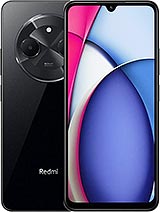
Redmi A3 Pro

Redmi 13 5G
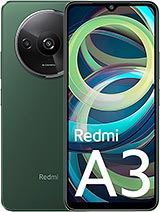
Redmi A3
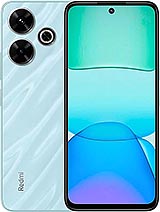
Redmi 13
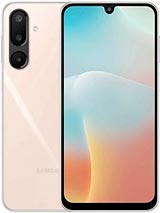
Galaxy M16 5G