Xiaomi Redmi K80 Ultra review
The K80 Ultra suits someone who values day-to-day speed and battery life over camera prowess and doesn't mind a busy custom skin. Skip it if photography or expandable storage are high on your list, or if you prefer a tighter, lighter phone with a sharper screen.
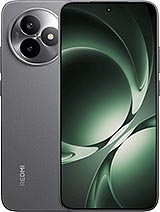
This review is based on Xiaomi’s published specifications and public benchmark data for the Xiaomi Redmi K80 Ultra, and the rating is spec-based. GoSolo does not physically test devices; where we estimate real-world behaviour such as battery life or charge time, we say so. How we rate phones.
Overview
The Redmi K80 Ultra packs a flagship Dimensity 9400+ chipset and 7410 mAh battery into a trim, 219g frame at a mid-range price—a rare combination that makes it a solid value for someone who wants smooth everyday performance and all-day battery without flagship costs.
Design & build
At 219g and 8.2mm thick, the K80 Ultra feels compact for a 6.83" phone—that's a real advantage if you hate pocket bulk. Glass front and aluminum frame are standard fare, but the IP68 rating (submersible to 2 meters for 30 minutes) is useful if you swim or work near water. The phone feels solid, though a matte finish option might have helped with fingerprints. For a device at this price hitting 310 EUR, the build sits above budget but below what you'd call premium; it gets the job done without fussing.
Display
The 6.83" OLED is one of the K80 Ultra's better bets. 144Hz keeps scrolling and gaming frame-rate smooth, and the 3200-nit peak brightness (1800 typical) means outdoor use in bright sun is readable without the harsh washed-out look cheaper phones suffer. Dolby Vision and HDR10+ are solid for watching content. The caveat: 1280×2772 resolution at 447 ppi is an unusual, tall aspect ratio that leaves text and app icons noticeably softer than flagship panels sitting at 500+ ppi. It's not bad, but it's not sharp. Color accuracy and refresh are the real wins here.
Performance
The Dimensity 9400+ is Mediatek's current flagship silicon, and it shows. The Cortex-X925 prime core and Immortalis-G925 GPU handle heavy games like Genshin Impact and Honkai Star Rail at high settings without stutter. Day-to-day multitasking, app launches, and media playback are snappy. For 2025, this chipset is near-peer to what Qualcomm's flagship Snapdragon brings, and at 310 EUR it's genuinely unusual to see this level of CPU and GPU muscle at this price point. The 12GB or 16GB RAM options are plenty; most users will never feel constrained. Performance is, straightforwardly, the phone's strongest card.
Software
HyperOS 2 on Android 15 is Xiaomi's custom skin. It's functional and fast, though it errs toward busy UI and doesn't shy from bloatware—you'll likely want to uninstall a handful of apps out of the box. The upside is regular updates; Xiaomi's track record for keeping Redmi and K-series phones current is solid. If you prefer near-stock Android, this isn't for you, but HyperOS is less intrusive than it was a few years back.
Camera
The 50MP main sensor (f/1.9, 1/1.55", OIS, 23mm) is where the K80 Ultra is competent but uninspired. It shoots balanced, well-lit photos in daylight and handles low light decently thanks to the wide aperture and OIS. But it doesn't distinguish itself—this exact sensor configuration is now common at 250+ EUR price points, and rivals have moved on to larger or more sophisticated setups. The 8MP ultrawide at 119° is the letdown: it's cramped for landscape and group shots, and the 1.12µm pixels deliver softer, mushier detail than the main camera. A 50MP ultrawide is table-stakes at this price now. The 20MP front camera is fine for video calls. 8K video recording is a spec-sheet flourish; most users will shoot 4K, and the gyro-EIS works reasonably well for handheld video.
Battery & charging
The 7410 mAh cell is the K80 Ultra's second-strongest point. With moderate use (messaging, browsing, some video), expect a full day plus into the next morning before you need a top-up—roughly 12–15 hours of screen time under realistic conditions. Heavy gaming or constant streaming will eat into that, but you're unlikely to hit the wall mid-afternoon. The 100W wired charger with Bypass charging technology tops the battery from empty in roughly 25–35 minutes depending on temperature and cable quality; that's fast enough that even a quick 15-minute plug-in buys several hours of use. Wireless charging is absent, which is increasingly standard to omit at this tier.
Value & verdict-context
At 310 EUR, the Redmi K80 Ultra occupies an odd middle ground: it has top-tier chip and RAM paired with a mid-range camera system. That's the trade-off baked into the price. If you care most about performance, battery, and display smoothness—and are willing to tolerate a competent but not special camera—it's good value. If you're a photo enthusiast or prioritize ultrawide versatility, a same-price rival with a weaker CPU but better camera setup might suit you better. The lack of expandable storage is a minor annoyance given the 1TB option exists, but it's worth noting if you hoard media. For global-south buyers who value snappy performance and endurance over camera prestige, this hits the mark. For others, the camera's mediocrity relative to the price tag is real, and HyperOS bloat might grate.
Verdict
The K80 Ultra suits someone who values day-to-day speed and battery life over camera prowess and doesn't mind a busy custom skin. Skip it if photography or expandable storage are high on your list, or if you prefer a tighter, lighter phone with a sharper screen.
- Dimensity 9400+ (3nm) and Immortalis-G925 GPU handle demanding games and everyday tasks without lag, matching flagships that cost much more
- 7410 mAh battery easily lasts a full day under mixed use, with 100W charging topping it in under 35 minutes
- 6.83" OLED at 1280×2772 is sharp (447 ppi), hits 3200 nits peak brightness, and 144Hz scrolling feels smooth; Dolby Vision and HDR10+ for media
- 8.2mm thickness and 219g weight keep it genuinely pocketable for its screen size; IP68 rating handles dust and submersion to 2m
- 50MP main camera with 1/1.55" sensor and OIS is competent but not exceptional; the 8MP 119° ultrawide is narrow and soft for group shots—rivals at this price now offer 50MP ultrawides with sharper, wider coverage
- No expandable storage; while up to 1TB is available, a microSD slot would have been practical for media-heavy users at this price
- Display brightness and HDR features are strong, but the 447 ppi density on a 6.83" screen means text and icons aren't as crisp as flagships; 1280×2772 resolution is oddly tall and narrow for the panel size
Xiaomi Redmi K80 Ultra Key Specifications
The essentials at a glance. See the full spec sheet.
| Released | 2025, June 26 |
|---|---|
| Display | 6.83 inches, 114.5 cm2 (~90.2% screen-to-body ratio), OLED, 68B colors, 144Hz, Dolby Vision, HDR10+, HDR Vivid, 1800 nits (HBM), 3200 nits (peak) |
| Resolution | 1280 x 2772 pixels, 19.5:9 ratio (~447 ppi density) |
| Chipset | Mediatek Dimensity 9400+ (3 nm) |
| RAM & storage | 256GB 12GB RAM, 256GB 16GB RAM, 512GB 12GB RAM, 512GB 16GB RAM, 1TB 16GB RAM |
| Main camera | 50 MP, f/1.9, 23mm (wide), 1/1.55", 1.0µm, PDAF, OIS 8 MP, 119˚ (ultrawide), 1/4.0", 1.12µm |
| Selfie camera | 20 MP, (wide), 1/2.0", 0.8µm |
| Battery | 7410 mAh |
| Charging | 100W wired, PD3.0Bypass charging |
| Software | Android 15, HyperOS 2 |
| Dimensions | 163.1 x 77.9 x 8.2 mm (6.42 x 3.07 x 0.32 in) |
| Weight | 219 g (7.72 oz) |
| Build | Glass front, aluminum frame |
| Durability | IP68 dust tight and water resistant (immersible up to 2m for 30 min) |
| Network | GSM / CDMA / HSPA / CDMA2000 / LTE / 5G |
| NFC | Yes |
| USB | USB Type-C |
Xiaomi Redmi K80 Ultra FAQ
Common questions, answered from the spec sheet.
Does the Redmi K80 Ultra support 5G?
Yes. The Redmi K80 Ultra supports 5G networks.
What chipset does the Redmi K80 Ultra use?
The Redmi K80 Ultra runs on the Mediatek Dimensity 9400+ (3 nm).
What display does the Redmi K80 Ultra have?
A 6.83 inches, 114.5 cm2 (~90.2% screen-to-body ratio) OLED, 68B colors, 144Hz, Dolby Vision, HDR10+, HDR Vivid, 1800 nits (HBM), 3200 nits (peak), 1280 x 2772 pixels, 19.5:9 ratio (~447 ppi density).
How big is the Redmi K80 Ultra battery?
The Redmi K80 Ultra has a 7410 mAh battery. Charging is rated at 100W wired, PD3.0Bypass charging.
Does the Redmi K80 Ultra have NFC?
Yes, the Redmi K80 Ultra has NFC.
Is the Redmi K80 Ultra water resistant?
The Redmi K80 Ultra carries a IP68 dust tight and water resistant (immersible up to 2m for 30 min) rating.
Does the Redmi K80 Ultra support a microSD card?
No, the Redmi K80 Ultra does not support expandable storage.
Does the Redmi K80 Ultra have a headphone jack?
No, the Redmi K80 Ultra does not have a 3.5mm headphone jack.
Alternatives to consider
If the Redmi K80 Ultra isn’t quite right, these are the closest calls.
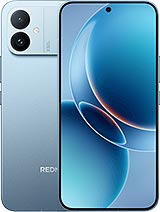
Redmi K90 Ultra
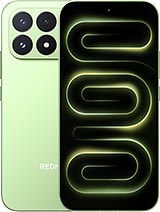
Redmi K100 Pro
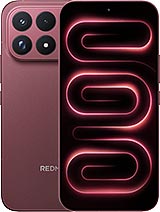
Redmi K100 Pro Max
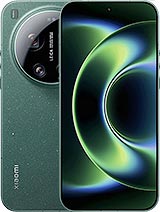
17 Ultra
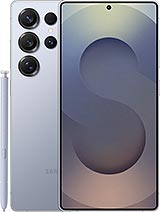
Galaxy S25 Ultra