ZTE Blade A75 review
The Blade A75 suits budget-conscious buyers in 5G coverage areas who prioritize battery life and screen size over performance or display quality. Anyone expecting smooth gaming, app responsiveness, or outdoor screen visibility should look at a Poco or Realme at the same price instead.

This review is based on ZTE’s published specifications and public benchmark data for the ZTE Blade A75, and the rating is spec-based. GoSolo does not physically test devices; where we estimate real-world behaviour such as battery life or charge time, we say so. How we rate phones.
Overview
The Blade A75 is a budget 5G phone with a large screen, solid battery, and headphone jack—but the low-res display and weak processor mean it struggles with gaming and multitasking. For €170 it is a practical workhorse for messaging and social media, not a multimedia device.
Design & build
At 205.5 grams and 8.6 mm thick, the Blade A75 is neither light nor slim, and without stated build materials or durability features, it reads as a cost-cut phone. The 86% screen-to-body ratio is decent for its class, and the dual SIM tray plus side-mounted fingerprint sensor follow the expected budget formula. There is nothing wrong here, but nothing that stands out either; it is a sensible plastic chassis that will survive daily use but will not impress on a desk.
Display
A 6.6 inch 120Hz IPS LCD is nominally generous, but the 720x1612 resolution and 266 ppi density betray the price: text, icons, and photos all lack the crispness you get from a 1080p panel at this diagonal, and side-by-side with a Poco or Realme at the same price will feel noticeably softer. The 120Hz refresh smooths scrolling through apps and social feeds, which is a nice touch for the money, but the IPS chemistry and likely modest brightness mean outdoor readability in direct sun will be a struggle. For indoor use and casual browsing it is fine; for image editing, photography review, or outdoor navigation, the blurriness becomes tiresome.
Performance
The Unisoc T760 is entry-level silicon that handles WhatsApp, email, YouTube, and light social media without lag. Jump to mobile games like PUBG Mobile and you will hit the chipset's ceiling fast; expect stuttering or forced low-resolution settings to maintain playability. The 4GB of RAM is the bare minimum and multitasking feels tighter than it should—background app switching can trigger reloads. For a buyer who uses their phone for calls, messaging, and content consumption, this is adequate; for anyone expecting responsive day-to-day fluidity or gaming flexibility, the Unisoc will frustrate within weeks.
Software
Android 13 ships clean with minimal bloat, which is refreshing for a budget phone. ZTE has resisted the urge to clutter it with unnecessary overlays, meaning you get a straightforward experience closer to stock Android than many rivals. Updates are a question mark—ZTE does not promise rapid or long-term support, so security patches may lag behind Samsung or Xiaomi at the same price. For the first 12 months you should be fine; after that, you may be on your own.
Camera
The 50MP sensor with f/1.8 aperture and 27mm focal length is a sensible setup for a budget phone, collecting enough light in daylight and wide enough for group shots and landscapes. In good light, colours are neutral and detail is acceptable; indoors or at dusk, noise creeps in quickly and the lack of optical zoom makes distant subjects muddy when cropped. The 8MP selfie is forgettable but adequate for video calls, and 4K video at 30fps is present but often stutters on the weak processor. This is a camera that works, not one that excels; do not expect mobile photography drama here.
Battery & charging
The 5000 mAh pack is honest work: mixed use (calls, messaging, social media, moderate video) should net 24 to 30 hours, and light users may stretch it to 36 hours. Heavy gaming or constant video playback will halve that, but for the target buyer—someone who checks email and TikTok—the battery is a strength. Charging is slower than it should be; 18W (where available) takes 1.5 to 2 hours, while the 10W variant stretched to 2.5+ hours. Rivals at this price now offer 30W or 33W, so the Blade A75 falls behind on time-to-charge. The battery itself is respectable; the charging infrastructure is not.
Value & verdict
At €170, the Blade A75 pitches itself at buyers in emerging markets or those switching from feature phones to 5G without wanting to spend €250+. The large screen, 5G bands, headphone jack, and all-day battery are legitimate strengths for the price, and for someone whose needs are calls, messages, and passive content consumption, it delivers. The 720p display and Unisoc T760 are the trade-offs—neither is a showstopper in isolation, but together they create a ceiling. You are not buying a gaming device or a photography phone; you are buying a durable, no-nonsense communications device that happens to have a big screen and modern connectivity. In that narrow lane, it is fit for purpose.
Verdict
The Blade A75 suits budget-conscious buyers in 5G coverage areas who prioritize battery life and screen size over performance or display quality. Anyone expecting smooth gaming, app responsiveness, or outdoor screen visibility should look at a Poco or Realme at the same price instead.
- 5000 mAh battery comfortably handles a full day of mixed use without worrying about afternoon top-ups
- 3.5 mm headphone jack and FM radio remain, which many budget buyers still value
- 5G connectivity where available, though the Unisoc T760 does not exploit it for real speed gains
- Clean Android 13 with minimal bloat and dual SIM flexibility for work-life separation or multi-country travel
- 720p display is soft and blurry compared to the 1080p standard at this size and price point; text and icons lack definition
- Unisoc T760 is a budget chipset that chokes on anything beyond light games or parallel app switching
- Charging tops out at 18W in some markets, meaning 2+ hours to full; slower than rivals offering 30W or more at similar prices
ZTE Blade A75 Key Specifications
The essentials at a glance. See the full spec sheet.
| Released | 2024, September |
|---|---|
| Display | 6.6 inches, 105.4 cm2 (~86.0% screen-to-body ratio), IPS LCD, 120Hz |
| Resolution | 720 x 1612 pixels, 20:9 ratio (~266 ppi density) |
| Chipset | Unisoc T760 (6 nm) |
| RAM & storage | 128GB 4GB RAM |
| Main camera | 50 MP, f/1.8, 27mm (wide), AF Auxiliary lens |
| Selfie camera | 8 MP, (wide) |
| Battery | 5000 mAh |
| Charging | 10W or 18W wired (market/region dependent) |
| Software | Android 13 |
| Dimensions | 163.6 x 74.9 x 8.6 mm (6.44 x 2.95 x 0.34 in) |
| Weight | 205.5 g (7.27 oz) |
| Network | GSM / HSPA / LTE / 5G |
| NFC | Yes (market/region dependent) |
| USB | USB Type-C 2.0 |
ZTE Blade A75 FAQ
Common questions, answered from the spec sheet.
Does the Blade A75 support 5G?
Yes. The Blade A75 supports 5G networks.
What chipset does the Blade A75 use?
The Blade A75 runs on the Unisoc T760 (6 nm).
What display does the Blade A75 have?
A 6.6 inches, 105.4 cm2 (~86.0% screen-to-body ratio) IPS LCD, 120Hz, 720 x 1612 pixels, 20:9 ratio (~266 ppi density).
How big is the Blade A75 battery?
The Blade A75 has a 5000 mAh battery. Charging is rated at 10W or 18W wired (market/region dependent).
Does the Blade A75 have NFC?
Yes, the Blade A75 has NFC.
Does the Blade A75 support a microSD card?
No, the Blade A75 does not support expandable storage.
Does the Blade A75 have a headphone jack?
Yes, the Blade A75 has a 3.5mm headphone jack.
Alternatives to consider
If the Blade A75 isn’t quite right, these are the closest calls.

Blade A75 5G

Blade A75 4G

Blade A76
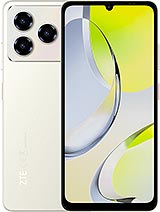
Blade A76 4G
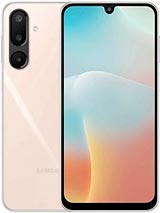
Galaxy M16 5G