ZTE nubia Focus review
The Focus suits buyers in emerging markets who prioritize screen size, battery life, and network longevity over sharp displays and raw speed, and who value a headphone jack. Skip it if you want a sharper screen, faster charging, or snappy performance for everyday gaming and multitasking.
This review is based on ZTE’s published specifications and public benchmark data for the ZTE nubia Focus, and the rating is spec-based. GoSolo does not physically test devices; where we estimate real-world behaviour such as battery life or charge time, we say so. How we rate phones.
Overview
The nubia Focus is a sprawling 6.56-inch 5G phone aimed squarely at buyers in emerging markets who want size, battery longevity, and a headphone jack without spending much. The entry-level Unisoc T760 and 720p display show where ZTE cut corners to hit around 200 EUR; it's a sensible trade-off for everyday use, but not a phone for anyone who values sharp text or responsive gaming.
Design & Build
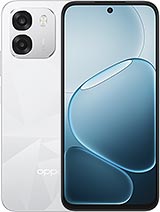
The Focus is a brick. At 205.5 grams and 8.6 mm thick, it's heavier and chunkier than most rivals in this space, though the glass front and back do feel solid in hand. The dimensions (163.6 x 74.9 mm) push it toward phablet territory, and that width will challenge anyone with smaller hands. There is no stated IP rating for water or dust resistance, so the glass back is a gamble in the real world. The headphone jack survives here, which is genuinely useful in a market where true wireless audio is not yet standard, and side-mounted fingerprint recognition works fast enough for daily unlock. Dual Nano-SIM slots let you run two numbers, common in regions where that matters.
Display
The 6.56-inch IPS LCD does refresh at 120 Hz, which keeps scrolling smooth, but the 720p resolution and 269 ppi pixel density are noticeable trade-offs. Text in apps and the web looks soft compared to phones that push 1080p even at this price, and anyone accustomed to sharper screens will spot the difference within minutes. The 84.4% screen-to-body ratio is decent for a phone from early 2024, and the 20:9 aspect ratio makes it narrow enough to grip, if tall. IPS also means wider viewing angles than OLED would offer, and color accuracy should be adequate for daily browsing and video—just do not expect vibrancy or contrast depth. This is a display built to consume content and notifications, not showcase media.
Performance
The Unisoc T760 is an entry-level 6 nm octa-core chip that handles messaging, social media, and casual web use without stuttering. RAM options run from 4 GB to 12 GB, and the higher tiers (8 GB or 12 GB) help maintain smoothness in multitasking. Heavy 3D gaming, video editing, and sustained intensive workloads will expose its limits; this is not a phone for PUBG marathons or daily professional computing. Day-to-day responsiveness is acceptable for its class and price, and the Mali-G57 GPU is enough for light tasks. UFS 3.1 storage is at least fast for a phone at this tier. If your main concern is speed, you are not the target buyer; if you want a phone that does not lag during typical use, this clears the bar.
Software
Android 14 ships out of the box, which is current for its 2024 release. ZTE's skin over Android tends to be light compared to others, so there should not be much bloat slowing you down. Update support is the usual question for ZTE—transparency is not their strong suit—but for a budget device in emerging markets, realistic expectations are a couple of major OS bumps and periodic security patches. Software is a non-factor here; it works as Android does.
Camera
The 108 MP main camera with f/1.8 aperture and phase-detection autofocus is the headline spec, and it does capture detail in daylight because of the large sensor (1/1.67"). In good light, photos are sharp and colors are generally pleasing. Low-light performance is where it stumbles; the sensor size and f/1.8 help, but the T760 does not have the computational horsepower to match multi-frame processing on pricier rivals, so night shots come out noisier and softer. There is no optical zoom—the 24mm fixed focal length limits close framing of distant subjects—and the 5 MP or 8 MP selfie cam is basic. Video maxes out at 4K 30 fps, which is acceptable but not exceptional. For a phone at this price, the main camera is a genuine strength in daylight scenes, though it is not a substitute for an actual ultrawide or telephoto option.
Battery & Charging
The 5000 mAh cell is one of the Focus's genuine advantages. In mixed use with moderate screen brightness, expect 12 to 14 hours of screen-on time, easily pushing to a second day on lighter schedules. That size is becoming standard at this price, but ZTE sizes the phone and weight accordingly, so it feels substantial rather than bloated. Charging maxes at 33W wired, filling the battery from empty in roughly 45 to 60 minutes. That is respectable but not standout for 2024; rivals now routinely hit 65W or 100W at this price, so the Focus charges slower than what you should expect from the competition. The 22.5W variant (depending on market) takes closer to 90 minutes. No wireless charging, which is not surprising at this tier.
Value & Verdict
At around 200 EUR, the Focus targets budget-conscious shoppers in emerging markets, and it delivers a working 5G phone with a massive screen and battery that lasts. The headphone jack, dual SIM, and headroom in RAM (especially the 12 GB option) address real-world needs in regions where these features matter. The trade-offs are real: the resolution is low for a 6.56-inch screen, the chip is entry-level, charging is slow by current standards, and the glass back without IP protection is fragile. A buyer in this position is choosing between size and longevity versus sharpness and speed. The Focus wins on the former, loses on the latter. Comparing it to rivals at this price, phones like the Samsung Galaxy A15 or Motorola Moto G35 offer better displays and faster chips in smaller packages, but they lack 5G in most markets and do not run as large a battery. The Focus is less of a balanced phone and more of a purpose-built option: pick it if you prize screen real estate, network future-proofing, and battery endurance over image quality and raw speed.
Verdict
The Focus suits buyers in emerging markets who prioritize screen size, battery life, and network longevity over sharp displays and raw speed, and who value a headphone jack. Skip it if you want a sharper screen, faster charging, or snappy performance for everyday gaming and multitasking.
- 5000 mAh battery easily lasts beyond one full day with moderate use, beating most rivals in this segment
- 5G support future-proofs connectivity in markets rolling out networks now
- Headphone jack preserved alongside dual SIM—rare in 2024 and genuinely useful in emerging regions
- 108 MP main camera with fast PDAF autofocus captures sharp daylight photos and plenty of detail
- 720p resolution on a 6.56-inch screen leaves text and UI elements visibly soft; rivals at this price now push 1080p
- 33W charging is slower than the 65–100W you will find on comparably priced alternatives
- Entry-level Unisoc T760 struggles with sustained heavy tasks and modern games
ZTE nubia Focus Key Specifications
The essentials at a glance. See the full spec sheet.
| Released | 2024, February 28 |
|---|---|
| Display | 6.56 inches, 103.4 cm2 (~84.4% screen-to-body ratio), IPS LCD, 120Hz (90Hz - LATAM) |
| Resolution | 720 x 1612 pixels, 20:9 ratio (~269 ppi density) |
| Chipset | Unisoc T760 (6 nm) |
| RAM & storage | 256GB 4GB RAM, 256GB 6GB RAM, 256GB 8GB RAM, 256GB 12GB RAM |
| Main camera | 108 MP, f/1.8, 24mm (wide), 1/1.67", PDAF Auxiliary lens |
| Selfie camera | 5 MP, f/2.2, (wide) or 8 MP, (wide) |
| Battery | 5000 mAh |
| Charging | 22.5W or 33W wired |
| Software | Android 14 |
| Dimensions | 163.6 x 74.9 x 8.6 mm (6.44 x 2.95 x 0.34 in) |
| Weight | 205.5 g (7.27 oz) |
| Build | Glass front, glass back |
| Network | GSM / HSPA / LTE / 5G |
| NFC | Yes (market/region dependent) |
| USB | USB Type-C 2.0 |
ZTE nubia Focus FAQ
Common questions, answered from the spec sheet.
Does the nubia Focus support 5G?
Yes. The nubia Focus supports 5G networks.
What chipset does the nubia Focus use?
The nubia Focus runs on the Unisoc T760 (6 nm).
What display does the nubia Focus have?
A 6.56 inches, 103.4 cm2 (~84.4% screen-to-body ratio) IPS LCD, 120Hz (90Hz - LATAM), 720 x 1612 pixels, 20:9 ratio (~269 ppi density).
How big is the nubia Focus battery?
The nubia Focus has a 5000 mAh battery. Charging is rated at 22.5W or 33W wired.
Does the nubia Focus have NFC?
Yes, the nubia Focus has NFC.
Does the nubia Focus support a microSD card?
No, the nubia Focus does not support expandable storage.
Does the nubia Focus have a headphone jack?
Yes, the nubia Focus has a 3.5mm headphone jack.
Alternatives to consider
If the nubia Focus isn’t quite right, these are the closest calls.
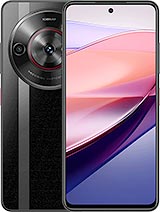
nubia Focus 2
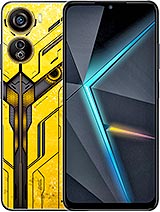
nubia Neo 2
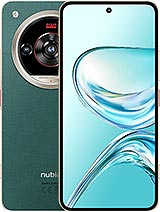
nubia Focus 2 Ultra
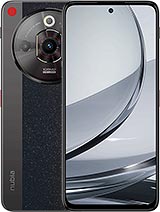
nubia Focus Pro
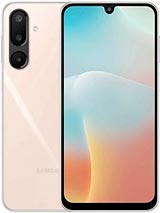
Galaxy M16 5G