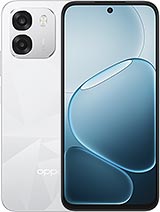
ZTE nubia Focus Pro review
This phone makes sense for buyers in markets with solid 5G coverage who prioritize all-day battery and a big screen over raw speed and who are comfortable sidestepping demanding games. Look elsewhere if you play intensive titles regularly, expect frequent OS updates, or need flagship-grade performance at mid-range prices.
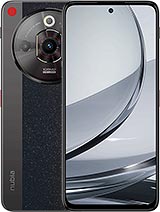
This review is based on ZTE’s published specifications and public benchmark data for the ZTE nubia Focus Pro, and the rating is spec-based. GoSolo does not physically test devices; where we estimate real-world behaviour such as battery life or charge time, we say so. How we rate phones.
Overview
The nubia Focus Pro is a straightforward mid-range phone that trades outright speed for long battery life, a big screen, and 5G support at a price most global markets find reasonable. It's built for buyers who scroll, stream, and message all day but have no patience for demanding games or apps that depend on raw processor power.
Design & Build
At 222 grams and 8.5 mm, the Focus Pro is neither light nor featherweight, but that weight buys you a large 6.72-inch frame that feels solid enough to hold. Glass front and back with a plastic frame is the formula every phone in this price range uses; it looks acceptable without being distinctive. The side-mounted fingerprint sensor is responsive, and dual SIM support is useful if you juggle networks or regions. Build quality is acceptable for the price, though the plastic frame will show wear if dropped repeatedly.
Display
The 6.72-inch 120Hz IPS LCD is generous and scrolling is noticeably smooth compared to 60Hz refresh, a genuine comfort when browsing. At 392 ppi, sharpness is good enough that text and icons remain clear at arm's length, but side-by-side with an OLED at this size, the difference in contrast and color depth becomes obvious. For video streaming, casual gaming, and web browsing, this screen does its job without complaint. The 86% screen-to-body ratio is respectable, though thick bezels top and bottom remind you this is not a flagship design.
Performance
The Unisoc T760 is a competent entry-level chipset that handles everyday tasks—messaging, social media, email, and light browsing—without lag. Moderate gaming, like casual puzzle or card games, runs fine at medium settings. Demanding titles such as Genshin Impact or PUBG will force you to drop settings or accept frame stutters. Multitasking between a few apps works smoothly; opening ten and jumping between them reveals the limits of the chipset. Android 13 is current enough, but ZTE's track record suggests major OS updates will be infrequent, so do not bank on long-term software support.
Camera
The 108 MP main camera with OIS and f/1.8 aperture is the standout hardware feature. In daylight it captures plenty of detail and crops well if you need to zoom without losing too much quality. Low light is where the advantage shows—the wider aperture and larger 1/1.67" sensor gather more light than budget competitors, resulting in cleaner night shots without excessive noise. The 5 MP ultrawide is auxiliary; it's there for the spec sheet rather than serious wide-angle work. The 32 MP selfie camera is standard and adequate. Video maxes out at 4K 30fps, which is fine for social media but not exceptional. Macro and zoom performance are unremarkable, and the lack of a dedicated telephoto means distant subjects come out soft if cropped.
Battery & Charging
The 5000 mAh battery is the true practical advantage here. On moderate use—texting, email, streaming, some gaming—expect a comfortable 24 to 30 hours between charges. Heavy video playback or intensive gaming halves that to 12 to 15 hours, but for most daily routines you will land on 1.5 to 2 days. The 33W wired charging gets you from zero to full in roughly 50 to 65 minutes depending on charger quality and heat management. That is solid, but rivals in the €180–220 band now routinely offer 65W or 100W, reaching full charge in 25 to 35 minutes. If you charge overnight, it does not matter; if you need a quick top-up mid-day, you will notice the slower pace.
Software & Connectivity
Android 13 is current for a 2024 phone, though nubia's update schedule is not known for generosity. You get 5G SA/NSA support across a good range of bands, which means fast downloads where coverage exists. Wi-Fi 5 is standard and sufficient for streaming and browsing. NFC is present for mobile payments, though regional support varies. Dual SIM is handy, and FM radio is included if you care. The lack of a microSD slot means your 256 GB of storage is final; cloud backup or external drives become necessary if you fill it.
Value & Verdict
At around €190, the Focus Pro sits in a crowded middle where you are not overpaying for premium materials or cutting-edge silicon. The real wins are battery longevity, a genuinely useful camera, and 5G availability. The real limits are the entry-level chipset and slower charging than peers at the same price. It is an honest phone: large, durable, and sufficient for everything except gaming and heavy productivity. It does not pretend to be something it is not, which is refreshing in a segment full of marketing speak.
Verdict
This phone makes sense for buyers in markets with solid 5G coverage who prioritize all-day battery and a big screen over raw speed and who are comfortable sidestepping demanding games. Look elsewhere if you play intensive titles regularly, expect frequent OS updates, or need flagship-grade performance at mid-range prices.
- 5000 mAh battery with 33W charging keeps you running a full day-plus on moderate use, which matters more than most chipset tweaks in this segment
- 108 MP main camera with OIS and f/1.8 aperture delivers genuinely useful low-light performance and detail in daylight shots, a real step above cheaper peers
- 6.72-inch 120Hz IPS LCD gives scroll smoothness and ample space for video and browsing without the OLED price bump
- 5G support where available, plus NFC and dual SIM, cover connectivity needs at this price point
- Unisoc T760 chipset is entry-level; heavy games and demanding apps lag noticeably, and Android updates will likely be sparse
- 33W charging is competent but slower than rivals in the €180–220 range, which now routinely offer 65W or higher
- Display clarity at 392 ppi is passable, not sharp; IPS LCD also lacks the contrast depth OLED brings, even in this tier
ZTE nubia Focus Pro Key Specifications
The essentials at a glance. See the full spec sheet.
| Released | 2024, February 28 |
|---|---|
| Display | 6.72 inches, 109.0 cm2 (~86.3% screen-to-body ratio), IPS LCD, 120Hz |
| Resolution | 1080 x 2400 pixels, 20:9 ratio (~392 ppi density) |
| Chipset | Unisoc T760 (6 nm) |
| RAM & storage | 256GB 8GB RAM |
| Main camera | 108 MP, f/1.8, 24mm (wide), 1/1.67", PDAF, OIS 5 MP, f/2.2, 17mm (ultrawide), AF Auxiliary lens |
| Selfie camera | 32 MP, f/2.5, (wide) |
| Battery | 5000 mAh |
| Charging | 33W wired |
| Software | Android 13 |
| Dimensions | 166 x 76.1 x 8.5 mm (6.54 x 3.00 x 0.33 in) |
| Weight | 222 g (7.83 oz) |
| Build | Glass front, plastic frame, glass back |
| Network | GSM / HSPA / LTE / 5G |
| NFC | Yes (market/region dependent) |
| USB | USB Type-C 2.0, OTG |
ZTE nubia Focus Pro FAQ
Common questions, answered from the spec sheet.
Does the nubia Focus Pro support 5G?
Yes. The nubia Focus Pro supports 5G networks.
What chipset does the nubia Focus Pro use?
The nubia Focus Pro runs on the Unisoc T760 (6 nm).
What display does the nubia Focus Pro have?
A 6.72 inches, 109.0 cm2 (~86.3% screen-to-body ratio) IPS LCD, 120Hz, 1080 x 2400 pixels, 20:9 ratio (~392 ppi density).
How big is the nubia Focus Pro battery?
The nubia Focus Pro has a 5000 mAh battery. Charging is rated at 33W wired.
Does the nubia Focus Pro have NFC?
Yes, the nubia Focus Pro has NFC.
Does the nubia Focus Pro support a microSD card?
No, the nubia Focus Pro does not support expandable storage.
Does the nubia Focus Pro have a headphone jack?
No, the nubia Focus Pro does not have a 3.5mm headphone jack.
Alternatives to consider
If the nubia Focus Pro isn’t quite right, these are the closest calls.
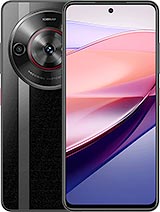
nubia Focus
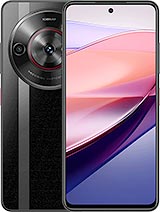
nubia Focus 2
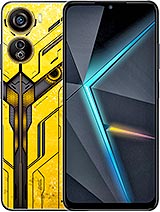
nubia Neo 2
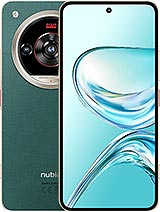
nubia Focus 2 Ultra
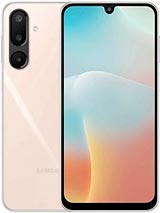
Galaxy M16 5G