ZTE Voyage 3D review
This phone suits buyers who specifically want 5G in a light form factor and care little about gaming or photography. Anyone else—and that includes most budget phone shoppers—should look at competing phones from Xiaomi, Motorola, or Samsung that offer faster chipsets, better cameras, and stronger value for the same price.
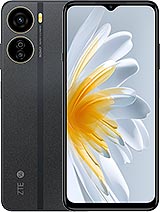
This review is based on ZTE’s published specifications and public benchmark data for the ZTE Voyage 3D, and the rating is spec-based. GoSolo does not physically test devices; where we estimate real-world behaviour such as battery life or charge time, we say so. How we rate phones.
Overview
The Voyage 3D bets on a gimmick—its 3D display—while cutting corners everywhere else. At 190 EUR with a weak Unisoc chipset, basic 50MP camera, and 33W charging, it's a budget phone that doesn't know what it's actually for.
Design & Build
At 190 grams and 8.5mm thick, the Voyage 3D sits on the heavier, sturdier end of its class. The glass front paired with a plastic frame and back is a familiar compromise at this price—glass gives the illusion of solidity while keeping costs down, though it means you are buying a phone that feels less refined than what rivals offer at the same EUR price point. The side-mounted fingerprint sensor is practical, and dual nano-SIM slots suggest it is pitched at markets where local and regional network switching matters. There is nothing here that moves the needle one way or the other; it is inoffensive plastic-and-glass middle ground.
Display
The standout feature here is the 3D lightfield display with real-time 2D-to-3D content conversion, which ZTE clearly sees as its selling point. A 6.58-inch IPS LCD at 1080x2408 (401 ppi) is sharp enough for text and feeds, and 120Hz refresh makes scrolling noticeably smoother than a 60Hz panel. The catch is predictable: IPS LCD cannot match OLED's contrast or color saturation, and without a brightness spec, legibility in direct sunlight is a guessing game at this price. The 3D feature itself is a novelty that wears thin fast; watching videos that are not natively 3D converted in real time rarely looks natural, and the effect requires a specific viewing angle to work. For a phone at this price, a brighter, punchier standard display would have been more useful than a gimmick that few apps or content actually support.
Performance
The Unisoc T760 is an entry-level chip, and the Voyage 3D makes no pretense of hiding that. Six gigabytes of RAM and eMMC 5.1 storage mean everyday tasks like messaging, browsing, and light social media work without hiccups. Heavier apps, multitasking, and any demanding mobile game will stutter compared to a Snapdragon 6 Gen 1 phone at a similar price. This is not a chip you use because you want to; it is what ZTE chose to keep the cost down. For someone whose phone life is email and maps, that is fine. For anyone with higher ambitions, this will feel slow within six months.
Software
Android 13 with ZTE's MyOS 13 skin is here, but there is almost nothing to say about it. MyOS is one of the lighter skins out there, and on a device with only 6GB RAM, that matters. Updates are the real question: ZTE's track record on software support is thin, and budget phones rarely see more than two years of patches. If you are buying this, do not expect meaningful OS upgrades down the line.
Camera
The 50MP main sensor with phase-detection autofocus and LED flash handles daylight decently, capturing reasonable detail in good light. No telephoto, no ultra-wide, no night mode—which is standard for this price, but it also means the phone does one thing: daylight snapshots. The 5MP selfie is barebones, adequate only for video calls. If you are buying a 190 EUR phone and photography matters at all, this camera is a footnote, not a reason to choose this phone.
Battery & Charging
The 4500 mAh battery paired with the modest Unisoc chip suggests roughly a full day of mixed use, dropping noticeably on video or gaming. The 33W wired charging (USB Power Delivery 3.0) is slow by 2024 standards—rivals at this price now push 65W or higher—but at least PD compliance means you can borrow any standard USB-C charger in a pinch. A full charge will take around 45 to 60 minutes. The battery itself is unremarkable: adequate but not impressive, and no wireless charging or fast-charging tricks.
Value & Verdict Context
At roughly 190 EUR, the Voyage 3D is positioned as a budget 5G phone with a 3D gimmick. The problem is that the 3D display is a solution in search of a problem, and everything else—the slow chipset, basic camera, modest battery, weak charging—feels like compromises made to justify the 3D tech. A buyer in this price bracket would be better served by a standard 120Hz phone with a faster chipset, a better camera, or both. The 5G support is welcome if your region has coverage, but it does not make up for the shortcomings elsewhere. The Voyage 3D is not a bargain; it is a curiosity that costs as much as much better devices.
Verdict
This phone suits buyers who specifically want 5G in a light form factor and care little about gaming or photography. Anyone else—and that includes most budget phone shoppers—should look at competing phones from Xiaomi, Motorola, or Samsung that offer faster chipsets, better cameras, and stronger value for the same price.
- 120Hz IPS LCD is noticeably smoother than 60Hz alternatives, especially when scrolling through apps and feeds
- 5G connectivity available in supported bands, with dual-band Wi-Fi 6 and Bluetooth 5.0 for solid wireless coverage where available
- Side-mounted fingerprint sensor and dual nano-SIM slots for regional flexibility
- Unisoc T760 is entry-level and shows its limitations in multitasking and any game heavier than Candy Crush
- 33W charging is slow for 2024; rivals at this price now hit 65W or higher, meaning longer waits between charges
- 3D display novelty wears thin fast and adds cost without real daily benefit; standard LCD or AMOLED would be more practical
ZTE Voyage 3D Key Specifications
The essentials at a glance. See the full spec sheet.
| Released | 2024, June 27 |
|---|---|
| Display | 6.58 inches, 104.3 cm2 (~85.1% screen-to-body ratio), IPS LCD, 120Hz |
| Resolution | 1080 x 2408 pixels, 20:9 ratio (~401 ppi density) |
| Chipset | Unisoc T760 (6 nm) |
| RAM & storage | 128GB 6GB RAM |
| Main camera | 50 MP, (wide), PDAF 5 MP |
| Selfie camera | 5 MP |
| Battery | 4500 mAh |
| Charging | 33W wired, PD3.0 |
| Software | Android 13, MyOS 13 |
| Dimensions | 163.5 x 75 x 8.5 mm (6.44 x 2.95 x 0.33 in) |
| Weight | 190 g (6.70 oz) |
| Build | Glass front, plastic frame, plastic back |
| Network | GSM / HSPA / LTE / 5G |
| NFC | Unspecified |
| USB | USB Type-C 2.0 |
ZTE Voyage 3D FAQ
Common questions, answered from the spec sheet.
Does the Voyage 3D support 5G?
Yes. The Voyage 3D supports 5G networks.
What chipset does the Voyage 3D use?
The Voyage 3D runs on the Unisoc T760 (6 nm).
What display does the Voyage 3D have?
A 6.58 inches, 104.3 cm2 (~85.1% screen-to-body ratio) IPS LCD, 120Hz, 1080 x 2408 pixels, 20:9 ratio (~401 ppi density).
How big is the Voyage 3D battery?
The Voyage 3D has a 4500 mAh battery. Charging is rated at 33W wired, PD3.0.
Does the Voyage 3D have NFC?
No, the Voyage 3D does not list NFC support.
Does the Voyage 3D support a microSD card?
Yes, the Voyage 3D supports expandable storage (Unspecified).
Does the Voyage 3D have a headphone jack?
No, the Voyage 3D does not have a 3.5mm headphone jack.
Alternatives to consider
If the Voyage 3D isn’t quite right, these are the closest calls.
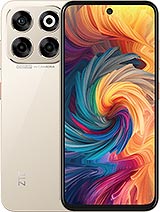
Blade V70
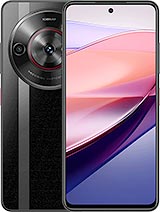
nubia Focus 2
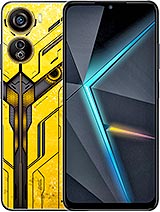
nubia Neo 3
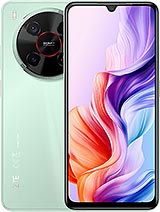
Blade V70 Max
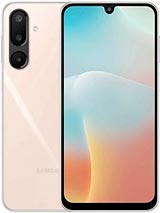
Galaxy M16 5G