Apple iPhone 17 Pro review
This phone suits people who prefer compact phones, already use iOS, and value a bright OLED screen and quick wired charging over raw endurance or zoom range. Those wanting best-in-class battery life, fastest charging speeds, or multi-year upgrade justification should cross-shop Android competitors or wait for next year's model.
This review is based on Apple’s published specifications and public benchmark data for the Apple iPhone 17 Pro, and the rating is spec-based. GoSolo does not physically test devices; where we estimate real-world behaviour such as battery life or charge time, we say so. How we rate phones.
Overview
The iPhone 17 Pro is a compact flagship with a bright 120Hz OLED screen, fast wired charging, and a capable zoom camera, but it makes no meaningful advance over last year's Pro and costs nearly $900 in markets where Android rivals offer more camera range and faster charging for less.
Design & build
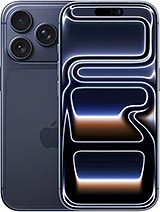
At 150mm tall and 206g, this is a phone you can pocket and use one-handed, a rarity in 2025. The aluminum-and-glass sandwich with Ceramic Shield 2 front and back resists scratches better than standard glass—a real-world win for a device you'll handle daily. The flat edges channel iPhone 12–16 design language with no surprises; if you've held any modern iPhone Pro, you know this shape already. IP68 water resistance (6m/30min) is par for the class. The phone doesn't feel lightweight or fragile, but it's not a brick either. Three colors (Silver, Cosmic Orange, Deep Blue) are safe choices.
Display
The 6.3-inch LTPO Super Retina XDR with 120Hz refresh rate and 3000-nit peak brightness is the standout hardware on this phone. At 460ppi with a 19.5:9 ratio, text and icons are crisp; the 120Hz motion is perceptibly smoother than 60Hz for scrolling and gaming. The real strength is outdoor visibility—3000 nits peak means HDR films and photos don't washout in direct sunlight, and the typical 1000-nit brightness keeps the UI legible without full sun. Competitors at this price tier often match or exceed this brightness, but few maintain this smoothness and color accuracy in tandem. Anti-reflective coating cuts glare in office fluorescents. There are no complaints here.
Performance
The A19 Pro is top-tier mobile silicon—a hexa-core 3nm chip with a 6-core GPU. It will run any current game, edit 4K video, and handle computational photography without lag. The AnTuTu benchmark sits around 2.43M, roughly a 2–3% uplift from the A18 Pro in last year's model. This means no practical daily speed gain for most users. If you're editing ProRes RAW on the phone or playing competitive shooters, you won't see any frame drops, but productivity tasks, browsing, and social media run identically to the previous generation. This is typical for Apple's incremental yearly improvements—you are not paying for raw performance because the A18 Pro was already fast enough. The real argument for upgrade is camera or software features, not chip.
Software
iOS 26 with support for future versions up to 26.5 is standard issue. Apple's firmware ecosystem means security updates and OS refinements land faster than most Android rivals, and the app store is mature and curated. You get Apple's suite (Maps, Photos, Health) integrated seamlessly with iCloud sync. One caveat: if you are outside the iOS ecosystem and value deep customization, this phone offers less configurability than competing Android flagships. For users already bought into Apple, this is a strength; for switchers, it might feel restrictive. Nothing here is deficient, just less flexible than the alternative.
Camera
The rear setup is where compactness and capability meet. The 48MP main (f/1.8, 24mm, 1/1.28") captures crisp detail indoors and at night, aided by dual-pixel PDAF and sensor-shift OIS. The ultrawide (13mm, 120°, f/2.2) is standard for the class but not exceptional—distortion is well-controlled, but the f/2.2 aperture means low-light shots need either high ISO or a tripod. The 4x optical periscope telephoto (100mm, f/2.8) is the real differentiator for a compact phone; it frames distant subjects without stepping back or cropping, and optical stabilization keeps handheld shots steady. Video is where this shines: 4K Dolby Vision HDR at up to 120fps with ProRes RAW support means you can shoot cinematic slow-motion footage with automatic color grading. The 18MP selfie camera is competent for FaceTime and Portrait mode but unremarkable. For casual snapshots and travel, this camera system punches above its compact form factor; for professional video work, the Pro Max remains the better choice.
Battery & charging
The 3998mAh capacity is modest by 2025 standards and reflects the trade-off for the compact body. Real-world screen time is roughly 14–16 hours with mixed use (some gaming, streaming, photography); a heavy user (8+ hours screen time daily) will need a charge before dinner. The upside: 25W wired USB-C charging gets you to 50% in about 20 minutes, a genuine convenience for a quick boost before leaving the house. Wireless MagSafe charging tops out at 15W (China variant) or 25W, slower than wired and not practical for emergency top-ups. Rivals at this price now offer 65W or faster wired charging and larger batteries, so the iPhone 17 Pro is behind on raw speed and capacity. If you charge overnight or carry a power bank, this is livable; if you chase endurance, look elsewhere.
Value & verdict
At $897 (or €1,060 and ₹154,900), this is a premium compact phone for people who value one-handed use, fast wired charging, and outdoor visibility. The 3000-nit OLED display and 4x optical zoom justify the price against cheaper compacts. However, this is not a meaningful upgrade over the iPhone 16 Pro—the A19 Pro gains are marginal, and the battery is unchanged. If you own a 16 Pro, waiting another generation makes sense. If you are new to iPhone or upgrading from a non-Pro model, the performance and camera are solid, though the battery's endurance and the charging speed are both behind what Android rivals offer at the same price. The real draw is the iOS ecosystem and Apple's long-term software support; if you are not already locked into Apple, an Android flagship at this price will give you larger cameras, faster charging, and better battery life.
Verdict
This phone suits people who prefer compact phones, already use iOS, and value a bright OLED screen and quick wired charging over raw endurance or zoom range. Those wanting best-in-class battery life, fastest charging speeds, or multi-year upgrade justification should cross-shop Android competitors or wait for next year's model.
- 6.3-inch LTPO OLED with 3000-nit peak brightness makes outdoor use and HDR content genuinely usable without squinting or tone-mapping
- 25W wired charging hits 50% in 20 minutes, practical for a midday top-up before leaving the house
- 4x optical periscope telephoto (100mm, f/2.8) frames distant subjects cleanly without the crop-and-hope limitations of earlier compacts
- Compact form factor (206g, 8.8mm) that fits one-handed without feeling cramped or toy-like
- A19 Pro generation gain over A18 Pro is incremental; yearly upgrade buyers see no compelling reason to trade in
- 3998 mAh battery barely carries a heavy user (gamer, streamer, photographer) through a full day without an evening charge
- Nearly $900 puts it in the price band where some Android rivals offer larger zoom range, faster charging (65W+), and larger main sensors for similar or less money
Apple iPhone 17 Pro Key Specifications
The essentials at a glance. See the full spec sheet.
| Released | 2025, September 09 |
|---|---|
| Display | 6.3 inches, 96.4 cm2 (~89.4% screen-to-body ratio), LTPO Super Retina XDR OLED, 120Hz, HDR10, Dolby Vision, 1000 nits (typ), 1600 nits (HBM), 3000 nits (peak) |
| Resolution | 1206 x 2622 pixels, 19.5:9 ratio (~460 ppi density) |
| Chipset | Apple A19 Pro (3 nm) |
| RAM & storage | 256GB 12GB RAM, 512GB 12GB RAM, 1TB 12GB RAM |
| Main camera | 48 MP, f/1.8, 24mm (wide), 1/1.28", 1.22µm, dual pixel PDAF, sensor-shift OIS 48 MP, f/2.8, 100mm (periscope telephoto), 1/2.55", 0.7µm, PDAF, 3D sensor‑shift OIS, 4x optical zoom 48 MP, f/2.2, 13mm, 120˚ (ultrawide), 1/2.55", 0.7µm, PDAF TOF 3D LiDAR scanner (depth) |
| Selfie camera | 18 MP multi-aspect, f/1.9, 20mm (ultrawide), PDAF SL 3D, (depth/biometrics sensor) |
| Battery | 4252 mAh |
| Charging | Wired, PD3.2, AVS, 50% in 20 min25W wireless MagSafe/Qi2, 50% in 30 min (15W - China)4.5W reverse wired |
| Software | iOS 26, upgradable to iOS 26.5 |
| Dimensions | 150 x 71.9 x 8.8 mm (5.91 x 2.83 x 0.35 in) |
| Weight | 206 g (7.27 oz) |
| Build | Glass front (Ceramic Shield 2), aluminum frame, aluminum back/ glass back (Ceramic Shield) |
| Durability | IP68 dust tight and water resistant (immersible up to 6m for 30 min) Apple Pay (Visa, MasterCard, AMEX certified) |
| Network | GSM / CDMA / HSPA / EVDO / LTE / 5G |
| NFC | Yes |
| USB | USB Type-C 3.2 Gen 2, DisplayPort |
Apple iPhone 17 Pro FAQ
Common questions, answered from the spec sheet.
Does the iPhone 17 Pro support 5G?
Yes. The iPhone 17 Pro supports 5G networks.
What chipset does the iPhone 17 Pro use?
The iPhone 17 Pro runs on the Apple A19 Pro (3 nm).
What display does the iPhone 17 Pro have?
A 6.3 inches, 96.4 cm2 (~89.4% screen-to-body ratio) LTPO Super Retina XDR OLED, 120Hz, HDR10, Dolby Vision, 1000 nits (typ), 1600 nits (HBM), 3000 nits (peak), 1206 x 2622 pixels, 19.5:9 ratio (~460 ppi density).
How big is the iPhone 17 Pro battery?
The iPhone 17 Pro has a 4252 mAh battery. Charging is rated at Wired, PD3.2, AVS, 50% in 20 min25W wireless MagSafe/Qi2, 50% in 30 min (15W - China)4.5W reverse wired.
Does the iPhone 17 Pro have NFC?
Yes, the iPhone 17 Pro has NFC.
Is the iPhone 17 Pro water resistant?
The iPhone 17 Pro carries a IP68 dust tight and water resistant (immersible up to 6m for 30 min) Apple Pay (Visa, MasterCard, AMEX certified) rating.
Does the iPhone 17 Pro support a microSD card?
No, the iPhone 17 Pro does not support expandable storage.
Does the iPhone 17 Pro have a headphone jack?
No, the iPhone 17 Pro does not have a 3.5mm headphone jack.
Alternatives to consider
If the iPhone 17 Pro isn’t quite right, these are the closest calls.
iPhone 17 Pro Max

iPhone 17
iPhone 18 Pro
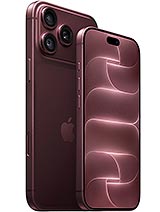
iPhone 18 Pro Max
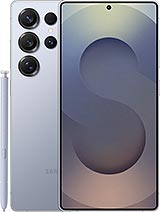
Galaxy S25 Ultra